






Definition and Purpose of the Organizational Leadership Assessment
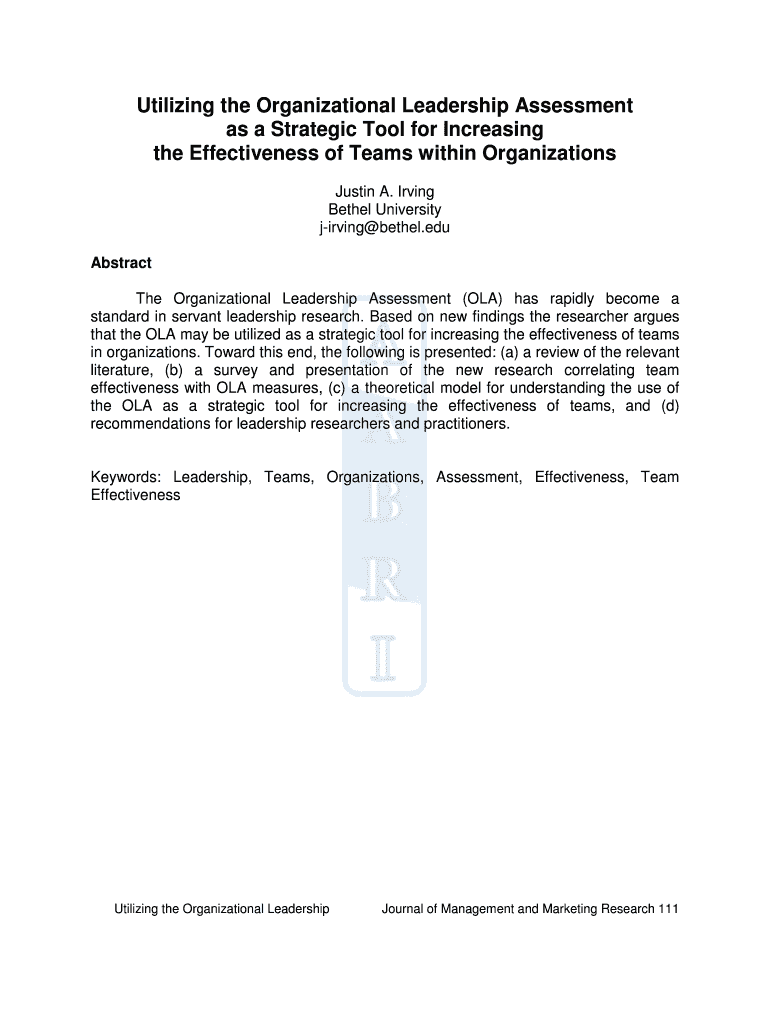
The Organizational Leadership Assessment (OLA) acts as a pivotal tool for understanding and fostering team effectiveness within various organizational settings. Its primary function is to evaluate the presence and degree of servant leadership practices and their impact on team dynamics. By measuring factors such as empathy, community building, and ethical leadership, the OLA helps organizations identify leadership strengths and areas for improvement. This assessment not only provides a diagnostic tool but also serves as a basis for cultivating a culture conducive to effective teamwork.
Key Elements of the Organizational Leadership Assessment
The OLA consists of several critical components that work together to provide a comprehensive overview of leadership within an organization. These elements include:
- Leadership Practices: Evaluates the extent to which leaders exhibit servant leadership qualities.
- Organizational Health: Assesses the overall climate and culture of the organization, focusing on communication, respect, and trust.
- Team Effectiveness: Measures how well teams are collaborating and delivering results.
- Individual Contribution: Looks at how individual members contribute to the organizational goals and the impact of their work.
- Feedback Mechanisms: Includes a set of tools for providing constructive feedback to leaders and stakeholders within the organization.
These components collectively enable organizations to align their leadership strategies with their business objectives, ensuring that they foster environments supportive of growth and development.
Steps to Complete the Organizational Leadership Assessment
Completing the Organizational Leadership Assessment involves several methodical steps, designed to ensure accurate and actionable outcomes:
- Preparation: Gather all necessary pre-assessment documents and define the objectives of the assessment.
- Form Selection: Choose the appropriate version of the OLA that aligns with the organization's size and industry.
- Distribution: Distribute the assessment forms among selected team members and leaders across various departments.
- Data Collection: Collect completed forms promptly to ensure the integrity and reliability of data.
- Analysis: Use analytical tools to interpret the data, paying attention to key indicators of leadership effectiveness and organizational health.
- Feedback: Compile results into a report and provide feedback to the organizational leaders.
- Implementation: Develop a strategic plan based on the assessment results to enhance leadership practices and improve team dynamics.
Advantages of Utilizing the Organizational Leadership Assessment
Utilizing the OLA offers several significant benefits to organizations seeking to optimize their leadership structures:
- Enhanced Leadership Insight: Provides a clear picture of leadership capabilities and areas needing development.
- Improved Team Dynamics: Fosters a more collaborative and effective working environment.
- Informed Decision-Making: Guides leaders in making informed decisions about leadership training and development programs.
- Increased Productivity: By promoting practices that encourage employee engagement, productivity is likely to increase.
- Adaptive Organizational Culture: Supports the transition to a more servant-minded organizational culture, where the focus is on serving others for the greater good.
Who Typically Uses the Organizational Leadership Assessment
The OLA is broadly applicable across diverse sectors, including:
- Corporations: Large and small businesses aiming to enhance corporate governance and leadership practices.
- Nonprofits: Organizations focusing on community-oriented goals and servant leadership.
- Educational Institutions: Schools and universities assessing leadership among administrative and teaching staff.
- Healthcare Providers: Hospitals and clinics seeking to improve patient care through better teamwork and leadership.
- Government Agencies: Departments looking to ensure effective leadership and cohesive team functionality.
Each of these entities finds substantial value in the OLA as it helps them meet industry-specific challenges and leadership goals.


Legal Context and Use of the Organizational Leadership Assessment
Understanding the legal context of the OLA is fundamental for its appropriate application:
- Confidentiality and Data Protection: Organizations must ensure that the data gathered through the assessment is handled with strict confidentiality and complies with regulations like GDPR or HIPAA if applicable.
- Ethical Use: The OLA should be utilized ethically to guide honest and constructive feedback rather than as a punitive measure.
- Compliance: Ensure that the assessment aligns with any specific industry compliance regulations, particularly in sectors like finance or healthcare.
Practical Examples of Using the Organizational Leadership Assessment
The application of the OLA can be illustrated through various scenarios:
- Scenario 1: A mid-sized tech company uses the OLA to identify gaps in leadership communication, resulting in a targeted workshop that improved internal communication channels and increased project success rates.
- Scenario 2: A nonprofit organization applies the OLA to assess servant leadership efficacy, finding that increased training led to enhanced community service delivery and donor engagement.
- Scenario 3: An educational institution implements the OLA, revealing insights into faculty collaboration and prompting initiatives that led to improved educational outcomes.
Software Compatibility and Integration
Organizations utilizing digital tools for assessments should note the compatibility of the OLA with different software platforms:
- Integration with Productivity Suites: The OLA can be integrated with software like Google Workspace, enabling seamless data sharing and collaborative analysis.
- Analytical Tools: Compatibility with platforms like Excel or specialized survey software helps to simplify data analysis and reporting.
- Cloud-Based Accessibility: Using cloud services ensures that the assessment can be accessed and submitted from various locations, facilitating broader participation without geographic restrictions.
State-Specific Rules and Variations
While the OLA is widely applicable, organizations must consider any state-specific regulations that may affect its implementation:
- Workplace Regulations: States with specific workplace regulation laws might require adaptations to the assessment process.
- Sector-Specific Mandates: Industries regulated differently across states may need to tailor the OLA to comply with local legal and operational standards.
By addressing both general and specific requirements, the Organizational Leadership Assessment serves as a robust tool for nuanced, strategic leadership evaluation across various contexts and industries.