






Definition & Meaning
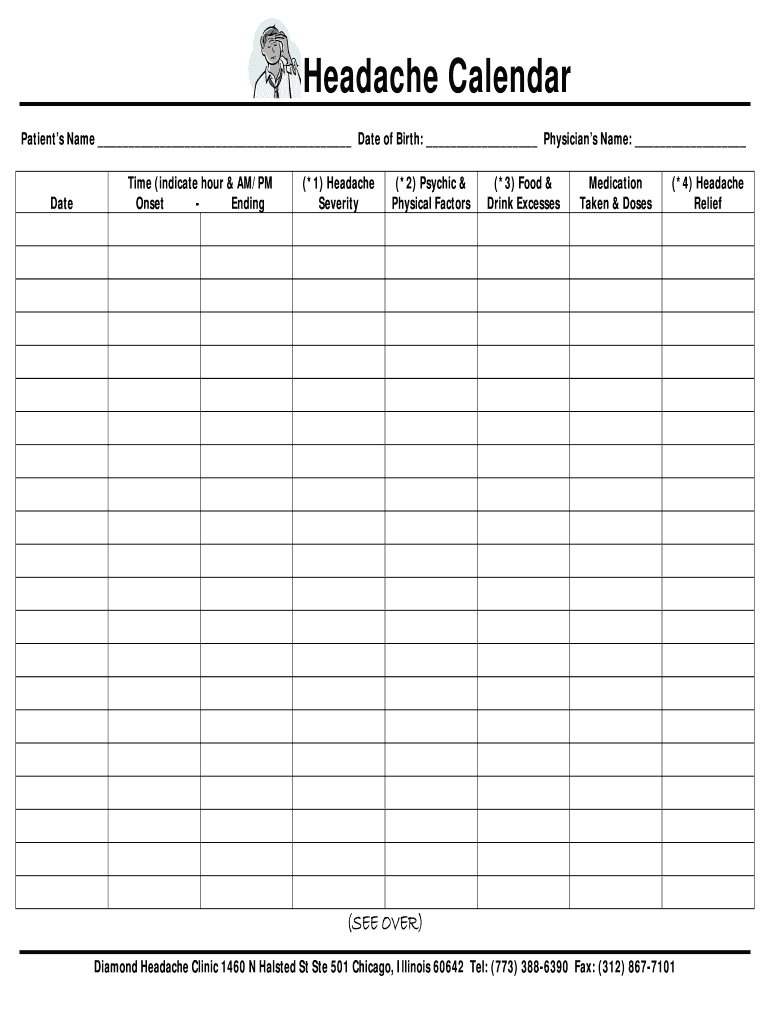
The DHC Headache Calendar - Diamond Headache is a specialized tool provided by the Diamond Headache Clinic in Chicago, designed for patients to meticulously track their headache occurrences. This document enables individuals to record detailed data about their headaches, ranging from onset and ending times to severity levels and contributing psychic and physical factors. The comprehensive nature of this calendar assists both patients and healthcare providers in identifying patterns and potential triggers, leading to more effective headache management strategies.
Key Elements of the DHC Headache Calendar
The DHC Headache Calendar includes several critical elements designed to capture comprehensive headache data. These elements include:
- Onset and Ending Times: Allows patients to document the exact timing of headaches to spot trends.
- Severity Levels: A scale is included to assess the intensity of each headache episode.
- Contributing Factors: Patients can note any psychic or physical factors that might contribute to headaches.
- Medications Taken: Provides space to track any medications used and their effectiveness.
- Relief Measures: Allows documentation of any actions taken that resulted in headache relief.
How to Use the DHC Headache Calendar
Utilizing the DHC Headache Calendar involves methodically recording relevant information every time a headache occurs. Patients should:
- Document Timing: Record the exact time the headache begins and when it ends.
- Assess Severity: Use the provided scale to rate the headache’s intensity.
- Identify Triggers: Note any food, drink, stressors, or other factors that may have contributed.
- Record Medications and Relief: List any medications taken and any other measures that provided relief.
Steps to Complete the DHC Headache Calendar
Completing the DHC Headache Calendar requires consistent and accurate data entry:
- Prepare the Calendar: Keep it easily accessible for quick documentation.
- Record Each Episode: Document each headache episode immediately or soon after it occurs to ensure accuracy.
- Review and Reflect: Regularly review recorded data to identify patterns or persistent triggers.
Why Should You Use the DHC Headache Calendar?
Using the DHC Headache Calendar provides multiple benefits:
- Improved Understanding: Helps patients and doctors understand headache patterns and triggers.
- Efficient Management: Allows for tailored treatment plans based on detailed headache profiles.
- Enhanced Communication: Facilitates better communication between patients and healthcare providers.
Examples of Using the DHC Headache Calendar
Real-world scenarios highlight the practical use of the calendar:
- Case Study 1: A patient identifies specific food triggers linked to headaches after consistent usage of the calendar.
- Case Study 2: A healthcare provider adjusts a patient’s treatment plan by analyzing severity patterns documented over several weeks.
Who Typically Uses the DHC Headache Calendar?
The DHC Headache Calendar is typically utilized by:
- Chronic Headache Sufferers: Individuals experiencing frequent headaches can use it to manage and understand their condition.
- Healthcare Professionals: Used by doctors to gain a detailed understanding of a patient’s headache dynamics.
- Research Participants: Often used in clinical studies assessing headache treatments and triggers.


Variations or Alternatives to the DHC Headache Calendar
While the DHC Headache Calendar provides a detailed approach, there are alternatives:
- Digital Apps: Mobile applications offer similar functionalities with added convenience.
- Simplified Journals: For patients preferring a less detailed approach, simplified headache journals are available.
By adopting these methodologies and utilizing the calendar's comprehensive elements, both patients and healthcare providers can work together to more effectively manage headache-related challenges.