Deep tissue massage intake and form 2026

Get Form
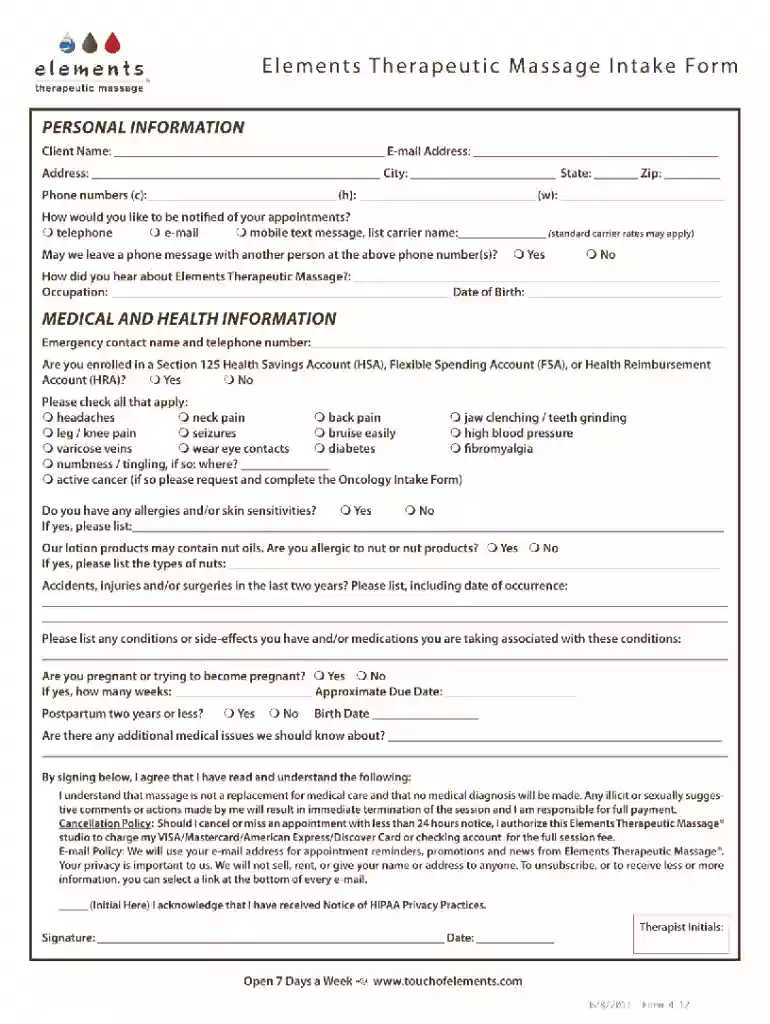
deep tissue massage intake and form Preview on Page 1

Here's how it works

01. Edit your deep tissue massage intake and form online
Type text, add images, blackout confidential details, add comments, highlights and more.

02. Sign it in a few clicks
Draw your signature, type it, upload its image, or use your mobile device as a signature pad.

03. Share your form with others
Send printable massage intake forms via email, link, or fax. You can also download it, export it or print it out.

Definition & Meaning

A "deep tissue massage intake and form" is a specialized document designed to gather essential information before a deep tissue massage session. This form collects data from clients about their medical history, previous injuries, current physical condition, and specific areas of concern. This allows massage therapists to tailor their approach to suit each individual's needs, thereby ensuring a safe and effective treatment. By carefully evaluating client responses, therapists can identify any contraindications to the massage and customize techniques to provide optimal therapeutic benefits.

How to Use the Deep Tissue Massage Intake and Form

Using the deep tissue massage intake and form effectively involves several steps to ensure that all pertinent client information is captured accurately. Initially, the client fills out the form with their personal details and medical history. The form typically includes sections on current pain levels, known allergies, and past surgeries or injuries. After completing the form, the client should review it with the massage therapist. This review process allows for further discussion about any detailed concerns or areas requiring special attention during the massage. The therapist uses the information to customize the session, paying particular attention to areas of tension or discomfort outlined in the form.

Steps to Complete the Deep Tissue Massage Intake and Form

  1. Client Information: Fill out your name, contact details, and emergency contact information.
  2. Medical History: Provide details about any ongoing medical conditions, past injuries, or surgeries.
  3. Current Physical Condition: Note any areas of pain or tension, including specific muscle groups that you would like the therapist to focus on.
  4. Allergies and Sensitivities: List any allergies, particularly to lotions or oils that might be used during the massage.
  5. Consent and Agreement: Read the terms and conditions, and sign to confirm your consent for the massage session.
  6. Review: Discuss the completed form with your therapist to ensure they understand your needs and expectations.

Key Elements of the Deep Tissue Massage Intake and Form

  • Personal Information: This section collects the client's name, age, contact information, and emergency contact.
  • Health Overview: Clients provide details about chronic illnesses, medications, and any relevant medical history.
  • Focus Areas: Indicate specific bodily discomforts or areas that require concentrated massage techniques.
  • Contraindications: Highlight any conditions or situations, such as pregnancy or recent surgeries, that might affect the massage's approach.
  • Consent: A legal agreement to acknowledge the terms of the service and the understanding of the massage procedure.

Important Terms Related to Deep Tissue Massage Intake and Form

  • Contraindication: A specific condition or factor that serves as a reason to withhold a particular treatment.
  • Effleurage: A massage technique involving long, sweeping strokes, used to prepare the area for deeper work.
  • Myofascial Release: A technique focusing on relieving tension and improving flexibility in the fascia, the connective tissue encasing muscles.
  • Modality: Refers to the different methods and techniques used in massage therapy based on customer needs.
  • Informed Consent: The process of providing clients with information about the massage techniques and obtaining their agreement to proceed.

Who Typically Uses the Deep Tissue Massage Intake and Form

This form is primarily used by massage therapists working in various settings such as spas, wellness centers, and rehabilitation clinics. Clients who seek relief from chronic pain, recovery from sports injuries, or stress reduction may also frequently engage with this form. Additionally, therapists who specialize in sports massage or therapeutic bodywork heavily rely on it to design personalized treatment plans tailored to individual client needs. Moreover, chiropractors and physical therapists may utilize this form to complement their holistic treatment approaches.


decoration image ratings of Dochub

Legal Use of the Deep Tissue Massage Intake and Form

In the U.S., ensuring legal compliance involves adhering to privacy regulations, such as the Health Insurance Portability and Accountability Act (HIPAA), which protects sensitive client information. The form must contain a consent section where clients acknowledge the nature of the massage and any associated risks. Furthermore, therapists must ensure the storage of filled forms in a secure environment to prevent unauthorized access.

Creating and Managing Digital Versions of the Form

Digital platforms like DocHub can effectively manage deep tissue massage intake forms. Through DocHub, therapists can easily convert existing paper forms into fillable digital documents. This allows clients to complete the forms online before their appointment, facilitating a smooth check-in process. Key features include:

  • Interactive Fields: Add text boxes, checkboxes, and signature fields to capture client data accurately.
  • Secure Storage: Store completed forms securely in a cloud environment with encryption to protect client privacy.
  • Electronic Signatures: Clients can sign the forms digitally, ensuring legal compliance and faster processing.
  • Real-Time Collaboration: Allows therapists to share forms and gather input or approval from other healthcare professionals when necessary.
be ready to get more

Complete this form in 5 minutes or less

Get form

Got questions?

We have answers to the most popular questions from our customers. If you can't find an answer to your question, please contact us.
Contact us
Wow. In US, an LMT full body massage includes the glutes, arms, legs, stomach, back, shoulders, neck, feet, scalp and face, upper chest, hands, fingers. It does not include the pubic areas, or vaginal areas. The top of the chest is fine, but nipples are kept covered under the sheet.
Client intake form allows the massage therapist to collect detailed information about the clients health history, areas of concern, and any injuries or chronic conditions they may have. Experienced massage therapists always keep survey cards of their patients.
An intake form is a structured form used to collect key information at the start of a business process, such as onboarding a client, employee, or vendor. These forms standardize data collection and can be automated for faster, more accurate routing.
Intake forms are documents used to streamline communication and collect essential patient information, such as medical history, current concerns, and insurance details, during the initial interaction with a provider to ensure accurate diagnosis or treatment before the appointment begins.
Massage therapy intake forms are questionnaires about your clients health history, areas of concern, and massage goals or preferences. By asking each client to complete an intake form prior to their service, you: Ensure their safety. Avoid using techniques that might be contraindicated.

Security and compliance

At DocHub, your data security is our priority. We follow HIPAA, SOC2, GDPR, and other standards, so you can work on your documents with confidence.
Learn more
ccpa2
pci-dss
gdpr-compliance
hipaa
soc-compliance
be ready to get more

Complete this form in 5 minutes or less

Get form

People also ask

The counseling intake form provides you with the initial background on the client. Besides asking for basic demographic information, the counseling intake form may include past psychiatric treatment, medications, reasons for seeking therapy, and family history.

massage intake form