
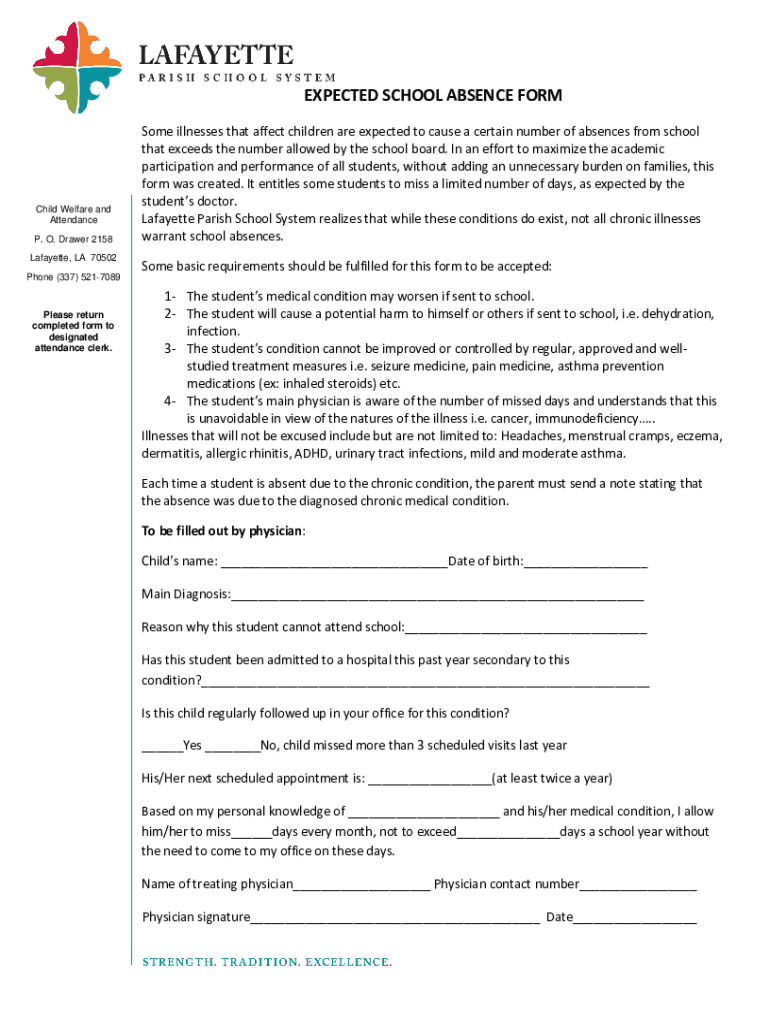







Definition and Purpose of the Expected School Absence Form
The Expected School Absence Form is designed to cater to students with chronic medical conditions that necessitate school absences beyond the limits typically set by school boards. This form serves as a formal document to outline the criteria for acceptable absences due to such conditions. It ensures that parents, schools, and healthcare providers have a mutual understanding of the student's needs and the legitimacy of the absences.
Key Considerations for Use
- Purpose: To validate absences due to ongoing medical issues.
- Verifications Required: Must include a physician's verification of the student's condition.
- Absence Recommendations: The form should detail recommended days for absence as advised by healthcare professionals.
How to Use the Expected School Absence Form
Using the Expected School Absence Form involves several critical steps from completion to submission. It allows parents and guardians to formally request excused absences for medical reasons.
- Gather Necessary Information: Collect details regarding the student's medical condition, treatment requirements, and expected absence duration.
- Complete the Form: Fill out all sections completely, ensuring accuracy in the representation of the student’s condition.
- Physician Verification: Have a licensed physician verify the medical condition and recommend absence days.
- Submit to School Administration: Once completed and verified, the form should be submitted to the school’s administration office.
Steps to Complete the Expected School Absence Form
Filling out the Expected School Absence Form correctly is essential to ensure that it is accepted without delays.
- Student Information Section: Enter details such as the student’s full name, grade, and student ID.
- Medical Condition Explanation: Provide a detailed description of the medical condition that necessitates absence.
- Physician’s Details: Include the name, contact information, and signature of the verifying physician.
- Absence Duration: Specify the anticipated number of days or range of dates the student will be absent.
- Parent/Guardian Signature: Ensure the form is signed by a parent or guardian to acknowledge the request.
Why is the Expected School Absence Form Important?
The form plays a critical role in maintaining educational continuity and ensuring that absences are understood and properly documented.
- Prevents Penalties: Proper use of the form prevents penalties related to unexcused absences.
- Fosters School-Home Communication: Enhances understanding and cooperation between the school and the family.
- Supports Educational Planning: Assists schools in preparing learning materials in advance.
Who Typically Uses the Expected School Absence Form?
Primarily used by parents or guardians, this form is intended for:
- Students with Chronic Illnesses: Those undergoing medical treatment over extended periods.
- Educational Administrators: School officials who need to manage attendance records effectively.
- Healthcare Providers: Physicians who verify the necessity of each absence.


Key Elements of the Expected School Absence Form
The document consists of several essential components designed to provide clarity and ensure comprehensive documentation.
- Student Identification: Ensures the right student is associated with the form.
- Medical Justification: Validates the medical reasoning behind the absences.
- Verification and Signatures: Confirms authenticity and accountability from all involved parties.
Legal Use of the Expected School Absence Form
The form also holds legal significance as it aligns with educational regulations on student absences.
- FERPA Compliance: Adheres to the Family Educational Rights and Privacy Act, which governs student privacy.
- State Educational Mandates: Must comply with state-specific regulations regarding permissible absences.
State-Specific Rules for the Expected School Absence Form
Different states may implement variations in terms of what's required on this form.
- Varying Absence Limits: States may differ in the maximum number of excused absences allowed.
- Documentation Requirements: Some states might require additional documentation or differing formats for medical verification.
- Submission Protocols: Differences can exist in how and where the forms must be submitted.
Additional Nuances
Individual school districts might impose additional requirements, highlighting the importance of checking local regulations before form submission. While the form provides standard coverage for chronic conditions, it may not apply to short-term illnesses unless specifically stated by school policy.




