






Definition & Meaning
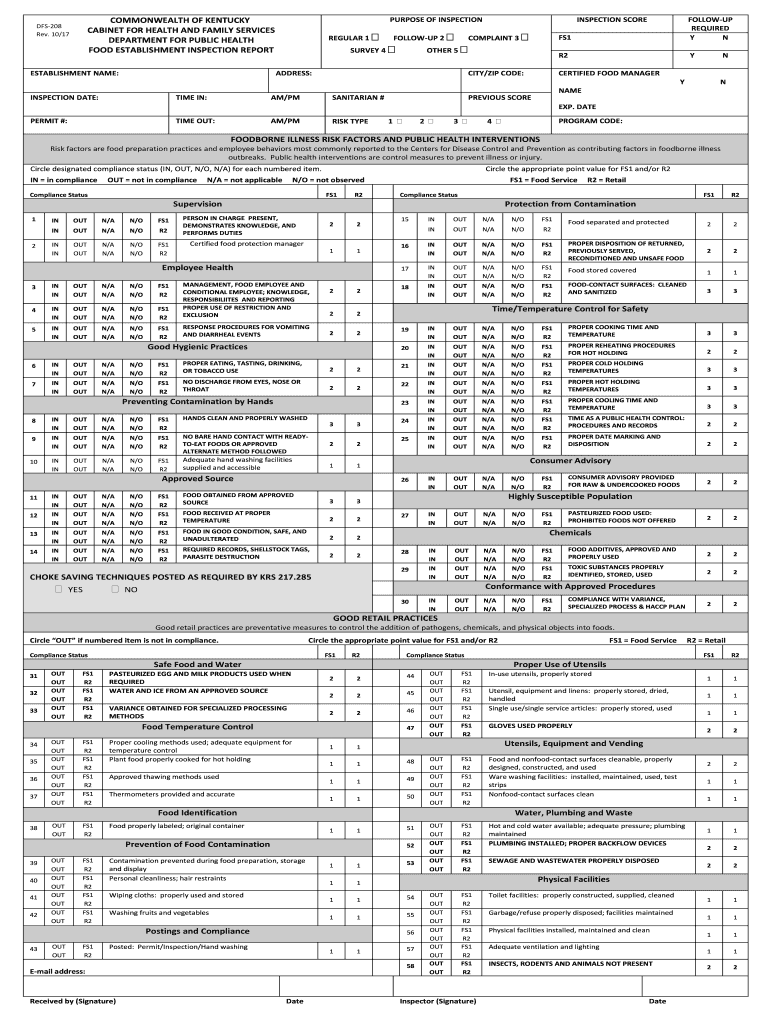
The Food Inspections conducted by the Northern Kentucky Health Department are a critical part of the public health framework. These inspections ensure that food establishments comply with health and safety standards set by the Commonwealth of Kentucky's Department for Public Health. The primary objective is to prevent foodborne illnesses by ensuring establishments maintain proper hygiene, food storage, and preparation protocols. Violations identified during inspections must be corrected within designated time frames, and establishments are often subject to follow-up inspections to verify compliance.
Purpose of Food Inspections
- Ensure safe food handling practices are followed
- Identify and correct potential health hazards
- Maintain public confidence in food safety
- Reduce foodborne illness outbreaks
How to Use the Food InspectionsNorthern Kentucky Health Department
Understanding and utilizing the report from the Northern Kentucky Health Department's food inspections can be crucial for food establishment operators. The report provides detailed feedback on compliance with health regulations, identifying both areas of compliance and those needing improvement. Accessing and properly interpreting these reports helps operators implement corrective actions promptly, which is crucial to maintaining operational status and public trust.
Steps for Operators
- Review the Report: Examine the inspection results thoroughly to understand any noted violations.
- Implement Corrections: Address all violations promptly, focusing on food safety and cleanliness standards.
- Consult with Health Inspectors: Engage the inspectors for clarifications or guidance on addressing specific issues.
- Prepare for Follow-Up Inspections: Implement lasting improvements to ensure compliance persists at future inspections.
How to Obtain the Food InspectionsNorthern Kentucky Health Department
Food establishment owners and the general public can access inspection reports through the Northern Kentucky Health Department's official website or request them directly from the department. These records are typically made publicly available to ensure transparency and accountability.
Accessing Inspection Reports
- Online: Visit the Northern Kentucky Health Department’s website to search for specific reports by business name or location.
- In-Person Requests: Contact the department directly to request copies of inspection reports.
- Notifications: Some jurisdictions offer notification services for new inspection results, allowing stakeholders to stay updated.
Key Elements of the Food InspectionsNorthern Kentucky Health Department
The inspection report encompasses several key elements designed to provide clarity and comprehensive feedback about a food establishment's compliance level.
Components of the Report
- Compliance Status: Displays the current compliance status, indicating whether the establishment meets required health standards.
- Violation Details: Itemizes violations, categorized by severity, such as critical or non-critical issues.
- Corrective Actions Required: Lists required actions that establishments need to take to address any deficiencies.
- Inspection Date and Follow-up: Specifies when the inspection occurred and if a follow-up is scheduled.
Important Terms Related to Food InspectionsNorthern Kentucky Health Department
Understanding specific terminology used in inspection reports is crucial for correctly interpreting the findings and recommendations.
Key Terms
- Critical Violations: Issues that directly impact food safety and require immediate attention.
- Non-critical Violations: Issues that are less likely to cause harm but still need correction.
- Foodborne Pathogens: Harmful microorganisms that can cause illness if food is improperly handled.
- HACCP (Hazard Analysis Critical Control Points): A systematic preventive approach to food safety that addresses physical, chemical, and biological hazards.
State-Specific Rules for the Food InspectionsNorthern Kentucky Health Department
Kentucky has specific regulations governing food safety inspections, dictated by its public health laws. These rules define inspection procedures, report availability, and corrective measures.
Kentucky Regulations
- Health Codes: Adherence to state health codes ensures uniformity in safety standards across all establishments.
- Mandated Training: Food handlers must undergo state-mandated training to ensure understanding of safety protocols.
- Regular Inspections: Establishments are subject to regular inspections to ensure ongoing compliance.
- Documentation: Proper documentation and record-keeping are essential for maintaining compliance.
Who Typically Uses the Food InspectionsNorthern Kentucky Health Department
The primary users of the food inspection reports from the Northern Kentucky Health Department include food establishment operators, regulatory authorities, and consumers.


User Groups
- Food Establishment Operators: Utilize reports to maintain and improve food safety standards.
- Regulatory Authorities: Use inspection findings to enforce public health laws and regulations.
- Consumers: Access reports to make informed choices about where to dine based on health standards.
Penalties for Non-Compliance
Non-compliance with health regulations as identified in the Northern Kentucky Health Department's inspection reports can lead to significant penalties for food establishments.
Potential Consequences
- Fines and Fees: Monetary penalties imposed for violations.
- Operational Restrictions: Specific areas or processes may be restricted until compliance is achieved.
- Closure Orders: Repeated or severe violations can result in temporary or permanent establishment closures.
- Public Notification: Non-compliance may be publicly disclosed, affecting the establishment's reputation.
Examples of Using the Food InspectionsNorthern Kentucky Health Department
Inspection reports are versatile tools for improving food safety practices.
Scenario Applications
- Training and Education: Use reports as case studies in food safety training sessions to highlight common violations and corrective actions.
- Operational Audits: Conduct internal audits using inspection criteria to prepare for upcoming inspections.
- Continuous Improvement: Establish a feedback loop using inspection results to drive continuous operational improvements.
Form Submission Methods (Online / Mail / In-Person)
Submission methods for addressing inspection report findings or applying for reinspection can vary based on the requirements of the Northern Kentucky Health Department.
Submission Options
- Online: Some corrections or follow-up documentation may be submitted through the department's official online portal.
- Mail: Physical documentation supporting compliance actions may be sent via traditional mail.
- In-Person: Direct submissions at the department’s office, particularly for urgent or complex matters.
Creating Effective Cheat Sheets
Using the Food InspectionsNorth Kentucky Health Department reports, one can create effective cheat sheets for quick reference.
Cheat Sheet Essentials
- Common Violations: List frequent issues and effective solutions.
- Critical Safety Tips: Highlight best practices for food safety.
- Regulatory Contact Points: Add contact information for assistance with compliance questions.
IRS Guidelines
While not directly related to food inspections, understanding any IRS guidelines applicable to the hospitality industry, such as proper accounting for food-related expenses and employee training costs, can enhance financial compliance.
Relevant IRS Considerations
- Recording Expenses: Keep thorough records of training and compliance-related expenses for tax purposes.
- Deductible Items: Identify potentially deductible safety compliance costs, such as training programs.
Business Types That Benefit Most from Food InspectionsNorthern Kentucky Health Department
Various business types can derive significant advantages from engaging with the Northern Kentucky Health Department's inspection process, including restaurants, food trucks, and catering services.
Beneficial Enterprises
- Restaurants: Regular inspections help maintain health standards, reducing the risk of non-compliance.
- Catering Services: Ensure that all practices meet established safety standards during events.
- Food Trucks: Mobile establishments must adhere to the same safety regulations as stationary ones to ensure consistency and safety.
Legal Use of the Food InspectionsNorthern Kentucky Health Department
Utilizing the reports legally is important for both maintaining operational compliance and defending against any potential legal claims.
Legal Usage Tips
- Defensive Documentation: Use reports to demonstrate compliance and proactive measures taken to correct any violations.
- Compliance Benchmarking: Leverage reports for comparing operational standards against industry benchmarks.