






Definition and Meaning of the TAT Cuffs Competency Checklist
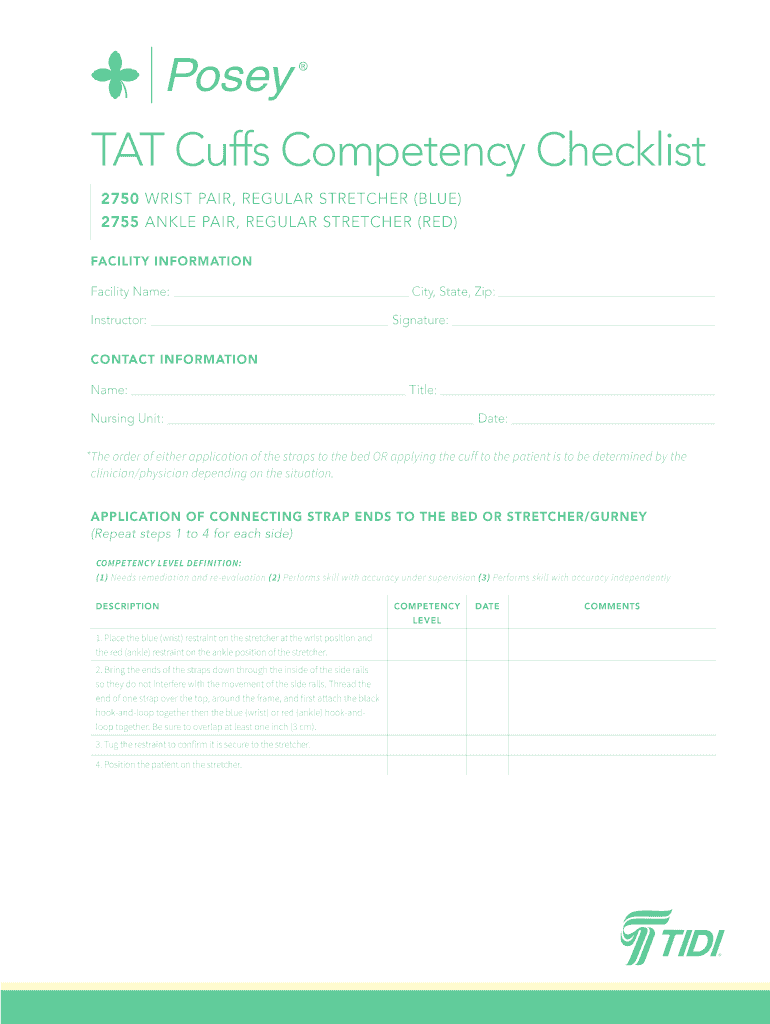
The TAT Cuffs Competency Checklist is a structured form designed to assess and ensure proficiency in the application of TAT cuffs, which are commonly used as restraints on patients. This checklist serves as a comprehensive guide for healthcare professionals to secure wrist and ankle restraints properly, ensuring the safety and effectiveness of their use. It includes various elements like facility information, contact details, competency levels, and detailed instructions for the correct application and use of restraints.
Steps to Complete the TAT Cuffs Competency Checklist
-
Review Facility Information: Begin by filling out the facility details section, including the name, address, and contact information.
-
Verify Competency Levels: Assess the required competency levels for each part of the checklist to ensure all criteria are understood before proceeding.
-
Secure Wrist Restraints: Follow the detailed instructions provided to apply wrist restraints safely. Pay attention to the recommended techniques to minimize patient discomfort and ensure effectiveness.
-
Apply Ankle Restraints: Similar to the wrist restraints, ankle restraints must be applied meticulously. The checklist offers step-by-step guidance to secure these correctly.
-
Complete Review Sections: Conclude the checklist by reviewing each completed section, ensuring all steps have been followed accurately and all necessary assessments recorded.
Key Elements of the TAT Cuffs Competency Checklist
-
Facility Information Section: Captures essential data about the healthcare institution, vital for record-keeping and accountability.
-
Contact Details: Ensures that responsible personnel can be reached for any queries or clarifications related to the checklist.
-
Competency Levels: Provides a framework for evaluating the proficiency required for each task, ensuring that only qualified individuals apply the restraints.
-
Detailed Instructions: Offers explicit steps for the secure application of wrist and ankle restraints, prioritizing patient safety and compliance with legal standards.
Who Typically Uses the TAT Cuffs Competency Checklist
The typical users of the TAT Cuffs Competency Checklist are healthcare professionals, such as nurses and therapists, who are responsible for the physical management and care of patients. These professionals use the checklist as a guideline to ensure they are applying the restraints appropriately and in compliance with healthcare standards. Additionally, healthcare administrators may use the checklist to train and certify employees on restraint procedures.


Legal Use of the TAT Cuffs Competency Checklist
The checklist ensures that the application of TAT cuffs complies with legal and ethical standards within healthcare settings. It is structured to meet state and federal regulations regarding the use of physical restraints, protecting both patients and healthcare providers from potential legal issues that may arise from misuse or improper application of restraints.
Important Terms Related to the TAT Cuffs Competency Checklist
-
Restraint: Any device used to limit a patient's movement for medical or safety reasons.
-
Competency: The ability of a healthcare provider to apply TAT cuffs effectively and safely as delineated by the checklist standards.
-
Facility: The healthcare institution where the TAT cuffs are used and the competency checklist is implemented.
Software Compatibility and Integration
While the TAT Cuffs Competency Checklist may exist primarily as a physical document, integration with digital platforms like DocHub can streamline its usage. DocHub allows for the digitization and annotation of such checklists, enabling easy updates, electronic storage, and secure sharing among healthcare teams. This ensures all relevant data is captured and managed efficiently across facilities.
Examples of Using the TAT Cuffs Competency Checklist
In a busy emergency department, a nurse uses the TAT Cuffs Competency Checklist to apply wrist restraints to a patient exhibiting violent behavior. By following the checklist's detailed instructions, the nurse ensures that the restraints are applied safely, respecting the patient's dignity while maintaining staff and patient safety.
In another scenario, during a training session, healthcare trainees are assessed against the checklist to certify their ability to apply TAT cuffs under various simulated conditions. This practical application ensures reliable proficiency across the healthcare team.