Definition & Meaning
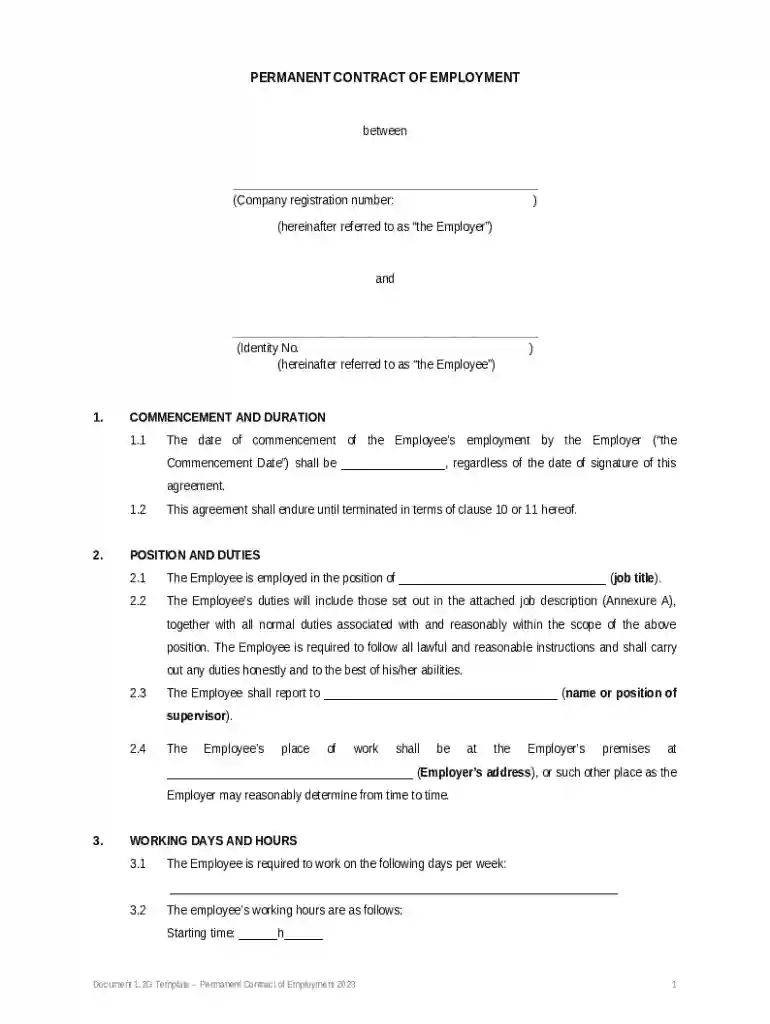
A Template Permanent Contract of Employment is a standardized document used by employers to establish the terms and conditions of employment with an employee. This legal document clearly outlines the roles and responsibilities of both parties, ensuring mutual understanding and compliance with workplace norms. It includes critical information such as the duration of employment, salary, benefits, and the tasks expected of the employee. This tool is essential in setting expectations and creating a formalized agreement reflecting both legal requirements and organizational policies.
Key Components
- Employment Details: Lists the name of the employee, job title, and department.
- Contract Duration: Specifies whether the employment is at-will or has a set term.
- Compensation Package: Details salary, bonuses, and other financial incentives.
- Employment Duties: Describes the specific tasks and responsibilities associated with the position.
- Performance Standards: Outlines expectations and metrics for evaluating employee performance.
- Leave Entitlements: Includes information on vacation, sick leave, and any other applicable leave.
- Termination Conditions: Details the conditions and process for contract termination.
Key Elements of the Template Permanent Contract of Employment
Understanding the essential components of the Template Permanent Contract of Employment ensures clarity for both the employer and the employee. Each section should be carefully crafted to prevent misunderstandings and legal discrepancies.
Major Sections
- Introduction: Establishes the parties involved, the agreement date, and an overview of the contractual relationship.
- Probationary Period: Defines the initial period of employment during which performance is evaluated before confirming permanent status.
- Employee Benefits: Details additional perks like health insurance, retirement plans, and employee assistance programs.
- Confidentiality Clauses: Protects sensitive company information from being disclosed by the employee.
- Non-Compete Agreements: Prevents employees from engaging in activities that would compete with the employer.
- Dispute Resolution: Offers methodologies for handling disputes, such as arbitration or mediation processes.
Steps to Complete the Template Permanent Contract of Employment
Completing a Permanent Contract of Employment involves multiple steps, ensuring all necessary information is accurately captured to formalize the employment agreement.
Detailed Process
- Gather Required Information: Compile details about the employee, position, salary, and benefits.
- Select a Template: Choose a template that fits the specific role and organizational policies.
- Customize the Template: Update sections to reflect the terms negotiated with the employee, adjusting for specifics like work hours and job responsibilities.
- Review Legal Requirements: Ensure that contract terms comply with federal and state employment laws.
- Internal Review: Have HR or a legal advisor review the contract to verify its accuracy and completeness.
- Presentation and Discussion: Discuss the contract with the employee, addressing any questions or amendments before finalizing the document.
- Signing: Both parties must sign the document to make it legally binding.
- Distribution and Filing: Provide copies to the employee and maintain records for organizational purposes.
Important Terms Related to Template Permanent Contract of Employment
Familiarity with the specific terminology used in the Template Permanent Contract of Employment helps both employers and employees understand their rights and responsibilities.
Glossary
- At-Will Employment: Employment can be terminated by either the employer or employee without cause or notice.
- Covenant: A formal agreement or promise contained within a contract.
- Gross Salary: Total salary before deductions, including taxes and other withholdings.
- Indemnity: Protection against loss or liability under specific conditions.
- Non-Disclosure Agreement (NDA): Contractual obligation to keep shared information private.
- Remuneration: Total compensation for performing job duties, including salary, bonuses, and other financial rewards.
Legal Use of the Template Permanent Contract of Employment
Employers must ensure the Template Permanent Contract of Employment adheres to applicable laws and regulations to prevent legal challenges and uphold ethical workplace standards.
Compliance Considerations
- Employment Law: Align terms with federal and state labor laws, including those related to wages and working hours.
- Equal Opportunity Employment: Ensure that no discriminatory clauses are included, upholding fair hiring practices.
- Wage and Hour Laws: Adhere to regulations on minimum wage, overtime pay, and record-keeping.
- Workplace Safety Standards: Incorporate language around compliance with Occupational Safety and Health Administration (OSHA) standards.
- Termination Procedures: Outline lawful grounds and processes for terminating employment to avoid wrongful termination claims.
Why Should You Use the Template Permanent Contract of Employment
The use of a Template Permanent Contract of Employment delivers significant benefits to both employers and employees, ensuring clarity and protection for both parties.
Advantages
- Clarity and Understanding: Clearly defined terms avoid ambiguity in employment conditions.
- Legal Protection: A contractual framework provides a legal basis for resolving disputes.
- Professionalism: Standardized contracts present a professional image to employees and stakeholders.
- Efficient Onboarding: Streamlined contract initiation supports faster and smoother employee integration.
- Fostering Trust: When expectations are clearly worded, both parties are more likely to trust and cooperate.
- Regulatory Compliance: Helps ensure organizational practices meet legal standards.
State-Specific Rules for the Template Permanent Contract of Employment
Employment contracts must account for variations in state laws to ensure their enforceability and compliance within different jurisdictions across the United States.
Regional Variations
- California: Emphasizes stringent wage and hour regulations, including requirements for meal and rest breaks.
- New York: Requires specific notifications on wage rates and paydays.
- Texas: Known for its at-will employment dominance, but mandates adherence to federal wage laws.
- Illinois: Imposes specific requirements on non-compete clauses and their enforceability.
- Florida: Minimum wage laws may differ slightly due to state-specific adjustments.
Who Typically Uses the Template Permanent Contract of Employment
Understanding who benefits from employing the Template Permanent Contract of Employment helps determine its relevance across various industries and roles.

Typical Users
- Human Resources Departments: HR professionals use the template to standardize onboarding and maintain legal compliance.
- Small to Medium-Sized Enterprises (SMEs): Many SMEs rely on such templates to manage their limited legal resources efficiently.
- Corporate Entities: Larger corporations use structured contracts to ensure consistency across their workforce.
- Legal Advisors: Lawyers use contracts as a baseline for creating customized agreements.
- Government Agencies: Public sector entities use comprehensive templates to formalize consistent employment terms.
- Non-Profit Organizations: Utilize templates to ensure clarity and legal security in employment relations.