






Definition and Purpose of the Emergency Lighting Testing Form
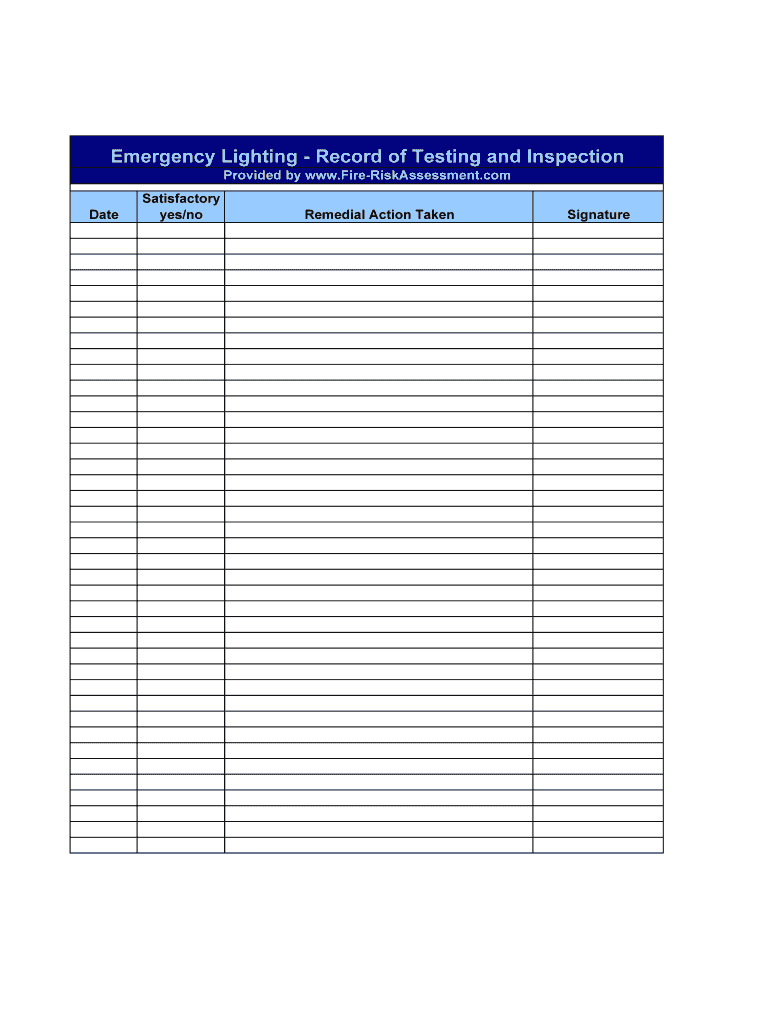
The Emergency Lighting - Template Form To Record Testing and Inspection serves as a comprehensive record for evaluating the efficiency and compliance of emergency lighting systems. Emergency lighting systems are critical safety installations designed to provide illumination during power outages, facilitating safe evacuation and emergency procedures. The form documents key details, such as inspection dates, results of tests, and any necessary maintenance actions. This ensures that systems remain functional and meet safety standards.
Detailed Elements Captured in the Form
- Inspection Dates: To track regular maintenance schedules.
- Testing Results: Records whether the system functions as intended.
- Remedial Actions: Details any repairs or adjustments required.
- Verification Signatures: Confirms that testing was conducted by a qualified professional.
Steps to Complete the Emergency Lighting Form
Proper completion of the form requires systematic follow-through of each section, ensuring accurate data collection and compliance with safety regulations.
- Identify the Premises: Start by filling in the location details where the emergency lighting is installed.
- Schedule and Execute Testing: Follow the manufacturer's guidelines and relevant safety standards to perform the tests.
- Document Test Outcomes: Clearly note whether each component passed or failed the testing process.
- Outline Remedial Actions: If issues are discovered, specify the corrective measures taken or needed.
- Secure Signatures: Have the responsible personnel sign the form to validate the recorded information.
Important Considerations
- Regular Interval Testing: Ensure that inspections occur at consistent intervals, as required by local safety codes.
- Professional Verification: A certified individual should oversee and sign off on the testing process to ensure accuracy.
Key Elements of the Emergency Lighting Form
Understanding the core components of the form is essential for accurate completion and compliance.
- System Components: Includes lighting units, power sources, and control panels that require testing.
- Compliance Checks: Ensures that the lighting system adheres to specific building codes and safety standards.
- Historical Data: Maintains a log of previous tests and findings to identify patterns or recurring issues.
Additional Features
- Field for Comments: Allows notes on observations or details outside of standard reporting.
- Date and Time Stamps: Provide precise records for review and audit purposes.
Who Typically Uses the Form
The form is utilized by a range of professionals tasked with ensuring building safety and compliance.


Primary Users
- Facility Managers: Oversee regular maintenance and safety checks of building systems.
- Safety Inspectors: Conduct official inspections and verify adherence to safety standards.
- Building Owners: Ensure their property meets legal safety requirements.
Other Potential Users
- Contractors: When hired to conduct specific maintenance tasks or installations.
- Fire Marshals: During evaluations of fire safety compliance in public buildings.
Legal Use of the Emergency Lighting Form
Adhering to legal requirements is crucial when handling safety documentation to avoid penalties and ensure public safety.
- Compliance with Building Codes: The form helps demonstrate that emergency lighting systems meet relevant codes and standards.
- Evidence in Legal Matters: Can be utilized as proof of due diligence if safety compliance is questioned.
- Regulatory Requirements: Helps fulfill obligations under Occupational Safety and Health Administration (OSHA) standards and local regulations.
Benefits of Regular Testing and Documentation
Engaging in consistent testing and thorough documentation provides multiple benefits that go beyond mere compliance.
Key Advantages
- Prevents Emergencies: Ensures systems work properly when needed, reducing risk during power outages or fires.
- Financial Savings: Identifies potential issues early, reducing costly emergency repairs or liabilities.
- Insurance Compliance: Maintains eligibility for insurance coverage by demonstrating proactive safety management.
Long-term Impact
- Enhanced Safety Culture: Fosters a workplace environment where safety is prioritized and systematically monitored.
- Reputation Management: Assures occupants and authorities of the seriousness with which safety compliance is treated.
State-Specific Rules and Variations
While the form is standard in function, state-specific regulations may dictate certain requirements or procedures.
- Regulatory Differences: Some states have unique codes that might alter testing frequency or documentation requirements.
- Training Requirements: Qualifications for personnel conducting tests may vary depending on state legislation.
Tips for Navigating Variations
- Stay Informed: Regularly consult state regulations or a compliance professional to remain updated on laws.
- Customization: Adapt the form to incorporate any additional fields or requirements mandated by state laws.