






Definition and Meaning of the Affidavit of Domestic Partnership
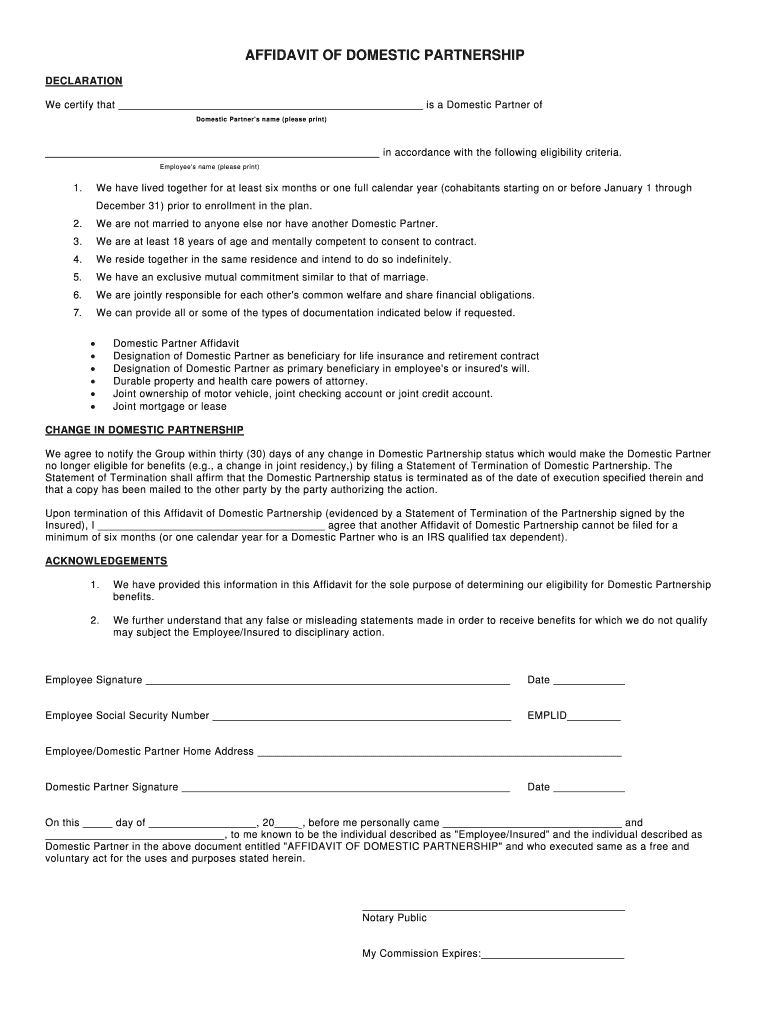
The Affidavit of Domestic Partnership is a legal document that certifies and formalizes the relationship between two individuals who qualify based on specific criteria. Typically, these criteria include cohabitation, mutual commitment, and shared financial responsibilities. This affidavit serves as proof of the domestic partnership, which might be used for various legal purposes, such as obtaining benefits or authorizing medical decisions.
Key Elements of the Affidavit
-
Eligibility Requirements: Partners must meet specific eligibility requirements, which often include living together for a designated period, sharing financial responsibilities, and being mutually committed to the relationship.
-
Signatures and Notarization: The document requires signatures from both partners and may need to be notarized to confirm its authenticity.
-
Responsibilities: The affidavit outlines the responsibilities both partners agree to uphold, such as financial obligations and notification of changes in partnership status.
-
Consequences for False Information: Providing false information in the affidavit can lead to legal consequences, including penalties or nullification of the document.
Using the Affidavit of Domestic Partnership
The Affidavit of Domestic Partnership can be used in various situations where legal recognition of the partnership is necessary. These scenarios may include the following:
- Accessing health or insurance benefits that recognize domestic partnerships
- Authorizing medical decisions if one partner is incapacitated
- Lease agreements or other legal contracts requiring a partnership affidavit
Practical Scenarios
-
Health Benefits: Many employers offer health benefits to domestic partners. By submitting the affidavit, partners can access these benefits without formal marriage.
-
Housing Arrangements: If required, the affidavit can serve as proof of joint housing arrangements in rental agreements or property purchases.
How to Obtain the Affidavit of Domestic Partnership
To obtain an Affidavit of Domestic Partnership, you should follow specific procedures which can vary slightly based on your location.
Steps to Obtain
-
Find the Form: Access the affidavit form through local government offices or legal aid websites that offer downloadable templates.
-
Complete Both Partners’ Information: Fill out essential details such as names, addresses, dates of birth, and the duration of cohabitation.
-
Sign Before a Notary: Have the document signed in the presence of a notary public to ensure its validity.
Required Documents
- Identification: Proof of identity for both partners, such as a driver's license or passport.
- Proof of Cohabitation: Documents like utility bills or lease agreements proving a shared address.
Completing the Affidavit of Domestic Partnership
Completing the Affidavit of Domestic Partnership involves a few critical steps to ensure its accuracy and legal acceptance.
Step-by-Step Guide
-
Fill Personal Information: Enter each partner’s full name, address, and contact details clearly.
-
Confirm Eligibility Criteria: Check off the criteria you meet, such as duration of cohabitation and shared responsibilities.
-
Signatures: Both partners need to sign the affidavit in front of a notary public.
-
Notarization: Have the affidavit notarized to confirm its authenticity.
Important Considerations
- Ensure all information is accurate and truthful to avoid legal repercussions.
- Keep a copy of the notarized affidavit for personal records.
Who Typically Uses the Affidavit of Domestic Partnership?
The Affidavit of Domestic Partnership is utilized by a wide range of people seeking legal recognition of their partnership outside of marriage. It is particularly beneficial for:
-
Same-Sex Couples: Before the legalization of same-sex marriage, this affidavit provided necessary legal recognition and benefits.
-
Elderly Couples: Older adults who prefer not to remarry but still wish to acknowledge their partnership for legal or financial purposes.
-
Couples in Committed Relationships: Unmarried couples, regardless of gender, who live together and want to establish legal recognition.


Legal Use of the Affidavit of Domestic Partnership
The Affidavit of Domestic Partnership can play a crucial legal role in various aspects, particularly in states or jurisdictions where domestic partnerships are recognized.
Legal Recognition
-
Benefit Claims: Legal acknowledgment can allow partners to file for joint benefits such as healthcare or family leave.
-
Decision Making: The affidavit often serves as legally acceptable proof for making medical or legal decisions on behalf of a partner.
Considerations for Legal Validity
- Each partner must comply with the stated requirements and provide truthful representations.
- The document’s notarization is essential for its acceptance in legal proceedings or as evidence in claims and benefits applications.
Key Elements of the Affidavit
Detailed Breakdown of Components
-
Identification of Partners: Both partners must provide personal information, including names, date of birth, and social security numbers if required.
-
Declaration of Commitment: A statement affirming mutual commitment and understanding of the responsibilities involved.
-
Financial Obligations: Clarification of shared financial responsibilities, which might include bills, rent, or mortgage.
-
Notification Duty: An agreement to notify relevant parties or authorities if the partnership status changes, such as dissolution or separation.
Examples of Using the Affidavit
Real-life applications demonstrate the utility of the Affidavit of Domestic Partnership. Some situations include:
- A couple applying for joint health insurance coverage where the provider requires formal proof of the partnership.
- Partners in a long-term relationship submitting the affidavit for housing agreements to secure joint tenancy rights.
Case Study
Two partners in a committed relationship for several years used the affidavit to manage their shared financial assets and ensure that both could access necessary health benefits through each other's employment.
By following these guidelines and understanding the appropriate applications of the Affidavit of Domestic Partnership, partners can effectively navigate the legal aspects of domestic partnerships in the United States.