




01. Edit your form online
Type text, add images, blackout confidential details, add comments, highlights and more.

Type text, add images, blackout confidential details, add comments, highlights and more.

Draw your signature, type it, upload its image, or use your mobile device as a signature pad.

Send it via email, link, or fax. You can also download it, export it or print it out.
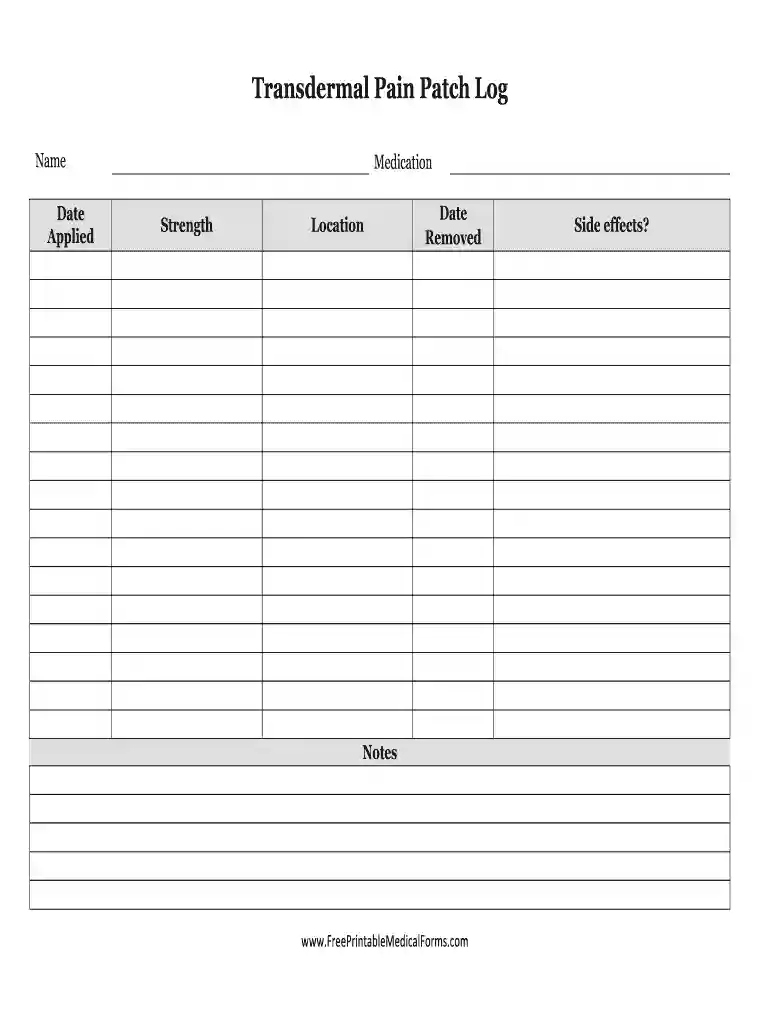
The Transdermal Pain Patch Log - Summit Home Health Care of is a specialized document used to monitor the application and removal of transdermal pain patches for patients. This log serves as a comprehensive record, capturing important data about the use of the patches, including the patient's name, the dosage of medication, and specific dates and locations on the body where patches are applied. The log also includes detailed notes on any side effects experienced by the patient and usage observations. This document not only helps health care providers ensure proper use of pain management strategies but also aids in maintaining patient safety.
Using the Transdermal Pain Patch Log involves meticulous tracking. The process includes initial documentation of the patient's information and prescribed dosage details. Each application should be logged, noting the date and time of application, the exact location on the body, and any immediate reactions. Removal of the patch should also be documented, including any changes in the patient's condition and observations regarding the patch's effectiveness. Consistent use of the log helps in maintaining accurate records that can inform adjustments in treatment if needed.
Patient Information: Start by entering the patient’s full name and any relevant identification or contact information.
Medication Details: Record the strength and type of medication being administered through the patch.
Application Date and Time: Note the exact date and time when the patch is applied.
Location on Body: Indicate the specific location where the patch was placed, ensuring rotation to mitigate skin irritation.
Observation Notes: Include any immediate or delayed reactions or side effects observed.
Removal Date and Time: Record when the patch is removed, noting any skin conditions or changes.
Effectiveness Review: Comment on the patient’s pain levels before and after the application period.
This log is primarily used by healthcare providers such as nurses, care managers, and pharmacists working in home health care settings. It assists them in ensuring compliance with prescribed treatment plans and provides a record for both the caregivers and the patient’s primary care provider. Patients and family members may also be trained to fill out the log under professional guidance to promote active participation in care.


Utilizing the Transdermal Pain Patch Log is essential for maintaining an organized and accurate record of pain management therapies. It helps monitor the effectiveness of a treatment, identifies patterns of side effects or issues with adherence, and supports communication among different health care providers involved in the patient’s treatment. This ensures high-quality care delivery and patient safety.
One example includes monitoring a patient with chronic pain who switches from oral to transdermal medication. Professionals track application sites to prevent skin irritation and ensure the dosage is effective. Another example might involve an elderly patient with cognitive impairment, where the log helps caregivers consistently manage pain and observe behavioral changes post-application to adjust the treatment plan effectively.
The use of the Transdermal Pain Patch Log assists in complying with legal requirements for administering controlled medications. It ensures legitimacy and transparency in drug usage, supports case documentation in the event of audits or investigations, and helps in upholding patient rights and safety by providing a thorough account of treatment history and adjustments.
DocHub enables the digital management of the Transdermal Pain Patch Log through its editing and signing features. Health care providers can store logs securely online, share them with authorized parties, and update them in real-time, ensuring data integrity and easy access. The platform’s security features also ensure that sensitive patient information is protected.
At DocHub, your data security is our priority. We follow HIPAA, SOC2, GDPR, and other standards, so you can work on your documents with confidence.

Dec 13, 2017 The objective of this curriculum is to provide an understanding of opioid drugs, and guidelines for their safe prescribing for individuals in
This course will train law enforcement officers to observe, identify, and articulate the signs of impairment related to drugs, alcohol, or a


