






Definition and Purpose of the Food Chaining Intake Form
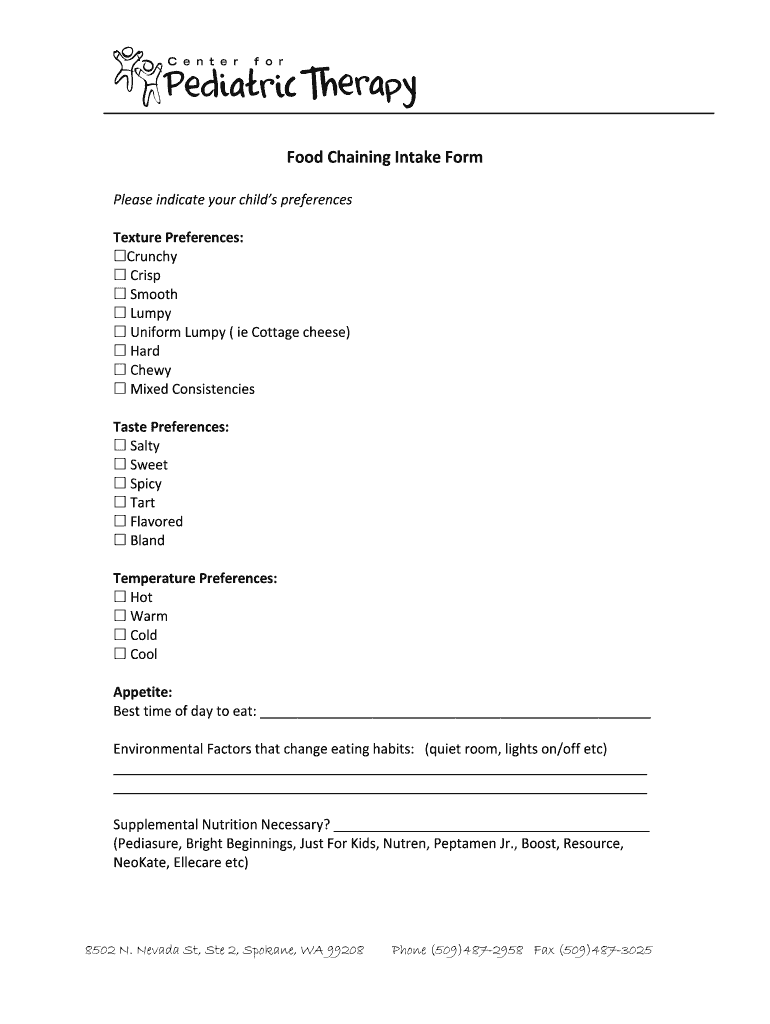
The Food Chaining Intake Form serves as a specialized document aimed at understanding a child's eating habits and preferences. This form collects comprehensive details on a child's preferred and disliked foods, focusing on aspects such as texture, taste, temperature, and appetite. The information gathered helps in identifying patterns and anomalies in a child's diet, which can be critical in developing interventions for feeding difficulties. Additionally, the form provides space for parents to report any external factors impacting their child's eating behavior, such as environmental conditions and familial influences.
How to Use the Food Chaining Intake Form
To effectively use the Food Chaining Intake Form, you must first ensure that you have access to all necessary information regarding the child's eating patterns. Here’s a step-by-step guide:
-
Data Collection: Gather detailed information concerning the child’s daily food intake, considering both preferred and non-preferred foods.
-
Environment Assessment: Note the environmental aspects, such as seating arrangements and meal times, that might influence the child’s eating habits.
-
Documentation: Accurately fill in all sections of the form, ensuring completeness and consistency in reporting. Highlight specific conditions such as allergies or chronic illnesses.
-
Review and Analyze: Once the form is complete, review the data for insights or patterns that can inform tailored food intervention strategies.
Key Elements of the Food Chaining Intake Form
The form is meticulously structured to capture a wide range of variables impacting a child's diet. Key elements include:
-
Food Preferences and Aversion: Sections to detail liked and disliked food items based on texture, flavor, and temperature.
-
Nutritional Insights: Areas to note down supplementary nutrition or dietary needs, especially for children with chronic health conditions.
-
Behavioral Observations: Opportunities to describe behavioral patterns during meals, such as distractions or food refusals.
-
Medical Background: Inclusion of medications that might impact appetite or digestion, contributing to the child's overall nutritional assessment.
Steps to Complete the Food Chaining Intake Form
Filling out the form requires precision and a thorough understanding of the child's dietary behaviors:
-
Initial Information: Start with the child’s personal details, such as name and age.
-
Dietary Preferences: Proceed to document specific likes and dislikes in their diet.
-
Parent Guidance: Parents should indicate any behavioral strategies or interventions tried previously.
-
Environmental Factors: Record aspects such as the child’s typical eating environment and any observed correlations with their eating behavior.
-
Submit for Evaluation: After completing the form, submit it to a nutritionist or healthcare professional for further evaluation and guidance.
Who Typically Uses the Food Chaining Intake Form
This form is primarily utilized by:
-
Pediatric Nutritionists: To devise personalized nutrition plans tailored to the child's unique eating behaviors and requirements.
-
Parents and Caregivers: To provide detailed insights into a child's diet, facilitating better communication with healthcare providers.
-
Feeding Therapy Specialists: To track and assess the progress of children undergoing therapy for feeding issues.


Importance of the Food Chaining Intake Form
The Food Chaining Intake Form is critical for diagnosing and intervening in feeding challenges faced by children. By meticulously detailing a child's food preferences and environmental influencers, this form enables healthcare professionals to create personalized strategies that promote healthy eating habits. The data compiled is invaluable in instigating early interventions that can alleviate or prevent potential nutrition-related issues.
How to Obtain the Food Chaining Intake Form
You can acquire the Food Chaining Intake Form through:
-
Healthcare Providers: Most pediatricians or nutritionists offer this document during consultations.
-
Online Platforms: Various child nutrition and health-related websites may provide access to downloadable versions of the form.
-
Educational Institutions: Some schools and childcare centers use this form as part of their nutritional assessments.
Legal Use and Compliance for the Food Chaining Intake Form
The Food Chaining Intake Form should be used in accordance with privacy laws and healthcare regulations. It is crucial to:
-
Maintain Confidentiality: Ensure that all data collected is protected and only shared with authorized personnel.
-
Obtain Consent: Acquire explicit written consent from parents or guardians before documenting any personal or health information.
Examples of Using the Food Chaining Intake Form
For practical application, consider scenarios such as:
-
Overcoming Picky Eating: Parents detail specific foods avoided by the child, allowing nutritionists to gradually introduce new foods in a strategic manner.
-
Monitoring Dietary Allergies: Regular updates on the form help track potential allergens and their effects on the child's health.
-
Dietary Interventions in Chronic Conditions: The form assists in understanding and managing the dietary needs of children with conditions like diabetes or lactose intolerance.