







Definition & Meaning
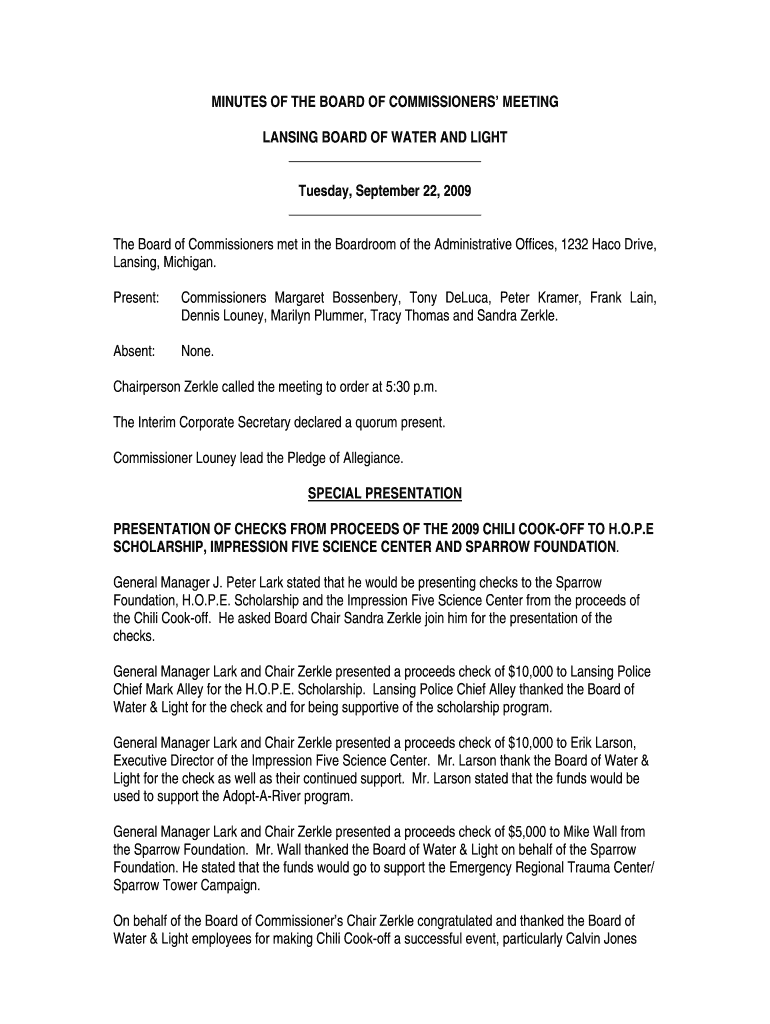
The "Minutes of the Board of Commissioners - Lansing Board" are official records that document the proceedings and decisions made during meetings of the Board of Commissioners for the Lansing Board of Water and Light. These minutes serve as a formal record, capturing the discussions, motions passed, resolutions, and any other significant actions taken during the meeting. They ensure transparency and provide a historical account of the board's activities and decisions, which are crucial for both public oversight and internal reference. Typically, they include details such as attendees, agenda items, discussions, votes, and any resolutions adopted.
Key Elements of the Minutes
The minutes of the board meetings generally consist of several essential components that together form a comprehensive record. These elements often include:
- Date and Time: The specific date and time when the meeting took place.
- Location: The venue where the meeting was held, which could range from a physical conference room to a virtual platform.
- Attendees: A list of the commissioners and any other notable participants or stakeholders who were present.
- Agenda Items: A detailed rundown of topics discussed, often following a predetermined agenda.
- Resolutions and Decisions: Documentation of any motions proposed, decisions made, or resolutions passed by the board members.
- Public Comments: Summaries of input or questions raised by the public, if permitted during the meeting.
- Closing Remarks: Final comments or discussions before adjournment.
Steps to Complete the Minutes
Recording the minutes during a meeting requires meticulous attention to detail and an understanding of the agenda. Here is a step-by-step guide to completing the minutes effectively:
- Preparation: Familiarize yourself with the meeting agenda, prior minutes, and any documents pertinent to the meeting.
- Recording Attendance: Note the names and roles of all attendees, logging absentees as needed.
- Structuring: Follow the agenda as the meeting progresses, noting each item discussed.
- Detailing Discussions: Capture key points, resolutions, and outcomes of discussions on each agenda topic.
- Documenting Resolutions: Clearly record any motions or resolutions made, including who proposed them and the results of any votes.
- Reviewing Public Input: If applicable, summarize the public comments section, responsibly reflecting the input provided.
- Finalizing: After the meeting, review and edit the minutes for clarity, accuracy, and completeness before distribution.
Legal Use of the Minutes
The minutes of board meetings hold significant legal value. They serve as an official record that can be referenced in legal or compliance matters to demonstrate the board's adherence to procedures and regulations. The minutes can be crucial in auditing processes, settling disputes, verifying compliance with laws, or resolving any allegations of misconduct. It is therefore essential to maintain an accurate and unbiased account of the meeting proceedings to ensure they fulfill their legal purpose effectively.
Who Typically Uses These Minutes
The primary users of these minutes include:
- Board Members: Use these records to review past decisions and prepare for future meetings.
- Regulatory Authorities: May review minutes to ensure compliance with regulations and governance standards.
- Public and Stakeholders: Interested parties may access the minutes to understand the board's decisions and actions, promoting transparency.
- Legal Counsel: May use minutes as evidence in legal matters concerning the board.
- Auditors: Reference minutes during audits to verify the integrity and completeness of the board’s actions and financial decisions.

State-Specific Rules
In the United States, the preparation and maintenance of board minutes might be subject to various state-specific rules and governance standards. Although general principles apply, states may have particular requirements regarding the format, accessibility, and retention of these documents. Some states may mandate that minutes be made publicly available, while others may have specific record-keeping requirements. Board members must be familiar with their specific state guidelines to ensure compliance and uphold good governance practices.
How to Obtain the Minutes
The "Minutes of the Board of Commissioners - Lansing Board" can typically be obtained through several methods:
- Official Website: Many boards publish their minutes on official websites for public access.
- Public Records Request: In cases where the minutes are not readily available online, individuals may submit a formal request via the Freedom of Information Act (FOIA) to access the records.
- Contacting the Board Office: Direct inquiries to the board's administrative office may yield access to the minutes.
- Public Libraries or Archives: Some records may be archived in public libraries or historical archives, accessible to researchers and the public.
Important Terms Related to the Minutes
Understanding the language used in the minutes is essential for accurate interpretation. Key terms often include:
- Quorum: The minimum number of members required to be present for the meeting to be legally valid.
- Motion: A formal proposal by a board member that invites discussion or a vote.
- Resolution: A formal decision or statement adopted by the board following a vote.
- Adjournment: The formal conclusion of the meeting.
- Minutes-Taker: The person responsible for recording the proceedings, often the board secretary or another designated individual.
This structured and detail-oriented guide provides thorough insights into the "Minutes of the Board of Commissioners - Lansing Board," ensuring comprehension and legal compliance.




