






Definition and Meaning in a Stud Dog Contract
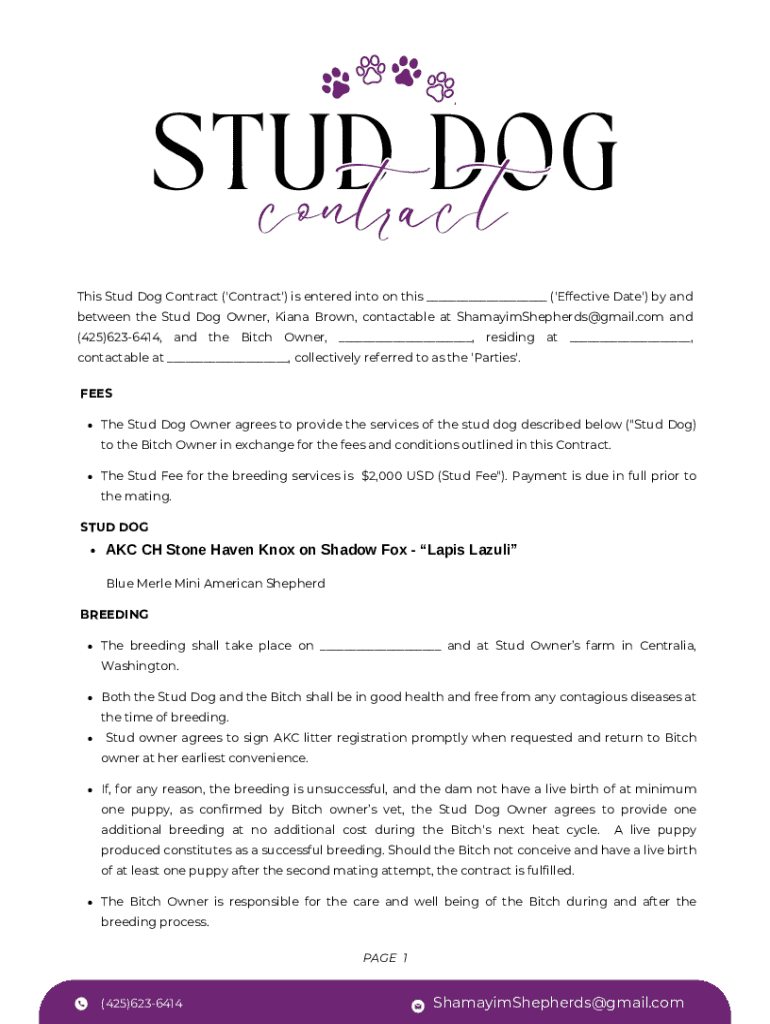
A Stud Dog Contract is a formal agreement between two parties: the Stud Dog Owner and the Bitch Owner. This document outlines the terms and responsibilities associated with breeding services involving a male dog, referred to as the "stud," and a female dog, known as the "bitch." The contract is essential for ensuring that both parties agree on breeding conditions, fees, health guarantees, and other pertinent terms to avoid misunderstandings and disputes.
Understanding the purpose and implications of a Stud Dog Contract is crucial for breeders. It protects the interests of both parties by clearly outlining what is expected, which can include the timeframe for breeding, financial arrangements, and any contingency plans should the initial breeding attempt be unsuccessful.
Key Elements of the Stud Dog Contract
Several critical components are typically included in a Stud Dog Contract to ensure clarity and mutual understanding:
-
Fees: This section specifies the cost for using the stud dog, along with payment terms, whether it be a one-time fee or installments. In the given scenario, a typical fee is set at $2,000.
-
Breeding Conditions: Detailed breeding conditions are outlined, specifying the location, timing, and number of attempts allowed for successful mating. The contract may also mention what happens in the event of failure in the first attempts, such as offering additional breeding at no extra cost.
-
Health Guarantees: Health testing requirements and guarantees for both the stud and the bitch can be included to ensure that the dogs are fit for breeding. This section might cover genetic testing, vaccinations, and overall health assessments.
-
Responsibilities: Each party's responsibilities regarding care, transportation, and confirmation of mating should be specified. This section can provide clarity on what each owner must contribute or manage to ensure a successful process.
Steps to Complete the Stud Dog Contract
Completing a Stud Dog Contract involves several steps to ensure all essential elements and responsibilities are covered:
-
Draft the Contract: Both parties should be involved in drafting the contract, ensuring that it reflects all agreed-upon terms regarding fees, breeding attempts, and health guarantees.
-
Review Health Requirements: Conduct any necessary health tests or provide proof of existing veterinary assessments. This might include testing for genetic disorders or confirming the absence of infectious diseases.
-
State Ownership and Identification: Clearly identify the dogs involved, including registration numbers, breed details, and ownership proof for legal assurance.
-
Agree on Terms: Discuss and finalize the terms related to breeding location, method, and timing. Ensure the contract reflects these discussions thoroughly.
-
Sign the Contract: Both parties, after careful review and agreement on all terms, should sign the contract to formalize the agreement.
Legal Use of the Stud Dog Contract
The legal framework of the Stud Dog Contract ensures its enforceability and protects both parties' rights. This contract can be governed by state-specific laws regarding breeding practices and animal welfare, particularly within the United States.
-
Contract Law Principles: The contract adheres to basic contract law requirements, such as offer, acceptance, consideration, and mutual consent. This ensures the document is legally binding.
-
Dispute Resolution: The contract often includes clauses detailing how disputes will be handled, whether through mediation, arbitration, or court proceedings, and which jurisdiction’s laws apply.
-
Liability Waivers: Liability terms address what happens in the event of injury or illness to the dogs under certain circumstances, outlining exemptions to protect owners from unforeseen liabilities.
State-Specific Rules for the Stud Dog Contract
State-specific rules may affect the Stud Dog Contract, and it's essential for breeders to be aware of these variations to ensure compliance.
-
Breeding Laws: Some states have regulations on the number of litters a dog can produce annually, or specific health checks mandated by state law before breeding.
-
Animal Welfare Standards: Compliance with local animal welfare laws, such as those concerning the conditions under which animals are kept, is mandatory.
-
Registration Requirements: Certain states might require registration with a local breed club or kennel association to validate the contract.
Examples of Using the Stud Dog Contract
Real-world scenarios underline the importance of the Stud Dog Contract:
-
Successful Breeding Arrangement: A Stud Dog Contract ensures both parties benefit from a successful breeding, outlining litter management and profit-sharing agreements.
-
Dispute Scenario: In a case where a stud dog does not breed successfully, the contract's clauses can stipulate what the next steps are, potentially offering another breeding attempt at no additional charge.
-
Health Discrepancy Resolution: If a health issue arises, the predetermined health guarantees and responsibilities clauses facilitate swift conflict resolution.
Differences Between Online and Paper Versions
When considering the digital versus paper versions of a Stud Dog Contract, differences primarily arise in terms of accessibility and convenience:
-
Digital Versions: Often more accessible, allowing for electronic signatures and easy edits if terms need adjustment. Platforms like DocHub enable this functionality securely.
-
Paper Versions: Traditional paper contracts may be preferred for their tangibility, but they can be less convenient for making changes or obtaining multiple signatures quickly.
Important Terms Related to the Stud Dog Contract
Key terms within a Stud Dog Contract are vital for clarity:
-
Stud Fee: The fee paid by the bitch owner for using the stud services.
-
Whelping: The process of giving birth in dogs, a term that might be used concerning the timeframe for delivery of the puppies.
-
Health Clearances: Documents confirming that the dogs involved are free from certain genetic diseases or health concerns.
Understanding the terminologies and their implications can significantly aid in forming a well-rounded and mutually beneficial agreement.