
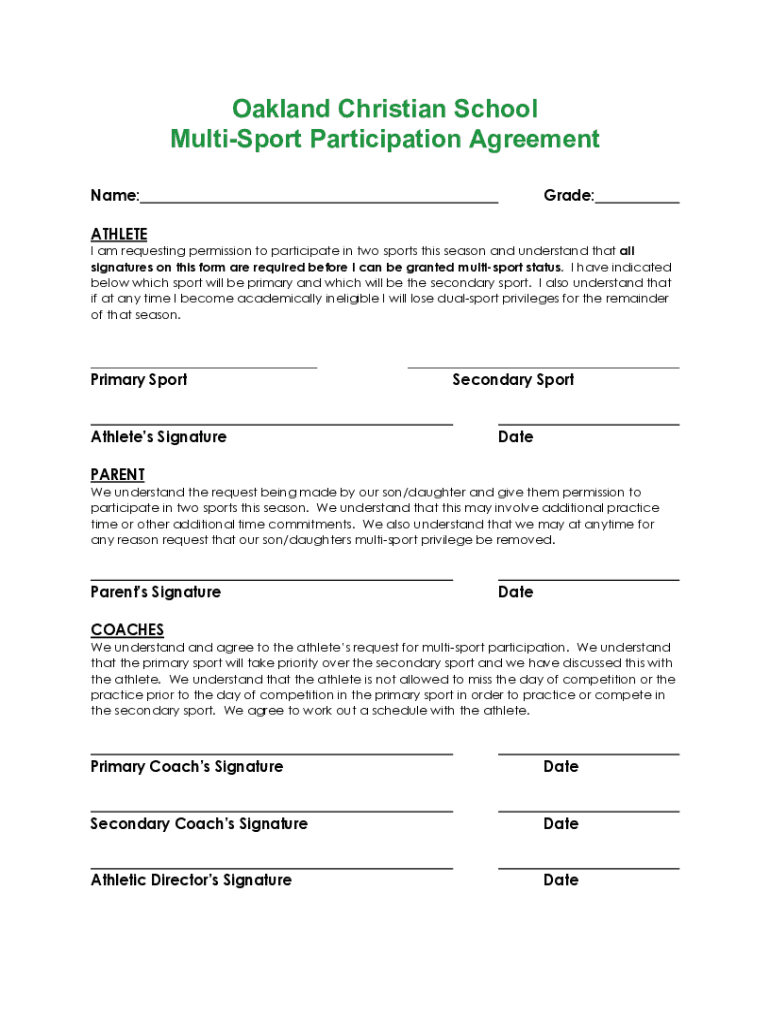







Definition and Purpose of the Multi-Sport Participation Agreement
The Multi-Sport Participation Agreement is a formal document utilized by educational institutions, such as Oakland Christian School, to delineate the responsibilities and commitments of student-athletes looking to engage in more than one sport during the same season. This agreement serves not only as a record of the student's intent and permissions but also emphasizes the importance of balancing athletic endeavors with academic obligations. It requires signatures from the student-athlete, their parent or guardian, and the coaches involved to ensure mutual understanding and agreement.
Key Considerations
- Commitment Level: The agreement highlights the student-athlete's dedication to maintaining practice schedules, games, and meetings for both sports.
- Academic Priority: A major focus is ensuring that participation in multiple sports does not interfere with academic performance, mandating a prioritization of the primary sport.
- Health and Safety: The document often includes clauses related to the health and well-being of the student-athlete, making provisions for adequate rest and injury management.
Steps to Complete the Agreement
Completing the Multi-Sport Participation Agreement involves several clear steps, ensuring that all parties are informed and in agreement.
-
Initial Discussion: The student-athlete should first discuss their intention to participate in multiple sports with their parents and existing coaches.
-
Consultation with School Advisors: Meet with school athletic advisors or counselors to ensure that the decision aligns with academic goals.
-
Complete the Form: Fill out the form with details of the sports involved, proposed schedules, and an acknowledgment of academic commitments.
-
Obtain Signatures: Gather necessary signatures from the student-athlete, their parents or guardians, and all involved coaches.
-
Submit the Agreement: Return the completed and signed agreement to the school's athletic department for review and final approval.
Considerations for Approval
- Alignment with School Policies: Ensure the agreement complies with school policies regarding sports participation and academic performance requirements.
- Feasibility Assessment: The school's athletic staff will assess the practicality of participating in multiple sports based on the student-athlete's current workload and past academic performance.
Why Use the Multi-Sport Participation Agreement
This agreement is essential for maintaining a structured approach to dual-sport participation while safeguarding educational and personal development priorities.
Benefits Include
-
Clarification of Expectations: Clearly outlines what is expected from the student-athlete in terms of time commitment, performance standards, and priorities.
-
Conflict Resolution: Provides a clear mechanism for resolving potential conflicts between sport schedules and academic responsibilities.
-
Safety Provisions: Promotes the health and safety of student-athletes by encouraging responsible participation and monitoring.
Who Typically Utilizes the Agreement
The agreement is designed for student-athletes in high school or middle school who wish to expand their athletic involvement by participating in more than one sport during a competitive season.
Primary Users
-
Student-Athletes: Those committed to and capable of managing multiple sports alongside their educational responsibilities.
-
Parents and Guardians: Who need assurance that their child’s education won’t be compromised by their athletic ambitions.
-
Coaches and Athletic Directors: Whose roles are pivotal in monitoring the student’s schedules and ensuring that commitments are met without compromising well-being or academic standards.
Important Terms Related to the Agreement
Several key terms are integral to understanding and executing the Multi-Sport Participation Agreement effectively.
-
Primary Sport: The main sport emphasized over others, which usually takes priority during conflicts in schedule.
-
Secondary Sport: Any additional sports participated in that may require flexible scheduling around the primary sport.
-
Academic Eligibility: A standard requirement that student-athletes maintain a certain GPA to qualify for participation in school sports.
-
Health and Safety Protocols: Guidelines addressing injury prevention and management, ensuring student-athletes maintain optimal health while participating in multiple sports.
Legal Considerations for the Agreement
While the agreement itself may not have legally binding consequences akin to other contracts, it adopts a firm legal framework intended to:
- Ensure Compliance: Align with school and sports regulatory body rules.
- Protect Parties Involved: Safeguard the interests of student-athletes, parents, and coaches.
- Minimize Liability: Reduce the liability of schools in cases of academic failure or injury due to overcommitment without adequate preparation.
Key Legal Features
-
Signatures as Consent: The collected signatures serve as mutual consent among all parties involved, indicating a shared understanding of the commitments and conditions stated.
-
Provisions for Change: Should circumstances change, the agreement often includes procedures for modifying commitments or withdrawing from secondary sports.
Key Elements of the Agreement
The Multi-Sport Participation Agreement is characterized by several crucial elements that ensure efficacy and clarity.
Main Components
-
Contact Information: Details of the student, parent or guardian, and coaches involved.
-
List of Sports and Seasons: Specifies which sports and seasons the student intends to participate in.
-
Commitment Clause: Details regarding practice schedules, competition dates, and expected dedication level.
-
Academic and Conduct Standards: Requirements related to maintaining a minimum GPA and behavior standards at school.
-
Health Considerations: Provisions related to managing the student-athlete’s physical and mental health, incorporating breaks, and addressing injuries.
Examples of Usage
By examining examples, schools and participants can learn more about how the agreement functions in practice and maximize benefit.
Practical Scenarios
-
Case Study 1: A student-athlete successfully manages participation in both basketball and soccer by using the agreement to prioritize basketball, adjusting schedules, and maintaining their GPA.
-
Case Study 2: An athlete initially overcommitted to both baseball and track. The agreement helped them redirect efforts to focus on improving their academic scores maintaining sports as a secondary concern.
Versions and Alternatives to the Agreement
Alternative arrangements and versions exist to accommodate different school policies or sports environments.
Common Variants
-
Single-Sport Focus: Agreements that focus solely on one sport but include conditions for academic and conduct standards.
-
Seasonal Agreements: Specific to seasonal sports, allowing students to re-evaluate and choose new commitments per academic or sports season.
-
Modified Participation: For students who can’t fully commit, offering partial participation in one sport to maintain focus on another aspect like academics or the arts.




