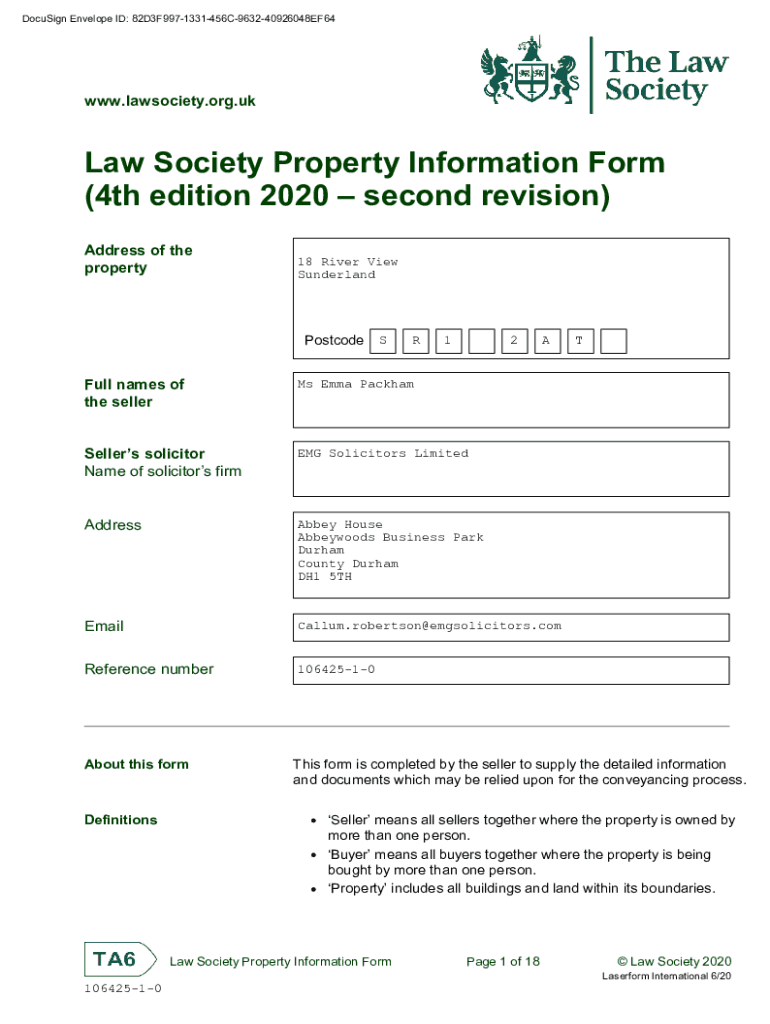







Definition & Purpose of the Law Society Property Information Form (4th Edition 2020)
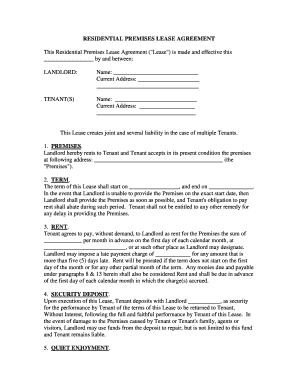
The Law Society Property Information Form, 4th edition 2020, serves a crucial role in the conveyancing process, which involves legal transfer of property ownership. This document is primarily completed by the seller to disclose essential details about the property that prospective buyers need to know. It ensures transparency and aids in making informed decisions before finalizing a purchase. While primarily used in the United Kingdom, aspects of it may hold educational value for U.S. audiences interested in international property transactions.
How to Use the Law Society Property Information Form
Understanding how to properly fill out the Law Society Property Information Form is vital for all parties involved. The form comprehensively addresses numerous aspects of the property:
- Property details: Includes information about the property’s boundaries, disputes, and notices affecting it.
- Utilities and services: Details about water, electricity, gas, and other utilities servicing the property.
- Legalities and rights: Notes on any legal rights or restrictions affecting the property, such as easements or wayleaves.
To complete the form, sellers should:
- Gather all relevant property documents.
- Review each section thoroughly before responding.
- Provide accurate and honest answers to avoid future legal complications.
Obtaining the Law Society Property Information Form
Sellers or their solicitors can obtain the Law Society Property Information Form 4th edition 2020 from several official sources in the UK. These include the Law Society’s website or through legal professionals specializing in property transactions. In some cases, the form may be part of a larger conveyancing package provided by solicitors.
Steps to Complete the Form Efficiently
Completing this form involves a step-by-step approach:
- Read Instructions Carefully: Understand the requirements of each section.
- Accurate Documentation: Have all relevant documents ready to provide precise information.
- Consultation: Engage with a solicitor to clarify doubts, especially on complex topics like legal easements and rights.
- Review and Feedback: Get a second set of eyes on your completed form, ideally from a legal advisor, to ensure accuracy.
Importance of the Law Society Property Information Form
Filling out this form accurately is essential for several reasons:
- Legal Compliance: Meeting all legal requirements helps prevent disputes.
- Buyer Confidence: A well-completed form boosts buyers' confidence in the transaction.
- Avoiding Penalties: Misrepresentation or omission can lead to legal penalties or the nullification of a sale.
Typical Users of the Form
The primary users of this form are:
- Property Sellers: Required to disclose information.
- Solicitors: Act on behalf of sellers to ensure compliance.
- Buyers: Use the form to make informed purchasing decisions.
Key Elements of the Form
Several essential components must be addressed in the form:
- Property boundaries and disputes
- Significant alterations or additions to the building
- Issues relating to infestations, rot, or other defects
- Environmental liabilities or concerns
Legal Implications and Considerations
It is crucial that sellers understand the legal weight this form carries:
- Honesty in Disclosures: Failing to disclose critical information can lead to legal actions by buyers.
- Adherence to Current Laws: The form must align with current property and disclosure laws, which may vary by jurisdiction.
Form Submission Methods
Although primarily distributed and collected in the UK, understanding submission methods is useful:
- Electronic Submission: Increasingly popular for its convenience and speed.
- Physical Mail: Still widely used for formal transactions.
- In-Person at Legal Offices: Allows direct consultation and immediate corrections.
Digital Versus Paper Version of the Form
Both versions have their merits:
- Digital Version: Offers easier sharing, editing, and storage, although not as universally accepted in all legal settings.
- Paper Version: Traditional and often preferred for comprehensive legal reviews and records.
Form Variations and Historical Context
The 4th edition of 2020 is an update that reflects new regulations and industry practices:
- Comparison with Previous Versions: Changes may involve updates in legal requirements or formatting.
- Alternative Forms: Jurisdictions may require additional forms covering environmental aspects or specific geographic concerns.
Selection of these blocks ensures comprehensive insight into the multifaceted aspects of the Law Society Property Information Form, providing a robust understanding for both sellers and buyers.