






Definition and Meaning
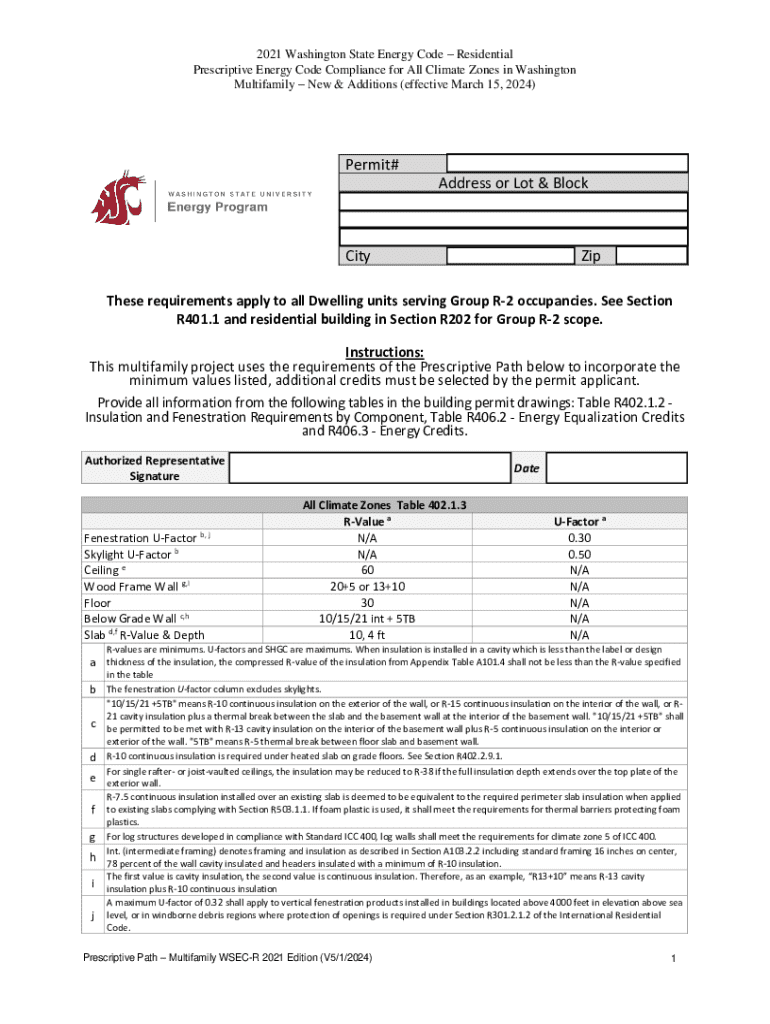
The 2021 Washington State Energy Code Residential refers to a set of regulations aimed at improving the energy efficiency of residential and multifamily buildings within Washington State. Effective March 15, 2024, this code outlines the minimum requirements for energy conservation, with a focus on reducing energy consumption and promoting sustainable building practices. It is applicable across various climate zones in Washington, ensuring that energy standards are consistent and tailored to regional needs.
Key Aspects
- Energy Efficiency: The code emphasizes the need for energy-efficient construction practices.
- Climate Zones: Specific requirements are tailored to different climate zones within the state.
- Regulatory Compliance: Builders must adhere to these standards to obtain permits for residential construction projects.
How to Use the 2021 Washington State Energy Code Residential
Builders and architects use the 2021 Washington State Energy Code Residential to guide the planning and construction of energy-efficient residential buildings. It is critical to incorporate the prescribed standards from the early stages of project development to ensure compliance and optimize energy performance.
Practical Steps
- Review Building Plans: Ensure that designs meet insulation and fenestration standards as described in the code.
- Incorporate Energy Credits: Utilize the guidelines for energy credits to enhance building efficiency.
- Documentation: Prepare necessary documentation to submit with building permit applications to demonstrate compliance with the code.
Steps to Complete Compliance with the 2021 Washington State Energy Code Residential
Adhering to the 2021 Washington State Energy Code Residential involves several key steps to ensure that all construction meets the state’s energy efficiency requirements.
Detailed Process
- Initial Assessment: Evaluate the project’s current plans against the code's requirements.
- Design Modifications: Implement changes in the building design to align with code specifications, such as using specified insulation materials.
- Energy Credits: Calculate and apply energy credits from approved systems like advanced heating solutions.
- Final Review: Conduct a final review to ensure all elements comply before submission for building permits.
Key Elements of the 2021 Washington State Energy Code Residential
The code comprises significant elements that builders must incorporate into residential projects to ensure energy efficiency.
Important Components
- Insulation Standards: Specifies types and levels of insulation needed in different parts of the building envelope.
- Fenestration Standards: Details requirements for windows and doors to minimize energy loss.
- Heating and Ventilation Systems: Guidelines for implementing energy-efficient HVAC systems that maximize warmth while reducing energy consumption.
Important Terms Related to the 2021 Washington State Energy Code Residential
Understanding specific terminology is crucial when working with the 2021 Washington State Energy Code Residential.
Key Terms
- Energy Credits: Benefits assigned to projects using approved sustainable practices or technologies.
- Fenestration: The design and placement of windows and doors in a building.
- R-Value: A measure of insulation’s ability to resist heat flow, essential for compliance.
State-Specific Rules for the 2021 Washington State Energy Code Residential
Washington’s energy code includes specific rules reflecting the state’s commitment to energy conservation and sustainable practices.
Focus Areas
- Local Climate Adaptation: Requirements adjusted based on local climate to enhance efficiency.
- Regional Adaptation: Energy standards are fine-tuned for diverse geographical regions within the state.
- Innovation Encouragement: Incentives are available for using newer, sustainable technologies in building designs.
Legal Use of the 2021 Washington State Energy Code Residential
Legal adherence to the 2021 Washington State Energy Code Residential is mandatory for residential and multifamily construction projects.
Compliance Requirements
- Permit Acquisition: Compliance is necessary for acquiring construction permits.
- Inspections: Buildings are subject to inspections to verify adherence to energy code standards.
- Penalties: Non-compliance may lead to fines or delays in project approval.
Examples of Using the 2021 Washington State Energy Code Residential
Real-world applications of the energy code demonstrate its utility in enhancing building energy efficiency.
Case Studies
- Multifamily Projects: Builders in urban areas have utilized the code to secure energy credits and reduce operational costs.
- Single-Family Homes: Implementing code-compliant insulation and heating systems has significantly lowered energy bills for homeowners.
Form Submission Methods for the 2021 Washington State Energy Code Residential
Understanding the methods for submitting documentation to comply with the 2021 Washington State Energy Code Residential is vital for builders.
Available Options
- Online Submissions: Builders can submit documentation electronically through state portals to expedite the review process.
- Mailed Applications: Paper submissions are accepted but may involve longer processing times.
- In-Person Filings: Certain projects require in-person submissions at designated state offices.
Each of these sections provides in-depth coverage of the 2021 Washington State Energy Code Residential, tailored to the needs of those involved in residential construction within Washington State.