
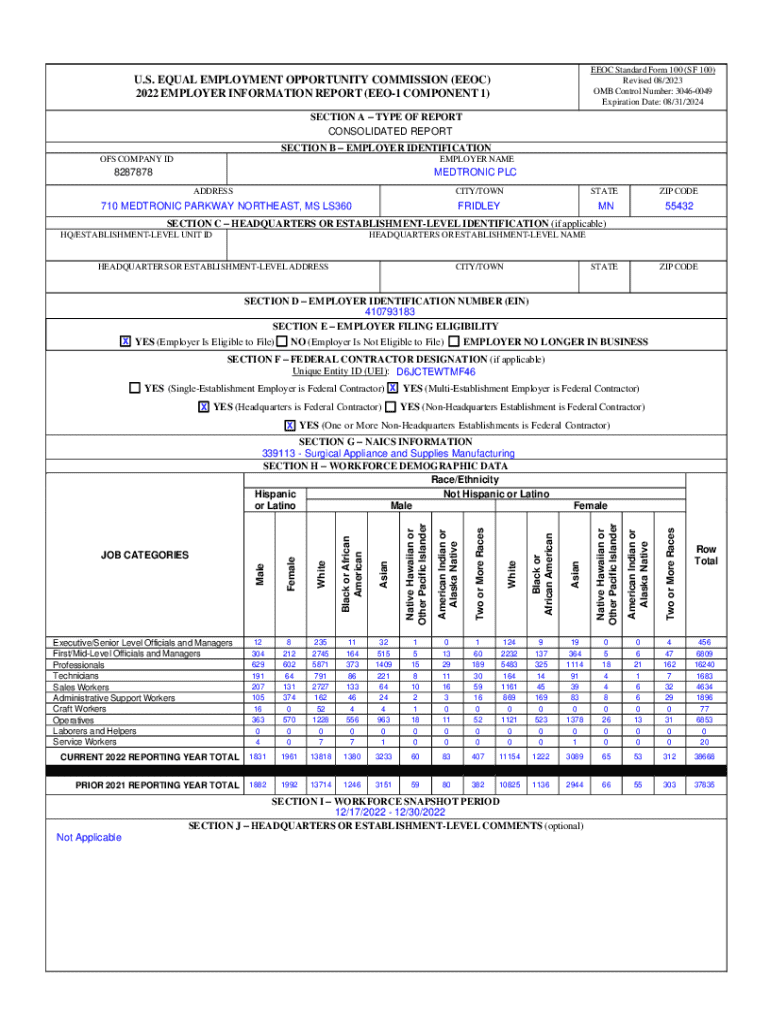







Definition and Meaning of EEO-1 Component 1EEOC Standard Form 100 (SF 100)
The EEO-1 Component 1EEOC Standard Form 100, commonly referred to as EEO-1 Form, is a mandatory reporting form that employers submit to the Equal Employment Opportunity Commission (EEOC) in the United States. This form collects demographic data about the workforce, including information on race/ethnicity, gender, and job categories, aiding in the enforcement of anti-discrimination laws. It is a crucial tool for ensuring workplace equality and tracking diversity within companies.
How to Use the EEO-1 Component 1EEOC Standard Form 100 (SF 100)
Employers use the EEO-1 Form to report company-wide demographic data to the EEOC. To properly fill out the form, organizations need to classify their employees by race and gender, distributed across various job categories. This form is part of compliance with federal regulations, aiming to help identify potential discriminatory employment patterns. Employers should ensure accuracy and completeness when entering data, as this influences the national employment statistics and can impact potential legal reviews.
Steps to Complete the EEO-1 Component 1EEOC Standard Form 100
-
Gather Employee Data: Collect information on every employee's race, gender, and job category. Ensure that the data is current for the designated reporting period.
-
Classify Job Categories: Assign each employee to one of the specific job categories defined within the form, such as managerial, technical, or administrative roles.
-
Enter Demographic Information: Accurately input gender and race data for employees in each job category.
-
Review and Validate: Double-check all entries for accuracy to prevent mistakes that could lead to compliance issues.
-
Submit the Form: File the completed form with the EEOC either electronically via their online portal or through other approved submission methods.
Key Elements of the EEO-1 Component 1EEOC Standard Form 100
- Employer Identification: Details such as employer name, address, EIN, and federal contractor status.
- Demographic Categories: Breakdown of employees by race, ethnicity, gender, and job classification.
- Comparison Metrics: Data reflecting workforce changes by comparing current and previous year's submissions.
Legal Use of the EEO-1 Component 1EEOC Standard Form 100
The EEO-1 Form is utilized primarily for legal compliance under Title VII of the Civil Rights Act of 1964. Its data helps enforce laws prohibiting workplace discrimination based on race, color, sex, or national origin. Ensuring the correct and timely submission of this form is not just a legal obligation but also serves as evidence of an employer's commitment to fostering a diverse and inclusive workplace.
Filing Deadlines and Important Dates
Employers are required to file the EEO-1 Form annually. The deadline typically falls in the fall of the reporting year, although specific dates can vary annually. Employers should remain vigilant about these deadlines to avoid penalties for late submissions. Additionally, companies should prepare for data collection well before the filing window to ensure accuracy and compliance.
Required Documents for Submission
- Employee Records: Current demographic data of all employees.
- Company Information: Accurate employer identification details.
- Workforce Composition: Documentation of employee distribution across job categories.
Penalties for Non-Compliance
Failing to file the EEO-1 Form or providing false information can result in significant penalties, including fines and potential legal action. Non-compliance can also harm a company's reputation, affecting its ability to participate in federal contracts and damaging its public image as an employer.
Business Types That Benefit Most from EEO-1 Component 1EEOC Standard Form 100
Large companies with over one hundred employees and federal contractors with fifty or more employees are required to submit this form. However, smaller enterprises can also benefit from similar diversity audits to promote equal employment practices, thereby enhancing their reputation and reducing potential legal risks.




