
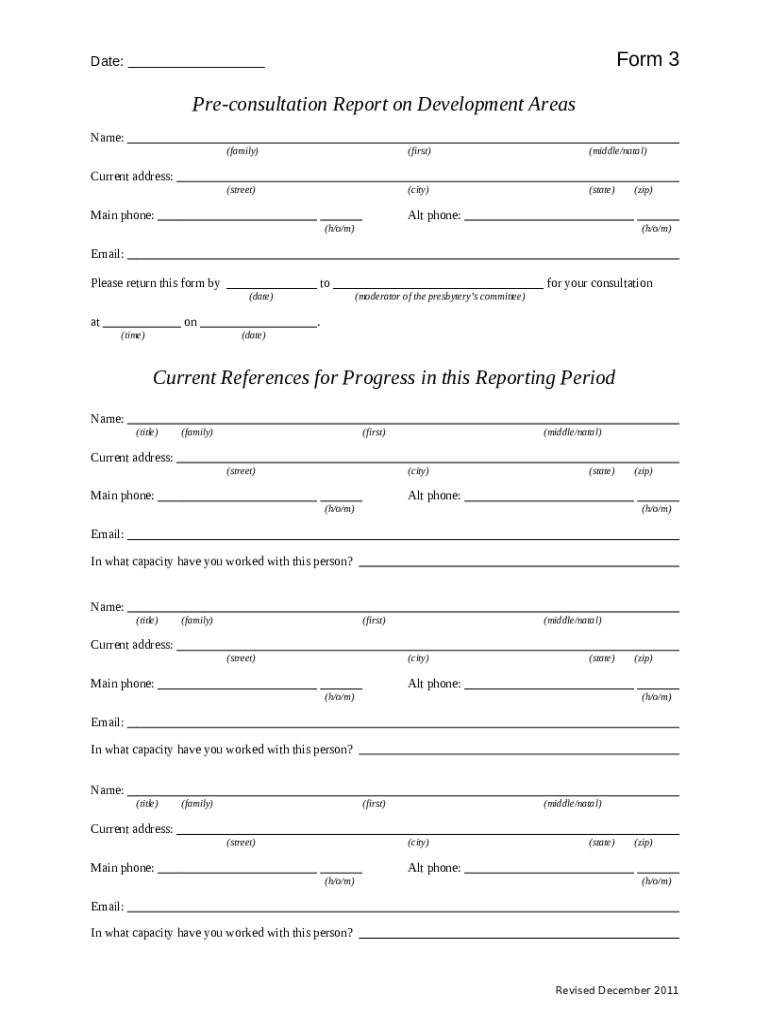







Definition and Meaning of the Pre Consultation Form
The Pre Consultation Form is a detailed document designed to gather essential information from individuals before a formal consultation. It serves as a preparatory tool, allowing both parties to make the most effective use of the consultation time. Typically, these forms include sections that request personal information, relevant background data, and specific goals or questions the individual might have. By collating this data in advance, facilitators or consultants can tailor their session to address the most critical areas for the individual, thereby maximizing the consultation’s efficiency and relevance.
Steps to Complete the Pre Consultation Form
Completing a Pre Consultation Form involves a systematic approach to ensure all required information is accurately captured. The process generally includes the following steps:
- Personal Information: Begin by filling out your basic personal details like name, contact information, and any identification numbers as required.
- Purpose and Goals: Clearly articulate the objectives you wish to accomplish through the consultation. This might include career goals, development areas, or specific questions.
- Background Information: Provide any relevant history or context that can help the consultant understand your situation better. This may include educational background, previous experience, or current challenges.
- Additional Details: Include any other specifics, such as current projects, relevant timelines, or other critical factors that could influence the consultation.
- Review and Submit: Double-check your entries for accuracy, ensuring all fields are complete before submitting the form.
How to Use the Pre Consultation Form
The Pre Consultation Form is typically used as a preparatory tool by individuals and professionals who seek to streamline and enhance the effectiveness of their consultation sessions. It is utilized across various industries, including healthcare, business, education, and legal services. By providing detailed information beforehand, both the consultant and the individual gain a clear understanding of the primary goals and focus areas, allowing for a more structured and productive discussion. In practice, these forms are used during the initial phase of engagement, ensuring all parties are well-prepared.
Key Elements of the Pre Consultation Form
Essential components that constitute the Pre Consultation Form include:
- Identification Section: Requires filling in personal or company details like name, address, and contact.
- Objective Outline: A field for specifying the goals or issues to be addressed during the consultation.
- Background Information: Space to provide context, history, or pertinent data that influences the consultation.
- Questions and Concerns: An area to list specific questions or areas of concern that the individual wants to discuss.
- Signatures and Consent: May include a section for legal consent or acknowledgment of terms related to the consultation.
Examples of Using the Pre Consultation Form
Numerous scenarios highlight the use of a Pre Consultation Form:
- Healthcare: Patients might fill out a form detailing their medical history and symptoms before a doctor's visit.
- Business Advisory: Entrepreneurs may outline their business challenges and strategic goals ahead of a consulting session with a business advisor.
- Educational Settings: Students provide academic concerns and future aspirations prior to meeting with a career counselor.
- Legal Advice: Clients disclose their legal issues and desired outcomes before a consultation with an attorney.
Who Typically Uses the Pre Consultation Form
The Pre Consultation Form is geared toward individuals or entities preparing for a structured consultation in various fields. Common users include:
- Medical Patients: Preparing for appointments or specialist visits to discuss health-related concerns.
- Business Owners: Engaging in financial consultations or strategic planning meetings.
- Students and Educators: Seeking academic counseling or career advice.
- Legal Clients: Consulting with attorneys on issues requiring detailed background information.

Legal Use of the Pre Consultation Form
The legal application of the Pre Consultation Form is significant, especially when formal agreements or confidential information is involved. It is crucial for ensuring transparency and understanding between parties. The form could include sections detailing confidentiality agreements, consent for information sharing, or acknowledgment of advice and potential outcomes. Properly executed, it protects both the consultant and the client by clearly defining the scope and limitations of the advice provided.
Required Documents for the Pre Consultation Form
To successfully complete a Pre Consultation Form, specific documents may be needed to support the information provided, such as:
- Identification Proof: Such as a driver’s license or a passport.
- Relevant Background Documents: Depending on the field, this could include medical records, academic transcripts, business plans, or legal documents.
- Supporting Evidence: Any documentation that backs the claims or information provided within the form.
By systematically gathering these materials, individuals can ensure their form is as comprehensive and accurate as possible, setting the stage for a fruitful consultation.




