






Definition and Purpose of the Annual Child Care Immunization Report
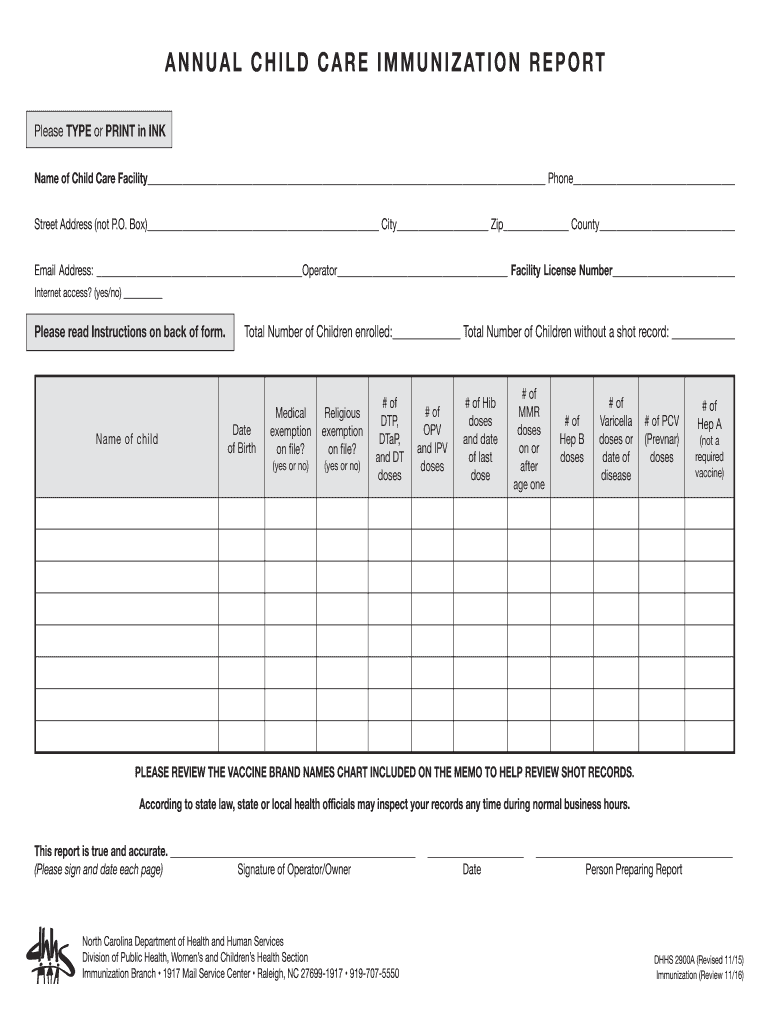
The N C DHHS: DHHS 2900 A-B Annual Child Care Immunization Report aims to monitor and ensure that children in child care facilities in North Carolina meet the immunization requirements set by the state. This report involves collecting data on vaccination status, including exemptions and doses administered. It plays a crucial role in safeguarding public health by ensuring compliance with state immunization laws. Child care facilities must understand the scope of this report, as compliance is not only a regulatory requirement but also a vital public health measure.
Key Components of the Report
- Immunization Status: This section requires detailed information on each child's immunization status, specifying which vaccines have been administered and which are still pending.
- Exemptions: Facilities must report any medical or religious exemptions claimed, with appropriate documentation.
- Compliance Assurance: Ensures facilities meet state law requirements, protecting children and the community from vaccine-preventable diseases.
Steps to Complete the Report
Completing the DHHS 2900 A-B form involves several steps that child care facilities need to follow meticulously:
- Gather Required Information: Start by collecting vaccination records for all children under care.
- Document Exemptions: Note any exemptions and ensure supporting documentation is filed appropriately.
- Input Data Accurately: Enter immunization data into the specified sections of the form, ensuring accuracy.
- Review and Submit: Verify the information for correctness and completeness before submission.
- Meet Deadlines: Submit the completed form by the annual deadline of January 29.
Tips for Accurate Reporting
- Consistency: Regularly update records to maintain accurate and reliable information.
- Verification: Double-check exemption documentation to ensure full compliance.
Legal Obligations for Child Care Facilities
Child care facilities have a legal obligation to submit this immunization report as part of their operational responsibilities. Non-compliance may lead to penalties or other regulatory actions. Facilities must maintain accurate immunization records and submit them timely to comply with North Carolina health regulations.
Reporting Compliance
- Timeliness: Submit reports promptly every year by the January 29 deadline.
- Record-Keeping: Maintain up-to-date records to facilitate seamless reporting.
Importance of the N C DHHS Immunization Report
The immunization report plays a significant role in public health by facilitating the tracking of vaccination coverage among children in care facilities. It ensures early identification of gaps in immunization, allowing for prompt remedial actions to prevent outbreaks.
Benefits
- Public Health Impact: Contributes to community health by minimizing the spread of infectious diseases.
- Regulatory Compliance: Helps facilities remain in compliance with state health regulations.
Eligibility Criteria for Reporting
Child care facilities across North Carolina, including private and public institutions, are required to submit this immunization report. The criteria include all facilities that provide regular care for children and ensure they're enrolled in a certified program.


Key Criteria
- Facility Type: Includes daycares, nursery schools, and other child care facilities.
- Child Enrollment: Facilities with enrolled children from organizations that require immunization reporting.
Required Documents for Submission
Facilities must submit documentation that includes children's immunization records, any relevant exemption documentation, and a completed DHHS 2900 A-B form. Keeping these records organized is critical for accurate and efficient reporting.
Organization Tips
- Documentation: Use digital tools to keep records organized and easily accessible.
- Verification: Ensure all submissions meet the state's documentation standards.
Form Submission Methods
Submit the N C DHHS: DHHS 2900 A-B form either online, by mail, or in person, depending on facility preference and resources. Digital submission is encouraged for efficiency and ease.
Available Methods
- Online: Fast and convenient submission option.
- Mail: Traditional method requiring ample time for processing.
- In-Person: Direct delivery, useful for facilities nearby reporting offices.
Potential Consequences of Non-Compliance
Failure to submit the immunization report might result in penalties from the North Carolina Department of Health and Human Services. It's pivotal for facilities to adhere to reporting requirements to avoid these consequences.
Ensuring Compliance
- Monitoring Deadlines: Keep track of submission deadlines.
- Regular Audits: Conduct internal checks to ensure all records are complete and accurate.