






Definition and Purpose of the Board of Zoning Appeals - Appeal Application
The Board of Zoning Appeals - Appeal Application is a formal process that allows individuals or entities to challenge decisions made by a Zoning Administrator. This application is crucial for those seeking to appeal zoning decisions that they believe are incorrect or unfair. The application process provides a structured approach to formally present grievances and request a review of the decision. Applicants typically include property owners, developers, or residents affected by the zoning decision. The overall objective is to ensure transparent and fair zoning practices that align with local regulations and community interests.
How to Use the Board of Zoning Appeals - Appeal Application
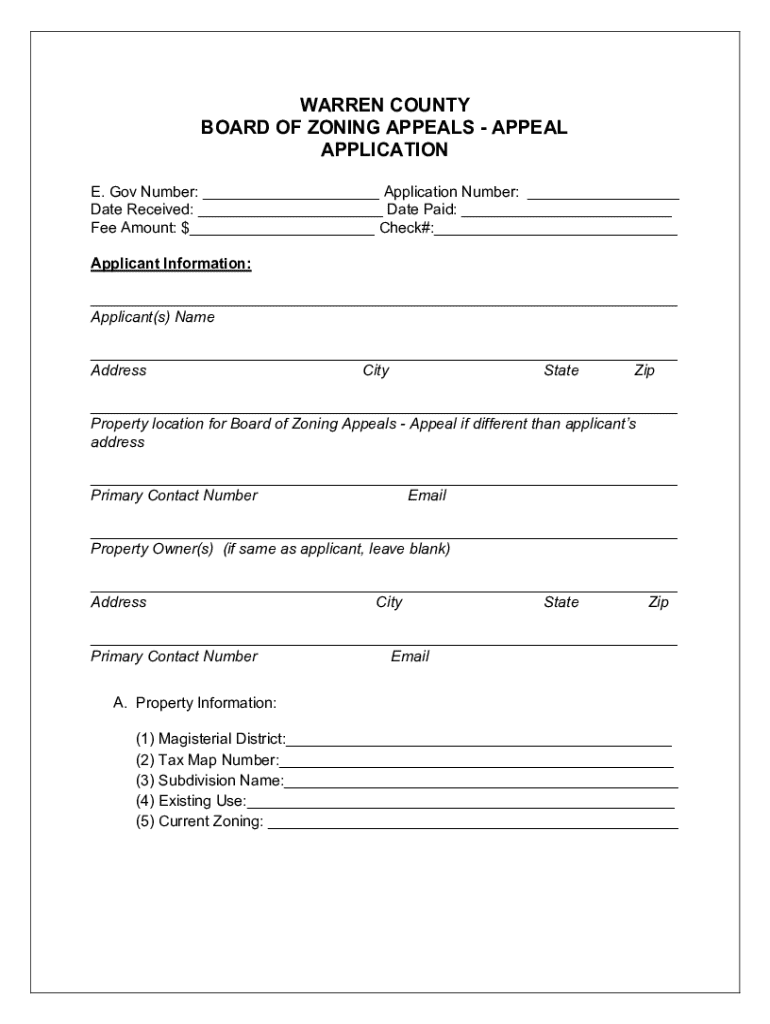
Utilizing the Board of Zoning Appeals - Appeal Application involves several steps. First, it's essential to understand the specific zoning decision that is being appealed. This involves obtaining a copy of the ruling and any related documentation. Next, the applicant must complete the appeal application form accurately, ensuring all required fields are filled out correctly. An application fee is usually required, so applicants should be prepared to make this payment according to local regulations. Once the application is completed, it must be submitted within the designated time frame, typically within a certain number of days after the zoning decision. A successful appeal relies on presenting a clear, well-documented case that challenges the initial decision.
Steps to Obtain the Board of Zoning Appeals - Appeal Application
To obtain the Board of Zoning Appeals - Appeal Application, start by visiting the local zoning board's website or office. Many jurisdictions offer downloadable forms online to facilitate ease of access. If online access is unavailable, applicants can request a physical copy by visiting the zoning board's office in person. It’s essential to verify that the form is the current version and applicable to the specific zoning board jurisdiction. Additionally, applicants may contact the zoning board directly via phone or email to request guidance on acquiring the form, especially if there are any uncertainties about the application process or requirements.
Key Elements of the Board of Zoning Appeals - Appeal Application
The Board of Zoning Appeals - Appeal Application is structured to gather essential information pertinent to the appeal. Key elements include the applicant's name and contact information, a detailed description of the property or area in question, and the specific decision being appealed. The application form also requires a clear statement outlining the reasons for the appeal, supported by relevant documentation such as maps, photographs, or evidence that highlights the grounds of the appeal. In some cases, notarization may be required, and applicants should prepare to submit any supplementary documents that strengthen their case.
Legal Use and Implications of the Board of Zoning Appeals - Appeal Application
The appeal application serves a legal purpose by providing a mechanism for due process in zoning decisions. By submitting an appeal, applicants formally request a review, which may result in a hearing. The hearing serves as an official forum for presenting additional evidence and arguments. Legal implications of this application include the potential reversal or modification of the original zoning decision. Applicants should be aware that the process may require legal representation, especially for complex cases. It’s vital to comply with all procedural requirements to avoid dismissal of the appeal based on technicalities.
Required Documents for the Board of Zoning Appeals - Appeal Application
Applicants must gather several documents to support their appeal. Necessary documents often include the completed appeal application form, a copy of the zoning decision being contested, a map of the property or zoning area, photographs highlighting the issue, and any evidence or expert opinions backing the applicant's claim. Additionally, proof of payment for the application fee is required. Applicants should ensure all documents are complete and accurate, as incomplete submissions may result in delays or rejection of the appeal. Original documents should be safeguarded, and copies provided for submission.
Form Submission Methods: Online, Mail, or In-Person
Submitting the appeal application can generally be done through several methods depending on the zoning board’s procedures. Many boards offer an online submission portal that allows applicants to upload scanned copies of the form and supplementary documents. Mail submission requires sending physical copies through certified mail to ensure a verifiable record of delivery. Alternatively, applicants can submit their application in person at the zoning board's office. Each method has its own advantages, with online being the most convenient for quick processing, while in-person submission facilitates direct communication with zoning officials.
State-Specific Rules for the Board of Zoning Appeals - Appeal Application
States may have unique regulations affecting the appeal process due to differing zoning laws and administrative procedures. It’s crucial to verify any state-specific requirements, such as time frames for submission, specific evidence needed, or particular fees. Researching local laws and consulting with zoning authorities or legal professionals can help applicants navigate these nuances. Being informed about state-specific rules can significantly impact the outcome of an appeal, ensuring that the application adheres to all necessary legal standards to maintain its validity.