Definition and Meaning
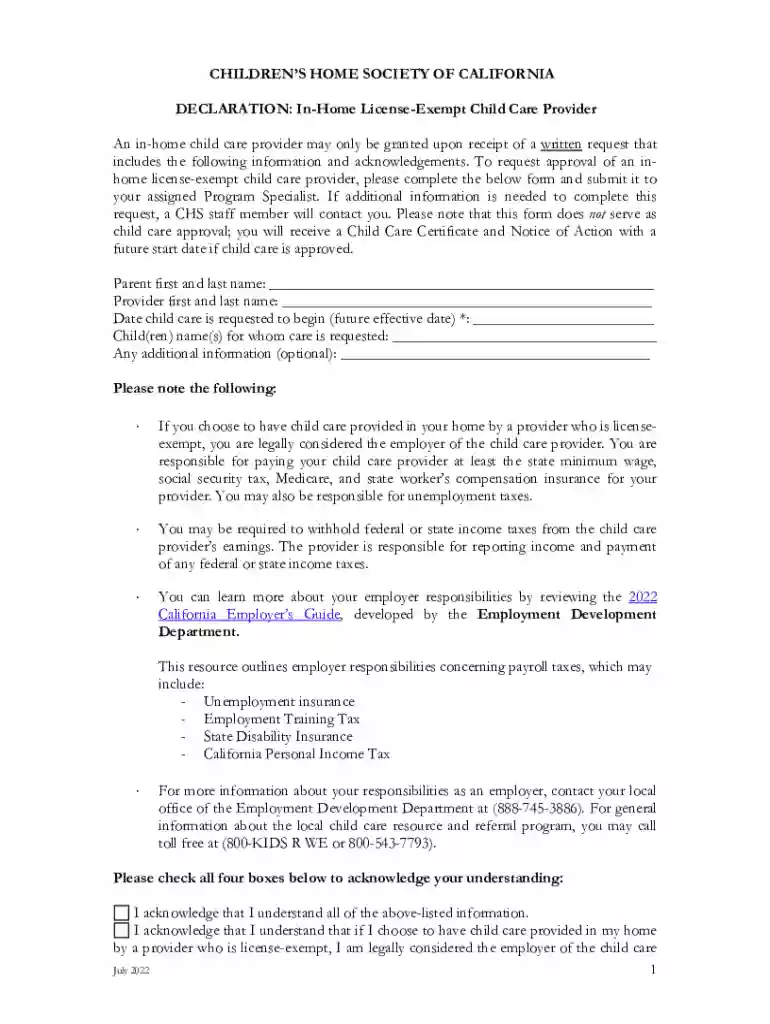
The "DECLARATION: In-Home License-Exempt Child Care Provider" form is a crucial document used primarily by individuals seeking to provide child care services without a formal license in a home setting. In the context of California, this form enables caregivers to offer child care services legally while being exempt from traditional licensing requirements. The primary focus is on ensuring that the caregivers meet specific criteria, thereby affirming their ability to provide safe and appropriate care for children.
Key Terms
- License-Exempt: Indicates that the caregiver does not require a formal child care license to operate.
- Child Care Provider: Refers to individuals offering child care services, typically in a residential setting, to a limited number of children.
How to Use the Declaration Form
The declaration form is essential for in-home child care providers who want to confirm their exempt status legally. Here’s how you can effectively utilize the form:
- Understanding Eligibility: Ensure you meet the state-specific criteria for being license-exempt, such as providing care for a defined number of children, usually not exceeding six.
- Accurate Completion: Fill out all required sections of the form with complete accuracy. This includes personal details, type of care provided, and the number of children under your care.
- Submission: Submit the form through the proper channels as outlined by the Children's Home Society of California. This might be via mail or an online submission platform.
Important Sections
- Personal Information: Details about the caregiver including name, address, and contact information.
- Child Care Details: Information about the number of children under care and the intended care setting.
How to Obtain the Declaration Form
Acquiring the declaration form is a straightforward process. Here are the methods to obtain it:
- Online Access: The form is often available on the website of the Children's Home Society of California or through related state child welfare agencies.
- Direct Request: Interested individuals can contact the Children's Home Society of California directly to request the form.
- Community Centers: Some community centers provide access to these forms as part of their support services for local caregivers.
Tips for Access
- Ensure that you are accessing the most current version of the form to avoid submission errors.
- Verify any special requirements for obtaining the form in your specific locale, as procedures may vary slightly between counties.
Steps to Complete the Declaration Form
Completing the declaration form accurately is crucial for a valid declaration of your license-exempt status. Follow these steps:
- Gather Information: Collect all necessary personal and operational details in advance to ensure you fill out the form correctly.
- Complete Sections Thoroughly: Enter details in all required fields, ensuring that no section is left blank.
- Review and Revise: Double-check for any errors or omissions before finalizing the form.
- Submit: Once satisfied with the accuracy, submit the form through the chosen method, be it online or by mail.
Checklist
- Verify all names and addresses.
- Check the numbers and ages of children.
- Ensure the described care matches your actual operation.
Why Use the Declaration Form
Using this declaration form is significant for several reasons:
- Legal Compliance: It legally supports your license-exempt status, allowing you to provide child care legally without a full license.
- Protection: Offers liability protection by officially documenting that you meet state standards.
- Resource Access: Enables access to various resources and support services available to child care providers through state programs.
Benefits
- Establishes legitimacy and trust with parents.
- Simplifies the process of entering the child care market.
- Opens opportunities for future training and development programs.
Who Typically Uses the Declaration Form
This form is primarily used by:
- Home Care Providers: Individuals or families providing informal child care in a residential setting.
- Parents: Seeking affordable, trustworthy, and familiar care solutions for their children.
- Extended Family Members: Such as grandparents or aunts/uncles, who offer child care within the family arrangement.
Use Cases
- A stay-at-home parent looking to earn income while caring for their own children.
- Relatives seeking to support family members by providing regular child care.
- Community members aiming to fulfill local demand for child care services.
Legal Use of the Declaration Form
The declaration form has specific legal implications and uses:
- Verification of Exempt Status: Legally confirms an individual's exempt status from licensing requirements.
- Contractual Transparency: Provides a legal basis for agreements made between the provider and parents.
- Regulatory Compliance: Ensures that care practices meet basic regulatory standards for safe and effective child care.
Legal Rights
- Affords certain protections to providers under state regulations.
- Clarifies provider responsibilities and rights to parents using the service.
Key Elements of the Declaration Form
The form is comprised of several vital components:
- Provider Information: Name, address, and contact details of the child care provider.
- Care Details: Type of care offered, hours of operation, and specific care requirements or conditions.
- Compliance Statements: Affirmations regarding the understanding and compliance with state regulations.
Critical Components
- Signature for authenticity and accountability.
- Specifics on care preferences, such as age range and care routines.
- Acknowledgement of understanding state laws and conditions of exemption.
This comprehensive breakdown ensures a deeper understanding and practical knowledge of the "DECLARATION: In-Home License-Exempt Child Care Provider" form, facilitating easier navigation through the processes involved.