






Definition & Purpose of DBS Check Risk Assessment
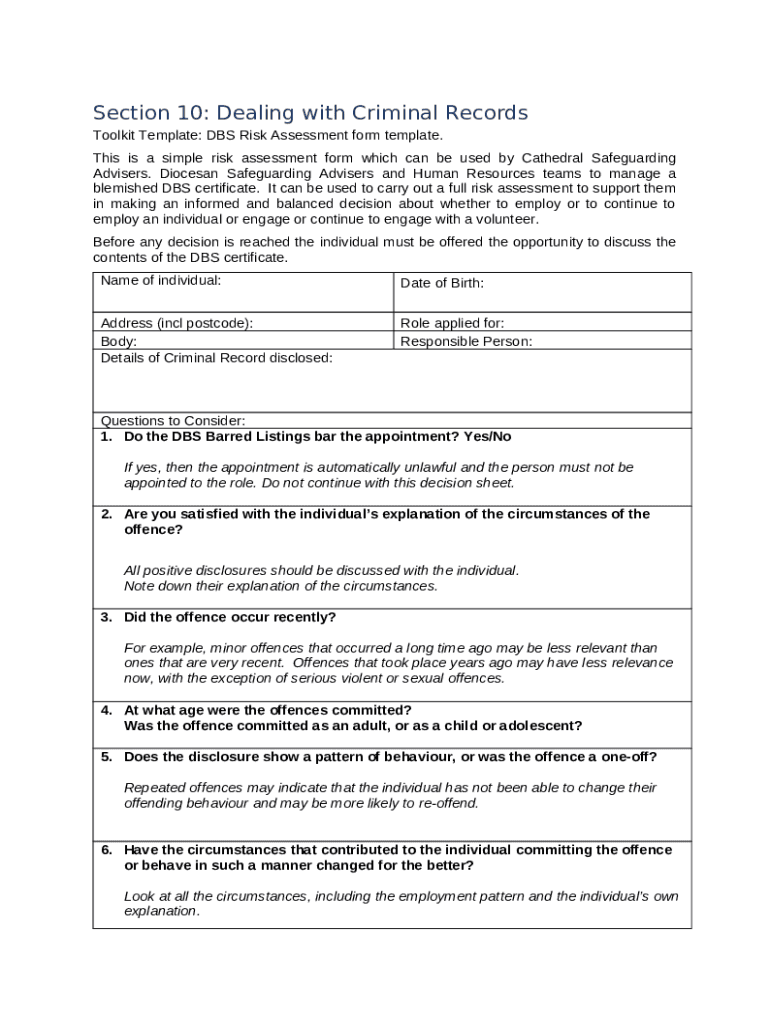
The DBS Check Risk Assessment form is a comprehensive tool designed for use by safeguarding and human resources teams. Its primary purpose is to facilitate the evaluation of individuals with blemished Disclosure and Barring Service (DBS) certificates. This form provides a structured approach to assess the potential impact of criminal records on employment or volunteer opportunities, ensuring that considerations are made for the nature and recency of offenses, as well as the context in which they occurred. The form guides evaluators in determining an individual's suitability for a role, identifying supervision needs, and planning for ongoing monitoring.
How to Use the DBS Check Risk Assessment Form
Users of the DBS Check Risk Assessment form should follow a systematic process to ensure thorough evaluation:
- Information Gathering: Collect all relevant background information about the individual, including the details of any past offenses as reported on the DBS certificate.
- Interviewing: Engage the individual in a conversation about their record. This dialogue should focus on understanding the circumstances of their offenses and any rehabilitation efforts since.
- Assessment: Use the form to document the nature of the offenses, consider any contextual factors, and analyze how these may impact the individual's role in the organization.
- Decision-Making: Use guided questions within the form to aid decision-making regarding the individual's employment suitability and any necessary supervision strategies.
Key Considerations
- Nature of the Offense: Compare the type of offense with the role's responsibilities to evaluate potential risks.
- Time Elapsed: Consider how much time has passed since the offense; more recent offenses may carry a different weight than older ones.
- Consistency: Apply a consistent approach to assessments to maintain fairness and objectivity.
Important Terms Related to DBS Check Risk Assessment
- Safeguarding: Refers to the measures put in place to protect individuals, particularly vulnerable groups, from abuse and harm in professional settings.
- DBS Certificate: A document issued by the Disclosure and Barring Service that details any criminal record information.
- Risk Assessment: A systematic process for identifying and evaluating risks associated with employing or assigning volunteer duties to individuals with a criminal record.
- Contextual Factors: Elements that provide insight into the circumstances surrounding an offense, such as intent, environment, and impact.
Legal Use of the DBS Check Risk Assessment Form
The legal application of the DBS Check Risk Assessment form is crucial. Organizations must ensure compliance with relevant employment and discrimination laws.
Key Legal Considerations
- Data Protection: Adhere to data protection regulations to safeguard the information collected during assessments.
- Equal Opportunity: Maintain fairness and avoid discrimination by focusing assessments on the relevance of offenses to the specific role.
- Confidentiality: Ensure that the information in the form, particularly sensitive data, is handled confidentially and shared only with authorized personnel.
Key Elements of the DBS Check Risk Assessment Form
- Personal Details: Information about the individual being assessed, including contact details and role applied for.
- Offense Record: Detailed account of the offenses listed on the DBS certificate.
- Risk Evaluation: Structured questions aimed at evaluating the risk the individual may pose in the context of the specific role.
- Recommendations: Summary of findings and recommendations for employment or continued monitoring.
Examples of Using the DBS Check Risk Assessment Form
Case Study 1: School Volunteer
A school intends to hire a volunteer who has a past minor offense for shoplifting. The form helps assess the relevance of this offense to the role involving children, concluding with restricted supervision but approval of the position.
Case Study 2: Healthcare Worker
A healthcare organization evaluates an applicant with a historic drug possession charge. The risk assessment supports a hiring decision with specific stipulations for monitoring and incident reporting to ensure patient safety.
Steps to Complete the DBS Check Risk Assessment Form
- Initialize Assessment: Begin by inputting basic information about the individual and the role.
- Review DBS Details: Examine the DBS certificate for any entries that require assessment.
- Interview Conduct: Set up a meeting with the individual to discuss their record and gain insights.
- Document Findings: Use the form to record responses and observations from the interview.
- Evaluate Risk: Fill out the guided assessment questions to gauge potential risks to the organization.
- Finalize Recommendations: Based on gathered information, summarize the decision and advice for employment or volunteer placement.
Who Typically Uses the DBS Check Risk Assessment Form
The target users of the DBS Check Risk Assessment form include:
- Human Resources: Teams responsible for hiring and employee management.
- Safeguarding Officers: Specialists tasked with ensuring safety and compliance within educational, healthcare, and volunteer organizations.
- Managers and Supervisors: Those responsible for department-specific hiring and oversight.
By providing a comprehensive, nuanced evaluation tool, the DBS Check Risk Assessment form plays a critical role in balancing organizational safety with inclusive employment practices.