




01. Edit your form online
Type text, add images, blackout confidential details, add comments, highlights and more.

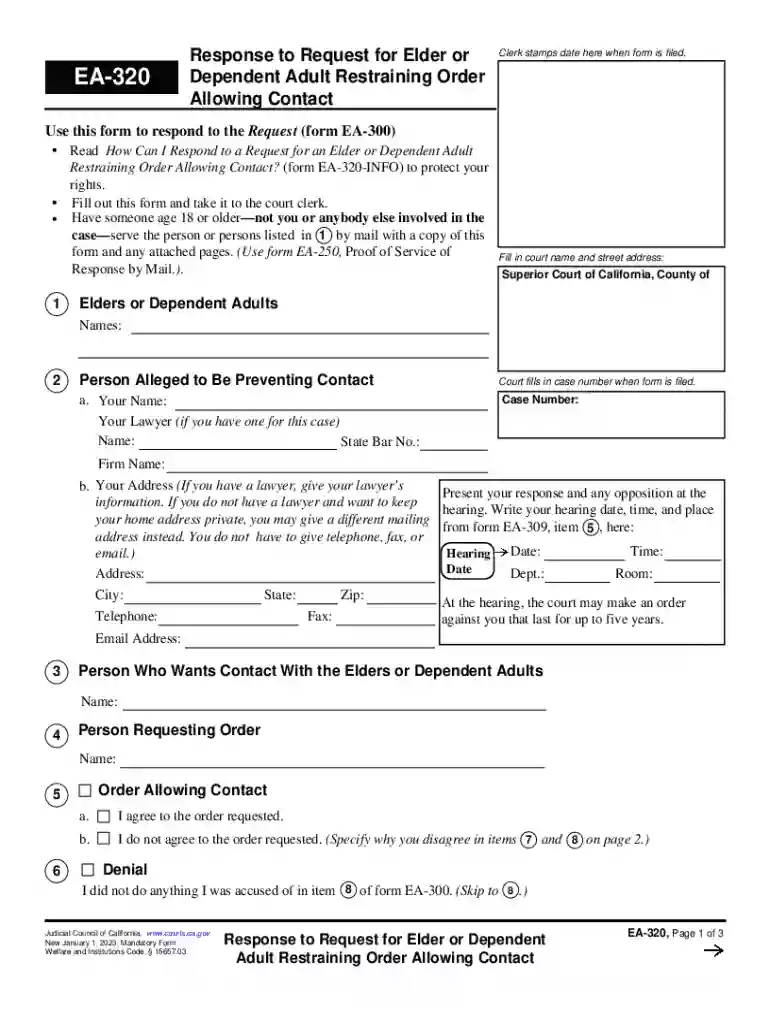
Type text, add images, blackout confidential details, add comments, highlights and more.

Draw your signature, type it, upload its image, or use your mobile device as a signature pad.

Send it via email, link, or fax. You can also download it, export it or print it out.
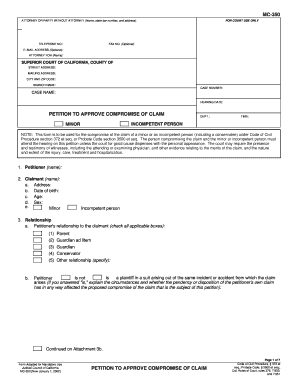
The EA-320 is a legal form used primarily to respond to requests for an Elder or Dependent Adult Restraining Order Allowing Contact. This document holds significant importance in legal proceedings involving the protection of vulnerable individuals. The form serves as a formal response mechanism where individuals can agree or disagree with a restraining order, provide necessary justifications, and request reimbursement for lawyer's fees and associated costs. Filling it out accurately is crucial as it directly affects the outcome of court decisions regarding personal protection and legal disputes involving elder or dependent adults.
Obtaining the EA-320 form is an essential first step in the response process. The form can typically be accessed through court websites related to family law or directly from local courthouses in the United States. Individuals can either download an electronic version for print or complete it online when available. Additionally, legal aid organizations often provide guidance and access to necessary legal forms, including the EA-320, to assist those who may face difficulties in securing the document independently.
Acquisition and Preparation:
Filling Out the Form:
Justifications and Requests:
Reviewing and Finalizing:
The EA-320 is primarily utilized in legal proceedings involving elder or dependent adult protection cases. Its use is vested within the legal framework that protects vulnerable individuals from abuse or unwanted contact. The form ensures that all parties involved have a structured opportunity to present their case and respective viewpoints. The legal application of the EA-320 is integral to maintaining fairness and ensuring all voices are heard in court hearings related to protection orders.
Legal standards and requirements surrounding the EA-320 can vary between states. For instance, submission deadlines, format requirements, and specific procedures for serving the form might differ. Understanding state-specific rules is crucial to ensure compliance and prevent unforeseen legal complications. Consulting state resources or legal professionals familiar with local laws can provide valuable guidance tailored to these regional differences.
Accompanying the completed EA-320 form, certain documents might be necessary to strengthen your response. These may include:
The EA-320 can typically be submitted through several official channels:
Failure to correctly handle or respond using the EA-320 can result in significant repercussions, including automatic approval of the restraining order request without your input, legal penalties, and the inability to reclaim certain legal rights or request fees. It is essential to strictly adhere to guidelines, deadlines, and accurate completion to safeguard your legal interests.
Consider scenarios where an individual seeks to modify terms within a restraining order — the EA-320 is utilized to provide a response outlining why modifications should be made in favor or against the proposed terms. Furthermore, in situations where unjust legal fees are being claimed, respondents can effectively use the form to argue for fair adjustment or denial of excessive fees. These examples highlight the form's practical application in various contentious circumstances.
At DocHub, your data security is our priority. We follow HIPAA, SOC2, GDPR, and other standards, so you can work on your documents with confidence.


Students will use computer software tools for developing quantitative analysis of operations. Particular emphasis will be given to predictive and prescriptive
Jan 1, 2023 Form EA-320 is used to respond to a request for an elder or dependent adult restraining order allowing contact, and must be taken to the court
For more information on the Xerox Nuvera 200/288 EA and MX Production Systems, please contact your Xerox representative, call (1-800-ASK-XEROX), or visit us


