






Definition and Meaning of Domestic Violence Protection Act Forms
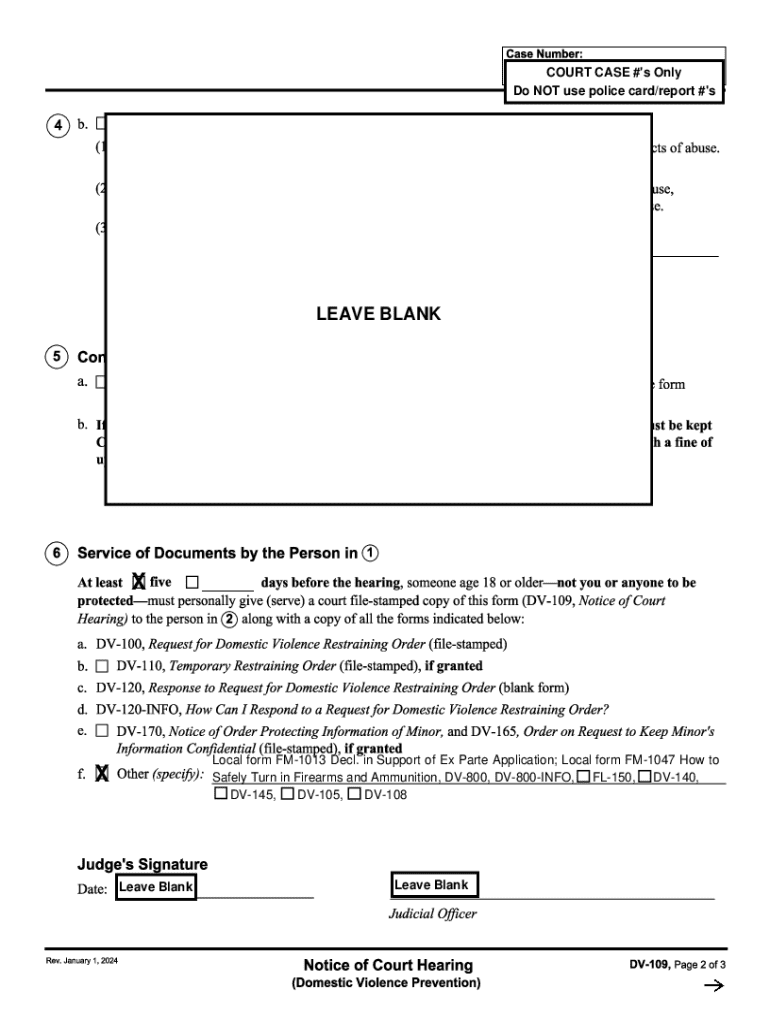
The Domestic Violence Protection Act forms, commonly abbreviated as DVPA forms, are legal documents used to request a restraining order in situations involving domestic violence. These forms are designed to protect individuals from further harm by establishing legal orders that restrict an alleged abuser's actions. The primary function of a DVPA restraining order is to provide immediate protection to individuals who fear for their safety due to instances of abuse or threats. Restraining orders typically include mandates such as prohibiting the restrained person from contacting the petitioner, keeping a physical distance, and avoiding certain locations frequented by the petitioner.
Key Elements of the Domestic Violence Protection Act Forms
- Petitioner's Information: The forms require detailed information about the individual seeking protection, including name, address, and relationship to the alleged abuser.
- Details of Abuse: The petitioner must provide a clear account of the incidents that led to the restraining order request. This includes dates, descriptions, and any injuries sustained.
- Restrained Person's Information: Information about the accused party, such as their name, address, and relationship to the petitioner, must be included to ensure proper identification.
- Requested Court Orders: The forms allow the petitioner to specify which protective orders they seek, such as no-contact orders or exclusion from the family home.
- Supporting Evidence: Any documentation, such as police reports or medical records, that corroborates the claims of abuse should be attached to the filed forms for stronger validation.
How to Use the Domestic Violence Protection Act Forms
Utilizing the DVPA forms involves a structured process that begins with obtaining the necessary paperwork and culminates in submitting it to the court.
- Secure the Appropriate Forms: Obtain the DVPA forms from your local courthouse, legal aid office, or online court portal.
- Detailed Completion: Fill out the forms with accurate and comprehensive information. Ensure every section is completed with the required details, double-checking for accuracy.
- Attach Evidence: Gather and attach any relevant documents or evidence that supports the claim of domestic violence.
- File the Forms: Submit the completed forms to the appropriate court, often through the family law division. Check if any filing fees are required or if fee waivers are available.
- Serve the Papers: Legally serve the filed forms on the restrained person. This must be done by a third party who is not involved in the case, under the protocols established by the court.
- Attend Hearings: Be prepared to attend any court hearings related to the restraining order. Bring copies of the forms, evidence, and any additional documentation to support your case.
Steps to Complete the Domestic Violence Protection Act Forms
- Begin with Personal Information: Ensure all your personal details are accurately filled in to prevent delays or errors in processing.
- Document the Situation: Use specific sections to thoroughly describe any instances of domestic violence, including detailed descriptions of incidents.
- Specify Orders Sought: Clearly outline the specific protections you seek from the court. Common requests include prohibiting contact or exclusive use of shared living spaces.
- Review and Proofread: Carefully review the entire document for mistakes or incomplete sections. Legal advisors or victim support agencies can offer assistance in reviewing forms.
- Submit and Follow Up: Once completed, submit the forms at the designated courthouse, and promptly follow up if the court requires additional information or changes.
State-Specific Rules for the Domestic Violence Protection Act Forms
While the core functions of the DVPA forms are standard across the United States, each state may have specific rules regarding their use.
Variations in Process
- Filing Requirements: Some states may have additional forms or different procedures for filing DVPA forms.
- Restraining Order Types: States might offer various types of protective orders with differing durations and conditions.
- Legal Aid Availability: The availability and scope of legal aid resources can vary by state, affecting how individuals might access help while completing the forms.
Why Should You Use the Domestic Violence Protection Act Forms?
Domestic violence victims utilize DVPA forms for several critical reasons:
- Immediate Protection: These forms serve as a rapid response mechanism to protect individuals from imminent harm by legally restricting an abuser's actions.
- Legal Framework: Providing a structured, legal avenue to seek protection helps strengthen the petitioner's case if future legal actions become necessary.
- Safety and Security: Obtaining a restraining order can significantly reduce the likelihood of further abuse or harassment, providing peace of mind to victims.
Practical Implications
- Documented Evidence: Creating a legal record of abuse can be beneficial for future legal proceedings, including custody battles or divorce cases.
- Preventative Measures: Utilizing DVPA forms acts as a deterrent for potential abusers, effectively alerting them to the legal consequences of their actions.
Examples of Using the Domestic Violence Protection Act Forms
Real-world cases highlight the utility of DVPA forms:
Case Study 1: Immediate Family Protection
A mother files a DVPA restraining order after her partner becomes violent during a household argument. The temporary order protects her and her children, allowing time for a permanent solution to be arranged by the court.
Case Study 2: Workplace Safety
An individual seeks a restraining order against their former partner who has been showing up at their workplace and causing disturbances. The DVPA forms help establish a court order that keeps the abuser away from the office.
Who Typically Uses the Domestic Violence Protection Act Forms?
DVPA forms are typically used by individuals who have experienced domestic violence or harassment situations that pose threats to their safety and well-being.


Common Users Include
- Domestic Partners: Spouses or partners seeking protection from an abusive relationship.
- Family Members: Relatives needing protection from a violent family member.
- Roommates: Individuals sharing residence with an abuser can also file DVPA forms.
This coverage of DVPA forms underscores their vital role in offering legal protection and creating a safer environment for individuals at risk of domestic violence.