




01. Edit your form online
Type text, add images, blackout confidential details, add comments, highlights and more.

Type text, add images, blackout confidential details, add comments, highlights and more.

Draw your signature, type it, upload its image, or use your mobile device as a signature pad.

Send it via email, link, or fax. You can also download it, export it or print it out.
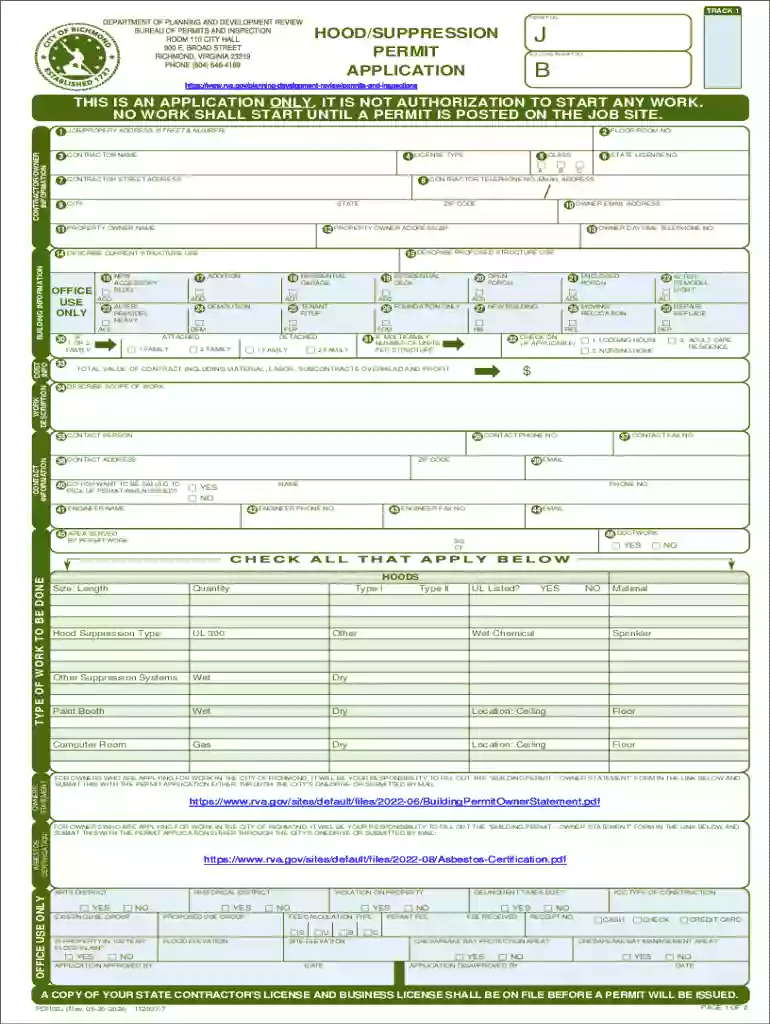
The Hood Suppression Permit Application is a specialized form used to authorize the installation or modification of fire suppression systems in kitchen hoods. These systems are critical in minimizing fire risks in commercial kitchens by detecting and extinguishing fires quickly and efficiently. The form is necessary for ensuring compliance with local safety regulations and standards, which aim to protect both property and human lives by preventing kitchen fires from spreading.
Role in Fire Safety: Fire suppression systems in kitchen hoods activate automatically when a fire is detected, discharging a firefighting agent that quickly douses the flames. The permit ensures that these systems are properly designed and installed.
Regulatory Compliance: The application ensures that installations adhere to the relevant fire safety regulations, which differ by jurisdiction but generally align with national safety standards such as those from the National Fire Protection Association (NFPA).
Completing a Hood Suppression Permit Application involves several steps that require careful attention to detail to avoid delays or rejections.
Gather Required Information: Collect detailed information about the project, including location, anticipated start and end dates, and project descriptions. This includes the type of hood system and its specifications.
Contractor Details: Include the name, contact information, and license number of the contractor responsible for the installation or modification. This ensures the contracting party is qualified and authorized to perform the work.
System Specifications: Provide comprehensive details about the hood suppression system, such as manufacturer details, system model numbers, and the type of extinguishing agent used. Attach diagrams or plans if necessary.
Compliance Certification: Certify that the proposed work complies with relevant codes and standards. This may involve submitting proof of compliance from a licensed professional engineer or fire protection specialist.
Submit Application and Fee: Depending on jurisdiction, there may be an application fee based on the project scope or value. Submissions are typically accepted via online portals, mail, or in person at the relevant fire department or municipal office.
Several critical components must be accurately and thoroughly addressed within the Hood Suppression Permit Application to ensure a successful submission.
Project Details: Description of the work to be performed, including any existing appliances and systems affected by the installation or modification.
Contact Information: Up-to-date and complete contact details for the contractor, property owner, and any other involved parties to facilitate communication throughout the process.
Technical Specifications: Detailed explanation of the fire suppression system components being installed or altered. Technical drawings may be required to illustrate the layout and functionality.
Ensuring all necessary documents accompany the Hood Suppression Permit Application is essential for processing and approval.
Site Plans and Diagrams: Provide detailed site plans showing the layout of the kitchen and placement of the suppression system.
Manufacturer's Specifications: Include specifications from the suppression system’s manufacturer to ensure compatibility and compliance with safety standards.
Professional Certification: Documentation from a certified engineer or similar professional attesting to the system’s compliance with safety standards.
A variety of stakeholders within the building and construction industry make use of the Hood Suppression Permit Application.
Contractors: Professional contractors specializing in kitchen installations and fire safety systems are typically responsible for submitting the application to ensure their work is legally sanctioned.
Property Owners: Owners of commercial properties, such as restaurants, may be directly involved in the application process to ensure their premises are safeguarded against fire risks.


Permit requirements and processes can vary significantly between states, often reflecting differences in regional risk assessments, population density, and historical fire data.
Local Codes and Ordinances: Each state may have unique codes and standards that affect how fire suppression systems are approved and regulated.
Jurisdiction-Specific Forms: Some states or municipalities might require additional forms or information not outlined in the general application form. Always check with local authorities for specific requirements and guidance.
Different jurisdictions may offer various methods for submitting the permit application, depending on their administrative processes and technological capabilities.
Online Submission: Many regions now offer online portals where contractors can submit their applications electronically. This is often the most efficient submission method.
Mail Submission: In areas without digital systems, applications may need to be mailed along with supporting documents.
In-Person Submission: Some municipalities may require in-person submissions, especially if they need to verify certain documents physically or provide immediate feedback.
The application form ensures that all installations comply with legal requirements and that fire suppression systems are installed safely and effectively.
Compliance with Fire Codes: Obtaining a permit through the application process guarantees that the system design conforms to established fire prevention codes, reducing potential liability in case of a fire.
Audit and Inspection: Successfully processed applications typically lead to inspections by local authorities to verify compliance and proper installation of fire suppression systems.
Together, these blocks provide comprehensive insight into the Hood Suppression Permit Application, ensuring users understand every crucial aspect of this critical safety procedure.
At DocHub, your data security is our priority. We follow HIPAA, SOC2, GDPR, and other standards, so you can work on your documents with confidence.
May 30, 2024 SUBMIT THIS WITH THE PERMIT APPLICATION EITHER THROUGH THE CITYS INSTRUCTIONS ON FILLING OUT A HOOD/SUPPRESSION PERMIT APPLICATION.
The Stanford University Fire Marshals Office (SUFMO) is your primary resource for all Fire Protection and Life Safety code compliance information.
Jan 12, 2023 1.2 Applications. This specification applies strictly to land-based applications that use fresh water to produce the foam solution. 1.3


