






Definition and Meaning of Town of Wolcott Minutes
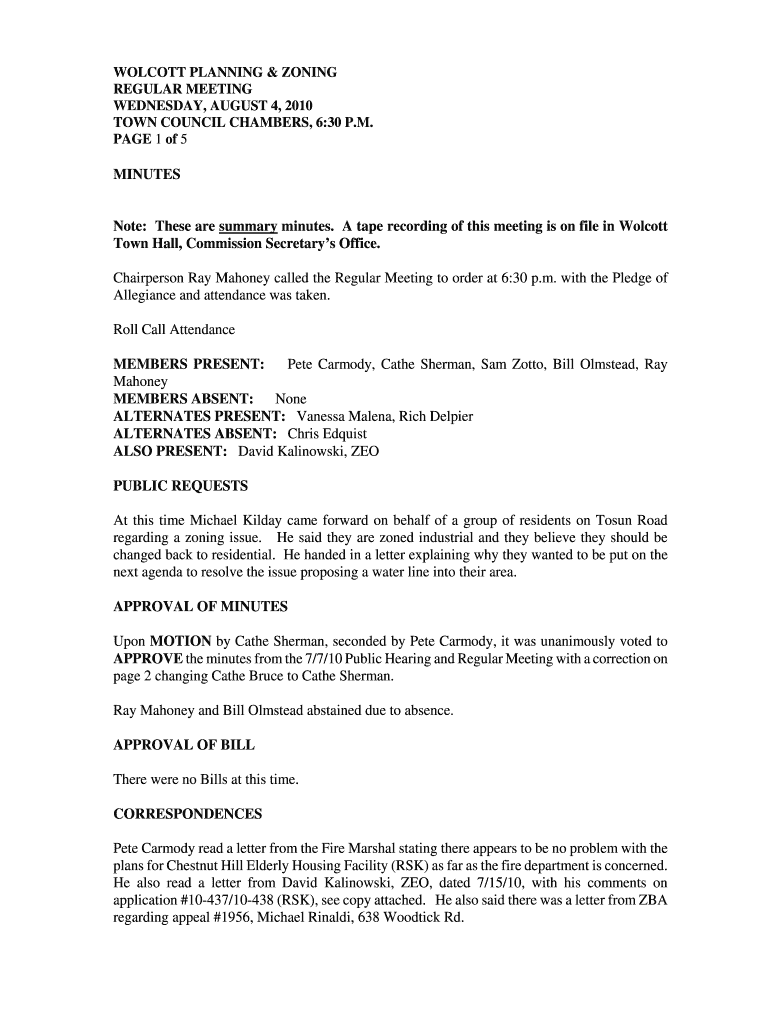
Minutes from the Town of Wolcott provide detailed records of discussions and decisions made during official meetings. These documents are essential for public transparency, accountability, and historical reference. Typically captured during sessions like town council meetings, these minutes summarize proceedings, including the agenda items discussed, actions taken, and decisions reached. They provide a formal account that can be referenced for legal, administrative, or historical purposes.
Key Elements of the Summary Minutes
Summary minutes for the Town of Wolcott encompass several vital components:
- Meeting Details: Includes date, time, and location.
- Participants: Lists attendees, including council members, officials, and guests.
- Agenda Items: Outlines key topics of discussion, such as public requests, zoning changes, or ordinance approvals.
- Decisions Made: Records resolutions, approvals, or rejections of proposals.
These elements ensure that the minutes comprehensively document the meeting proceedings and serve as an authoritative record.
Steps to Complete the Summary Minutes
Creating the summary minutes involves several systematic steps:
- Attendance Verification: Confirming the presence of members and ensuring a quorum.
- Note-Taking: Recording who spoke, what was discussed, and any decisions.
- Drafting: Compiling the initial draft with essential details.
- Review: Sending the draft to attendees for feedback or corrections.
- Approval: Finalizing once reviewed and corrected, then entering into official record.
Completion follows a structured procedure, ensuring accuracy and reliability of the document.
How to Obtain the Summary Minutes
Obtainment of summary minutes can vary depending on accessibility and distribution methods:
- Online Access: Many towns, including Wolcott, may publish minutes on their official website for public access.
- Town Clerk's Office: Physical copies can typically be requested from the town clerk or relevant administrative office.
- Public Libraries: Some libraries maintain archives of local government documents, offering another point of access.
Ensuring availability, these methods guarantee residents can remain informed about local governance.
Who Typically Uses the Summary Minutes
A variety of individuals and entities rely on the Town of Wolcott summary minutes:
- Residents: To remain informed about community decisions affecting their daily lives.
- Local Businesses: For insights into regulations or policy changes impacting operations.
- Researchers and Historians: As a source of historical data or to study trends in local governance.
- Legal Professionals: To substantiate claims or understand precedents in legal matters.
These diverse users highlight the minutes' broad utility.


Legal Use of the Summary Minutes
Minutes serve a legal purpose by documenting the public record of decisions and actions taken by a governing body:
- Evidence in Court: Can be used to clarify or confirm municipal decisions.
- Compliance Checks: Ensures that meetings and decisions comply with open meeting laws.
- Official Records: Maintains a legally recognized archive for future reference.
Their role in legal contexts underscores the importance of meticulous preparation and preservation.
Examples of Using the Summary Minutes
Multiple scenarios demonstrate the use of Town of Wolcott minutes:
- Zoning Issues: When property alterations are planned, residents may consult minutes for context on zoning changes.
- Historical Research: Scholars may analyze past meeting minutes to trace local legislative evolution.
- Policy Advocacy: Community members might leverage past decisions recorded in the minutes to advocate for new or revised policies.
These instances highlight the practical application of meeting minutes.
State-Specific Rules for Minutes
In Connecticut, where Wolcott is located, public meetings are governed by state-specific regulations:
- Freedom of Information Act (FOIA): Mandates public access to meeting minutes within a certain timeframe.
- Record Keeping Standards: Specifies retention periods and methods for maintaining minutes.
Adhering to state laws ensures transparency and accountability in documenting public meetings.
Important Terms Related to the Minutes
Understanding key terms is crucial for interpreting summary minutes:
- Quorum: The minimum number of members needed to validate proceedings.
- Resolutions: Formal expressions of opinion or decision voted on during the meeting.
- Agenda: A structured outline of topics to be discussed during the meeting.
These terms provide clarity and assist in understanding the documented proceedings.