




Definition & Meaning
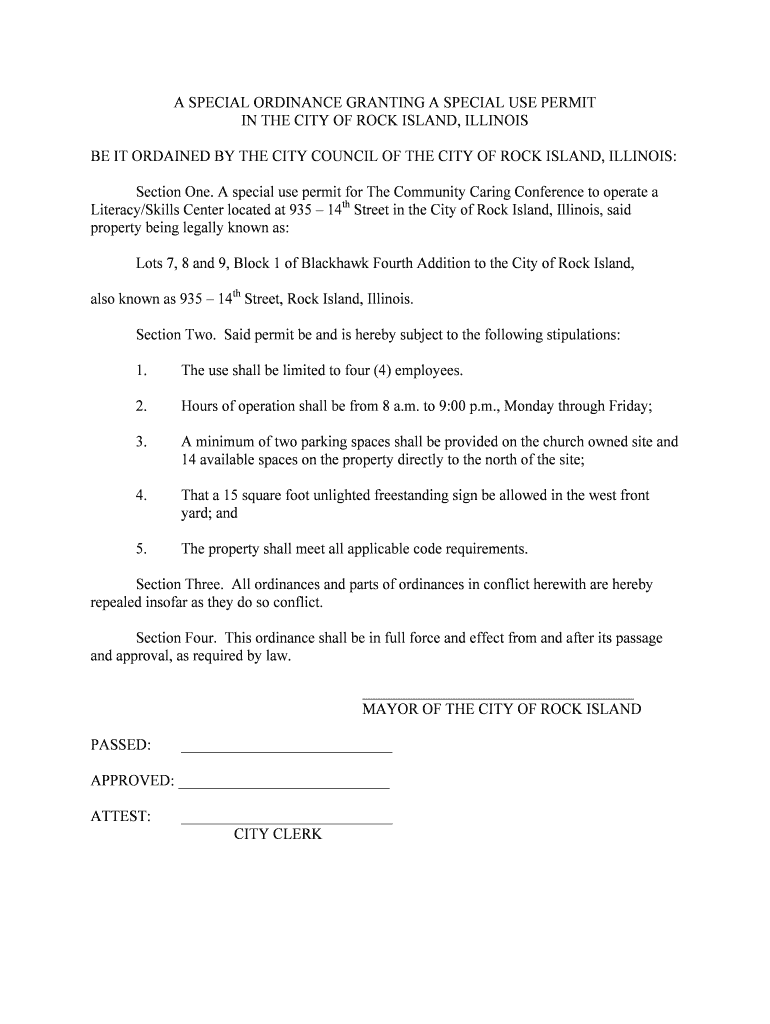
A "Special Ordinance granting a Special Use Permit to the Community" is a regulatory decision made by a local legislative body, such as a city council, to allow a particular piece of land to be used in a way that is not otherwise permitted under the local zoning laws. This ordinance provides specific permissions tailored to unique community needs, allowing for exceptions based on detailed stipulations.
Key Aspects of the Ordinance
- Zoning Exceptions: Overrides specific zoning laws for certain uses.
- Community Focus: Tailored to address local community needs.
- Detailed Requirements: May include conditions such as parking, signage, and operational limits.
How to Obtain the Special Ordinance
To secure a special ordinance granting a special use permit to the community, applicants typically must engage in a multi-step process involving the local government. This involves submitting a formal application, participating in public hearings, and undergoing a review process.
Application Process
- Pre-Application Meeting: Meet with city planning staff to discuss project details.
- Submit Application: Provide detailed plans and supporting documents.
- Public Hearing: Present your proposal before the city council.
- Council Decision: Await the council's vote on your application.
Documentation Required
- Site plans and developmental proposals.
- Community impact analysis.
- Compliance with local codes and ordinances.
Steps to Complete the Special Ordinance Process
Completing the special ordinance process involves careful preparation and adherence to local legislative procedures. Here are the steps typically involved:
Detailed Procedure
- Research: Understand zoning laws and community plans.
- Draft Proposal: Clearly outline the intended use and benefits.
- Stakeholder Engagement: Communicate with community members.
- Review and Revising: Adapt the proposal based on feedback.
- Final Submission: Submit the finalized application to the local authority.
Important Considerations
- Ensure all necessary information is detailed in the application.
- Be prepared for potential requests for additional information or modifications.
Why You Should Use a Special Ordinance
Obtaining a special ordinance offers several advantages for businesses and organizations looking to operate in ways that typical zoning laws might restrict.
Advantages
- Flexibility: Allows for unique uses not permitted by default zoning.
- Community Benefits: Enables projects that serve local needs, which might otherwise be impossible.
- Potential for Growth: Facilitates business expansion in targeted locations.
Example Benefits
- Housing developments in commercial zones.
- Community centers in residential areas.
Who Typically Uses the Special Ordinance
Special ordinances are utilized by a diverse range of applicants, including developers, non-profit organizations, and businesses, aiming to engage in activities or constructions that fall outside standard zoning parameters.

Typical Users
- Developers: Seeking to integrate mixed-use projects.
- Non-Profits: Wanting to operate community-focused centers, like literacy programs.
- Small Businesses: Expanding operations in restrictive zones.
Key Elements of the Special Ordinance
Understanding the key components of the special ordinance is essential for effective application and compliance.
Core Components
- Operational Guidelines: Details on hours, staffing, and visitor limits.
- Structural Requirements: Details about physical changes permissible under the ordinance.
- Compliance Obligations: Rules for legal and safety standards.
Examples
- A literacy center must adhere to specific safety codes and signage restrictions.
Legal Use of the Special Ordinance
Legal compliance is crucial in utilizing a special ordinance, as failing to adhere can result in significant consequences.
Compliance Requirements
- Adherence to Conditions: Must follow all specified conditions of the ordinance.
- Regular Reviews: Routine inspections to ensure compliance.
Consequences of Non-Compliance
- Possible revocation of the permit.
- Fines or legal actions if conditions are violated.
Business Types that Benefit Most
While many businesses might consider applying for a special ordinance, certain types benefit specifically due to their nature and operational goals.
Beneficiary Business Types
- Startups: Looking to redefine space usage.
- Education Facilities: Such as skills centers in residential areas.
- Community Services: Including health clinics or recreation facilities.
Utilizing a special ordinance efficiently can redefine operational capabilities, allowing businesses and organizations to contribute significantly to community development without being limited by traditional zoning constraints.