






Definition and Meaning
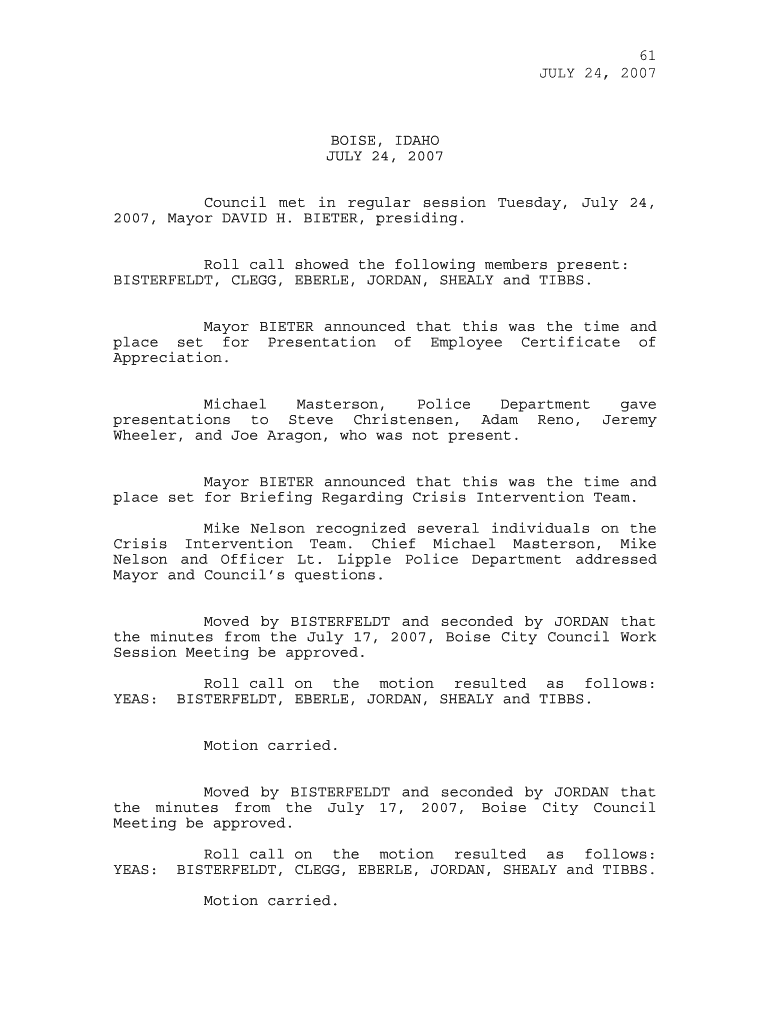
The content titled "61 JULY 24, 2007 BOISE, IDAHO JULY 24, 2007 Council met in" appears to refer to the documented minutes of a specific Boise City Council meeting. During such meetings, council members gather to discuss various city-related topics, including public safety, urban development, legal ordinances, and community welfare. The documentation serves as an official record, capturing the discussions, decisions, and resolutions adopted during these sessions. Understanding the significance of these records helps city residents and officials track resolutions, policy changes, and administrative procedures over time.
Functions of City Council Meetings
- Policy Discussion and Approval: City councils serve as the primary legislative body, engaging in the discussion and approval of policies affecting residents.
- Transparency and Accountability: Providing a transparent record of meetings ensures accountability, allowing citizens to review decisions impacting their community.
- Public Participation: Residents are often encouraged to attend these meetings, fostering direct participation in civic governance.
Key Elements of the Council Meeting
A typical city council meeting like the one held on July 24, 2007, in Boise, Idaho, would include several key components:
- Agenda Overview: A structured list of topics and issues to be discussed during the meeting.
- Attendance Record: Documentation of attendees, including council members, city officials, and public observers.
- Presentations and Reports: Detailed presentations by city officials or departments, covering progress and updates on various projects or concerns.
- Approval of Past Minutes: Members review, correct, and approve the minutes from previous meetings to ensure accuracy.
Sub-discussions
- Crisis Intervention Initiatives: Discussions may focus on strategies for crisis management and intervention, addressing community concerns like homelessness or emergencies.
- Crime Statistics Briefings: Regular updates on local crime statistics, which inform council decisions on public safety measures and resource allocation.
How to Use the Council Meeting Records
City council records serve various practical and legal purposes:
- Reference for Policy Decisions: They provide a factual basis for future policy decisions by referencing past discussions and resolutions.
- Community Engagement: Residents can use these records to stay informed about local governance and actively engage in civic matters.
- Research and Analysis: Researchers analyze these documents to study urban planning, governance trends, or historical events within the city.
Steps to Complete the Document
When creating a similar document:
- Finalize the Agenda: Outline topics and objectives for the meeting.
- Record Attendance: Document all participants, noting any absences.
- Detail Discussions: Capture key discussion points, decisions, and assigned action items.
- Vote and Approve: Document the voting process and ensure that decisions are recorded accurately.
- Review and Approve Minutes: Validate the draft with council members and make necessary corrections before final approval.
Why You Should Review Council Minutes
Reviewing city council minutes benefits various stakeholders:
- Citizens: Stay informed about decisions impacting local amenities, zoning, and public services.
- Business Owners: Understand local legislative changes that may affect business operations or growth strategies.
- Policy Makers: Use insights and public feedback recorded during sessions to craft more inclusive policies.
Who Typically Uses These Records
The records from such council meetings are essential for different individuals and groups:
- Local Government Officials: Track and manage city administration effectively.
- Legal Professionals: Reference during litigation or when dealing with municipal permits.
- Community Advocates: Use records as tools in promoting transparency and accountability.


Important Terms Related to Council Meetings
Understanding terminology is crucial for interpreting council meeting records:
- Ordinance: A law set forth by the municipal authority.
- Resolution: A formal expression of opinion or intention agreed upon by the council.
- Plat: Maps or plans of land divisions reviewed during development discussions.
Legal Use of the Records
Legal frameworks dictate the recording, distribution, and access of city council meeting minutes:
- Public Records Laws: Ensure that residents have the right to access meeting records, maintaining governmental transparency.
- Document Retention Policies: Define the duration these records must be kept and accessible for public or administrative purposes.
Examples of Council Meeting Discussions
To illustrate the practical aspects of these meetings, consider hypothetical scenarios:
- Urban Development: Discussing the approval of new housing developments or rezoning proposals to meet community growth.
- Public Health: Debating the implementation of new health regulations following a pandemic or health crisis.
- Environmental Policies: Introducing ordinances that promote sustainable practices within city operations.
Through such detailed documentation and analysis of council meetings, stakeholders can ensure effective governance, informed civic participation, and community-driven development.