







Definition and Purpose of the On-Going Training Packet for Conferences
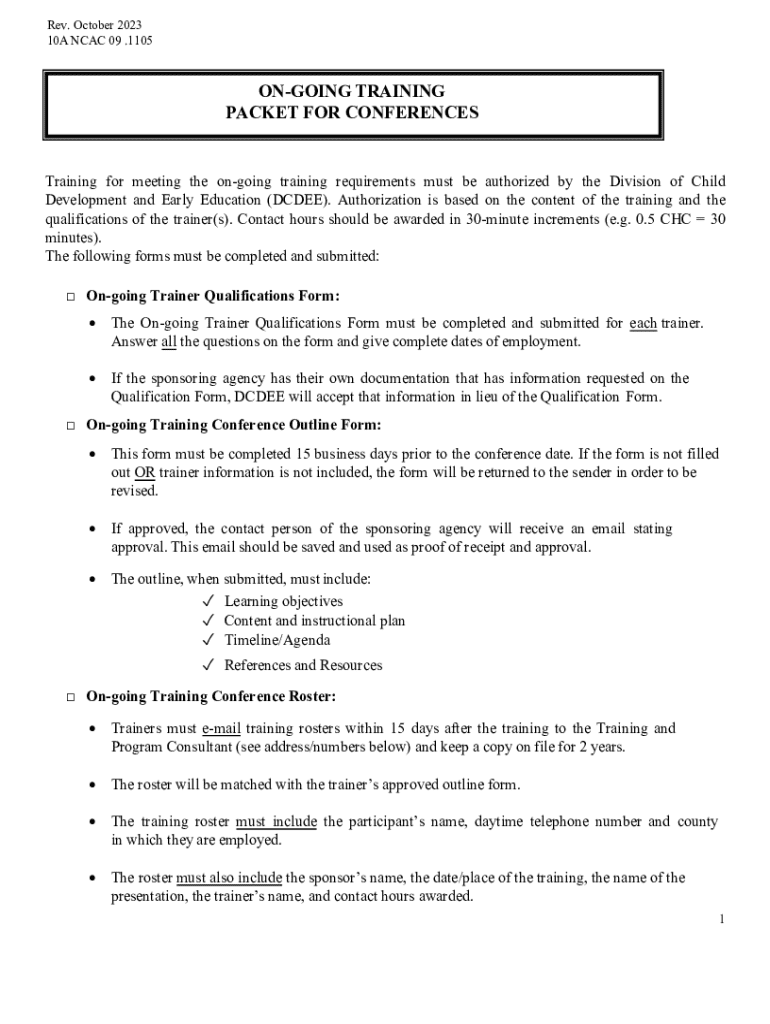
The On-Going Training Packet for Conferences refers to a structured set of documents and guidelines specifically designed to manage and conduct training sessions within conference settings. Its primary function is to facilitate the efficient planning and execution of training sessions by providing detailed instructions and necessary forms. This packet ensures compliance with educational standards, catering to various audiences like educators, conference organizers, and corporate trainers. It typically includes key elements such as trainer qualifications, training outlines, participant rosters, and evaluation forms.
How to Use the On-Going Training Packet for Conferences
Utilizing the On-Going Training Packet involves several critical steps to ensure a successful training session:
- Preparation: Begin by reviewing the entire packet to understand the requirements, including necessary forms and procedures.
- Trainer Qualifications: Verify that trainers meet the mandatory qualifications specified within the packet, ensuring compliance with set guidelines.
- Content Development: Develop training materials and outlines aligned with the specified content standards. Use the packet as a guide to structure presentations and workshops.
- Participant Management: Collect necessary information from attendees using rosters and ensure participant engagement through interactive modules as suggested in the packet.
- Evaluation and Feedback: Utilize provided evaluation forms for obtaining feedback from participants to refine future training sessions.
Steps to Complete the On-Going Training Packet for Conferences
Completing the On-Going Training Packet for Conferences involves adhering to specific procedures to ensure all requirements are fulfilled:
- Document Collection: Gather all documents, including training outlines and qualification forms required by the packet.
- Prior Approval: Submit necessary documents for prior approval if specified, especially if facing deadlines.
- Form Completion: Fill out all rosters, evaluation forms, and certification documents accurately. Ensure no participant data is omitted.
- Record Keeping: Maintain a thorough record of signed forms, evaluation summaries, and certification issuance for future reference.
Key Elements of the On-Going Training Packet for Conferences
Understanding the integral components of the packet is essential for effective utilization:
- Trainer Qualifications: Documentation of trainers' credentials and expertise areas.
- Training Outlines: Detailed plans and objectives for each training session.
- Rosters and Attendance Logs: Essential for tracking participant involvement.
- Evaluation Forms: Tools for assessing the effectiveness of training programs.
- Certificates of Completion: Provided to attendees upon successful completion of sessions.
Who Typically Uses the On-Going Training Packet for Conferences
Various groups leverage this packet to maintain standardization across training sessions:
- Educational Institutions: Used by lecturers and administrative staff to ensure compliance with academic and professional development standards.
- Corporate Trainers: Essential for HR departments to deliver consistent training across multiple branches.
- Conference Organizers: Streamlines the management process while ensuring state-specific regulations are adhered to.
- Government Agencies: Utilized for standardizing training within public service sectors.

Legal Use of the On-Going Training Packet for Conferences
The legal aspects surrounding the use of the training packet are crucial:
- Compliance: Ensures adherence to state and federal educational mandates.
- Licensure Requirements: May include specific directives regarding licensed professionals conducting sessions.
- Data Protection: Emphasizes safeguarding participant data and maintaining confidentiality in line with security protocols.
State-Specific Rules for the On-Going Training Packet for Conferences
Adapting the packet to meet state-specific regulations is often necessary:
- North Carolina Example: The Division of Child Development and Early Education mandates include specific guidance for child development training sessions.
- Variations by State: Different states might impose unique prerequisites regarding trainer credentials and reporting methods.
Important Terms Related to the On-Going Training Packet for Conferences
Familiarity with specific terminology enhances understanding and application:
- "Trainer Qualifications": Refers to the professional standards trainers must meet.
- "Session Outlines": Detailed frameworks outlining objectives and materials for training events.
- "Evaluation Protocols": Pre-defined methods for collecting and analyzing participant feedback.
- "Certification Process": The procedure through which completion certificates are issued to participants.
This comprehensive coverage of the On-Going Training Packet for Conferences provides an in-depth understanding of its structure, utility, and application across educational and professional training settings.




