
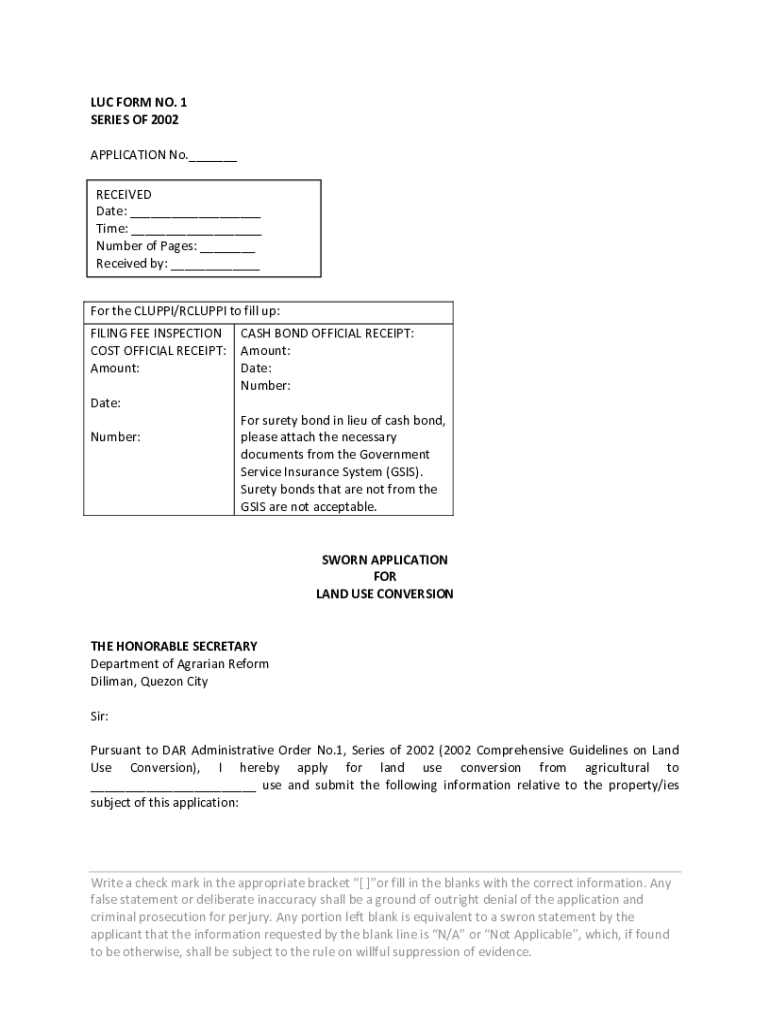







Definition and Purpose of the Notice of Land Use Conversion Application (LUC Form No 1)
The "Notice of Land Use Conversion Application (LUC Form No 1)" is a formal document utilized primarily within the context of changing the designated use of a land parcel from agricultural to non-agricultural purposes. Developed under the oversight of the Department of Agrarian Reform in the Philippines, this form serves as the starting point for stakeholders wishing to transform land use in compliance with regulatory requirements. It fundamentally involves a comprehensive assessment of the land, ensuring that such conversions align with national agricultural policies and objectives.
How to Obtain the LUC Form No 1
To procure the LUC Form No 1, applicants should first contact the Department of Agrarian Reform. It is typically available through their official website or regional offices. Ensuring you obtain the most recent version of the form is crucial to avoid any processing delays that might occur if outdated forms are submitted. Additionally, some local government units may offer resources to guide applicants through the process, helping to fulfill prerequisites for submission.
Steps to Complete the LUC Form No 1
-
Gather Required Information:
- Applicant's full name, contact details, and identification information.
- Details of the subject land, including its current use, size, and location.
- Information on land developers or stakeholders involved.
-
Fill in Property Details:
- Document the land title number and any relevant ownership documentation.
- Include schematic layouts or maps showing the property in context to surrounding areas.
-
Complete Developer Details:
- Provide full information about the land developer, if applicable.
- Outline the proposed development or usage plan for the land.
-
Meeting Legal Requirements:
- Ensure thoroughness to avoid legal repercussions related to inaccuracies.
- Attach all mandatory ancillary documents that substantiate the requested conversion.
Why Use the LUC Form No 1
The LUC Form No 1 is indispensable for landowners or developers aiming to rezone or repurpose agricultural land legally. Its use is mandated to ensure that all conversions meet agrarian reform laws and guidelines, thereby sustaining agricultural resources and responsibly managing land use change.
Key Elements of the LUC Form No 1
- Applicant Information: Collects details about the individual or entity applying for conversion.
- Land Details: Comprehensive section on land holdings and proposed use.
- Compliance Check: Ensures that all sections comply with existing legal frameworks.
- Attachments Section: Requires necessary supporting documents such as land titles, maps, and certifications.
Legal Use of the LUC Form No 1
This form is legally binding and affects land ownership and use rights. Misstatements or omissions may lead to legal penalties, reinforcing the importance of accuracy and completeness. Proper submission and subsequent approval from the relevant department are mandatory to commence any form of land development as specified in the application.
Required Documents for Submission
- Original and certified true copies of the land title.
- Development plan or proposal.
- Any bond or fee receipt as prescribed by the regulatory authority.
- Proof of payment for any filed charges related to the application process.
Application Process and Approval Time
The application process begins with the submission of the form along with all required documents. Following an initial review, the department may conduct site inspections or request additional information. Approval times can vary, typically spanning several weeks to a few months, depending on the application's completeness and any procedural reviews it requires.
State-Specific Rules for Land Use Conversion
While the LUC Form No 1 operates under national regulations, variations may exist based on regional policies or local government regulations. Applicants should verify local stipulations that might impact the conversion process, ensuring compliance with both national and state-level legal requirements.




