
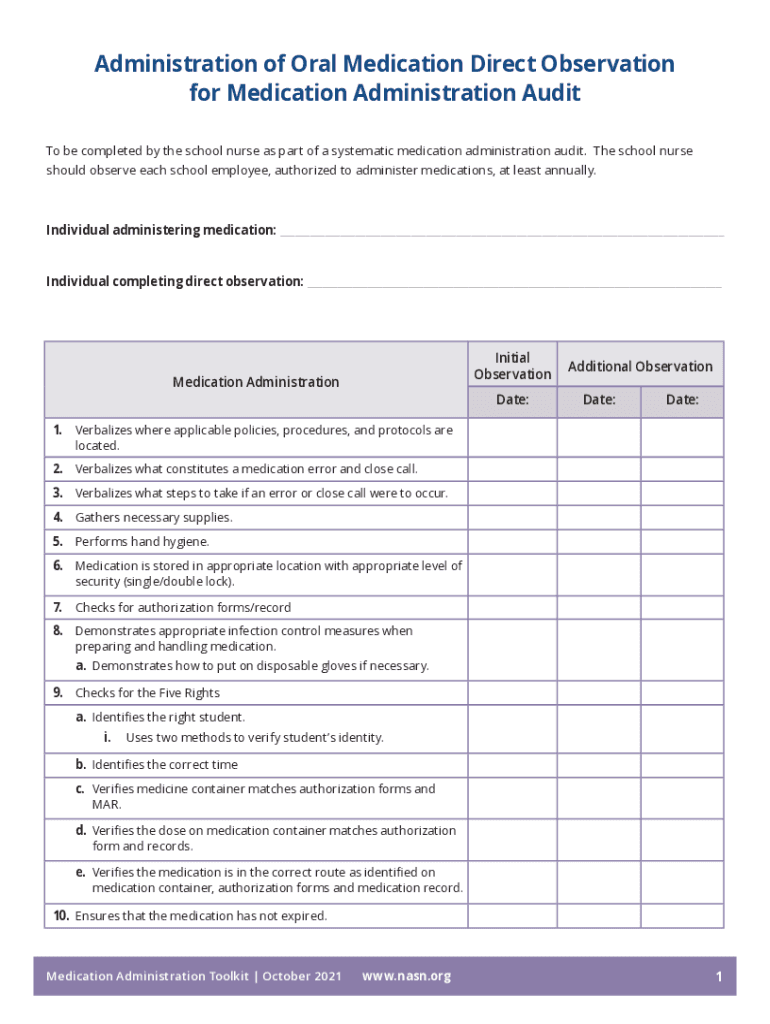







Understanding the Audit of Medication Administration in Schools
This section provides a comprehensive overview of what a medication administration audit entails, specifically in the context of schools. It highlights the scope and importance of the audit in ensuring compliance with school policies and safety protocols.
The audit primarily focuses on how school nurses and authorized staff manage and dispense oral medications to students. It includes observing processes to verify that procedures such as checking the student's identity, handling medication appropriately, and documenting each administration are strictly followed.
Purpose and Objectives of the Audit
- Ensuring Accuracy: The audit aims to minimize medication errors by ensuring prescribed medicines are administered correctly.
- Compliance: It helps in observing compliance with established school health policies.
- Safety: The goal is to secure student safety by verifying safe medication handling and proper documentation.
By strictly adhering to these practices, schools can maintain high safety standards for medication administration.
Steps to Complete the Medication Administration Audit
Conducting this audit involves a series of steps to comprehensively evaluate the medication administration process within a school setting. Here is a detailed breakdown of these steps:
-
Preparation and Planning
- Develop an audit checklist focusing on key areas like verification of student identity, medication dosage, and administration documentation.
- Schedule audit sessions with authorized personnel involved in the administration process.
-
Observational Assessment
- Observe the medication administration process, ensuring each step aligns with the checklist criteria.
- Pay special attention to critical moments such as identity verification, dosage checks, and record-keeping.
-
Documentation Review
- Examine log entries post-administration to ensure accurate recording of details such as time, dosage, and any observed side effects.
- Verify compliance with legal documentation standards.
Key Elements to Observe
- Student Verification: Ensure the identity of students is cross-checked prior to medication delivery.
- Dosage Confirmation: Confirm that the correct dosage is administered as per the physician's instructions.
- Record Accuracy: Review whether the distribution and effects of medication have been accurately logged.
Importance of Conducting the Audit
Conducting a medication administration audit in schools has significant implications:
- Reduces Errors: Routine checks help identify potential risks and weaknesses in the administration process.
- Enhances Safety: Protects students by ensuring medication is provided in a safe and controlled manner.
- Promotes Accountability: Encourages responsible behavior among school staff, leading to more diligent adherence to protocols.
By maintaining rigorous standards, schools can safeguard student health and foster a culture of safety and responsibility.
Who Typically Uses the Medication Administration Audit


Key Personnel Involved
- School Nurses: Primarily responsible for overseeing medication management and ensuring that authorized practices are followed.
- School Administrators: Oversee the implementation of the audit process and work on policy improvements based on audit results.
- Healthcare Providers: May be consulted to provide guidance on medication management to ensure health guidelines are not just met but exceeded.
Legal Use and Compliance
The legal framework governing the medication administration audit in schools is essential to ensure full compliance with state and federal laws.
State and Federal Regulations
- State-Specific Policies: Different states may have varying requirements for conducting these audits, making it necessary to consult localized regulations.
- Federal Compliance: Ensure all processes and record-keeping align with the Family Educational Rights and Privacy Act and other relevant federal guidelines.
Ensuring adherence to these legal requirements not only avoids potential legal disputes but also enhances trust among parents regarding their child's safety at school.
Electronic vs. Paper Documentation
Advantages of Digital Documentation
- Efficiency: Electronic records allow for easier access, editing, and sharing of documents.
- Security: Secure digital platforms can provide enhanced protection of sensitive information.
- Sustainability: Minimizes paper usage and contributes to more sustainable practices.
Transition Challenges
Despite the benefits, moving from paper to digital can involve challenges such as:
- Training staff on new software
- Initial data migration efforts
Options and Alternatives for Medication Administration Forms
While the focus is on the audit form, there exist a variety of related forms and templates tailored for specific school environments, such as:
- Medication Log Templates: These track daily administration events and observations.
- Parent Consent Forms: Obtain parental permission for administering specific medications.
Adopting varied form solutions can accommodate different situations, ensuring that all aspects of medication administration are documented and managed effectively.




