
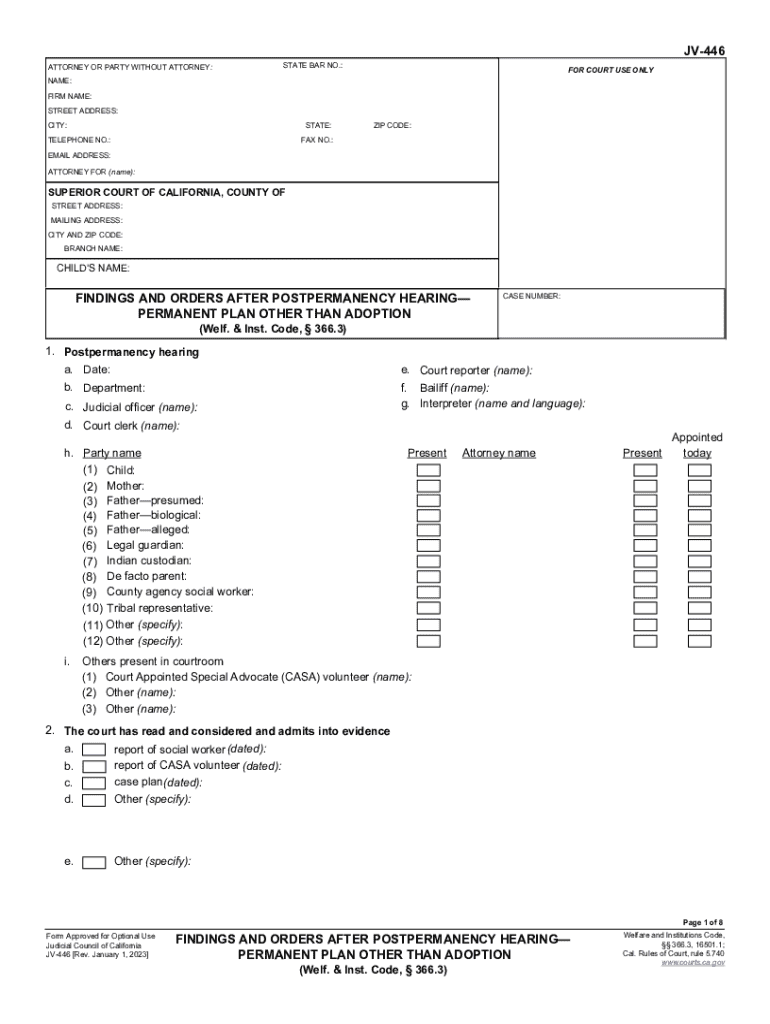







Definition and Purpose of Jv-446
The Jv-446 form is a crucial document used in California's juvenile court system. It is specifically designed for postpermanency hearings concerning a child's permanent plan when adoption is not an option. This form plays an essential role in documenting and outlining the court's decisions regarding the child's living arrangements, parentage, and the overall development of a case plan aimed at supporting the child's best interests.
Key Elements of Jv-446
- Court Findings: The form captures the court's findings about the child's current situation and placement options.
- Placement Details: It specifies the child's living arrangement and any changes that need to be made.
- Parentage Information: This section is devoted to documenting known parentage or legal guardianship details.
- Case Plan: The form includes a comprehensive outline of the proposed case plan for the child, addressing their well-being and future.
Steps to Complete the Jv-446
Completing the Jv-446 involves several detailed steps that ensure all necessary information is accurately provided.
- Personal Information: Begin by filling in the child's basic details, including name and date of birth.
- Current Living Arrangement: Provide specifics on where and with whom the child is currently residing.
- Court Findings: Document the court's findings related to the child’s needs and recommended permanent plan.
- Health and Education Needs: Ensure this section is thorough, detailing any special educational programs or health services the child requires.
- Service Recommendations: Outline suggested services or interventions aimed at supporting the child’s development and well-being.
- Signatures: Finally, ensure all necessary parties have signed the document to validate the details provided.
Legal Use and Importance of Jv-446
The Jv-446 form is legally significant as it assists in ensuring that all decisions made during postpermanency hearings are transparent and records are maintained for future reference.
- Judicial Accountability: The form holds the court responsible for its findings and decisions regarding the child’s care.
- Child Welfare: By documenting educational and health needs, the form guarantees that the child's best interests are prioritized.
- Parental Guidance: It lays out advisements given to parents and guardians, facilitating informed involvement in the child's life.
Who Typically Uses the Jv-446
The primary users of the Jv-446 are parties involved in California's juvenile court proceedings concerning child welfare.
- Judges and Court Officials: They rely on the form to ensure comprehensive documentation of hearings and decisions.
- Child Protection Services: Social workers and related personnel use the form to align on child placement and care plans.
- Parents and Guardians: They use the form for reference on the court's decisions and planned interventions for their child.

Gathering Required Documents for Jv-446
To accurately complete the Jv-446, several supporting documents are typically needed:
- Identification: For both the child and concerned parties.
- Previous Court Orders: Any prior documentation relevant to the child's case.
- Educational Records: Information pertaining to the child’s academic status and needs.
- Medical Records: Necessary to determine and plan for any health services required.
State-Specific Rules and Considerations
California has specific guidelines that influence how the Jv-446 is completed and interpreted.
- Adoption Alternatives: As the form is for situations where adoption is not pursued, understanding alternative permanent plans is essential.
- State Regulations: Comply with California’s specific legal requirements regarding juvenile welfare documentation.
- Forms and Submission: Adhere to state guidelines on how and where forms must be submitted to ensure compliance.
Examples and Scenarios of Jv-446 Usage
Understanding Jv-446 in action helps highlight its utility and the variety of situations in which it is used.
- Case Study: In a scenario where a child is placed in foster care, the Jv-446 ensures all aspects of living conditions and future plans are clearly laid out.
- Real-World Application: Consider a case where a child's educational needs change; the form will be updated to reflect new requirements and services.
Comparison of Digital and Paper Versions
Both digital and paper versions of the Jv-446 are used, each presenting its advantages and potential drawbacks.
- Digital Version: Offers ease of update and sharing among courtroom and social services personnel, fostering collaboration.
- Paper Version: Provides a tangible record that can be more accessible for individuals less comfortable with digital files.
- Choosing Format: The decision may depend on the particular courtroom's resources or involved parties' preferences.
By meticulously outlining the form's functions and filling it accurately, stakeholders can support the complex, dynamic needs of children within the juvenile justice system, ensuring decisions promote their welfare and align with legal standards.




