
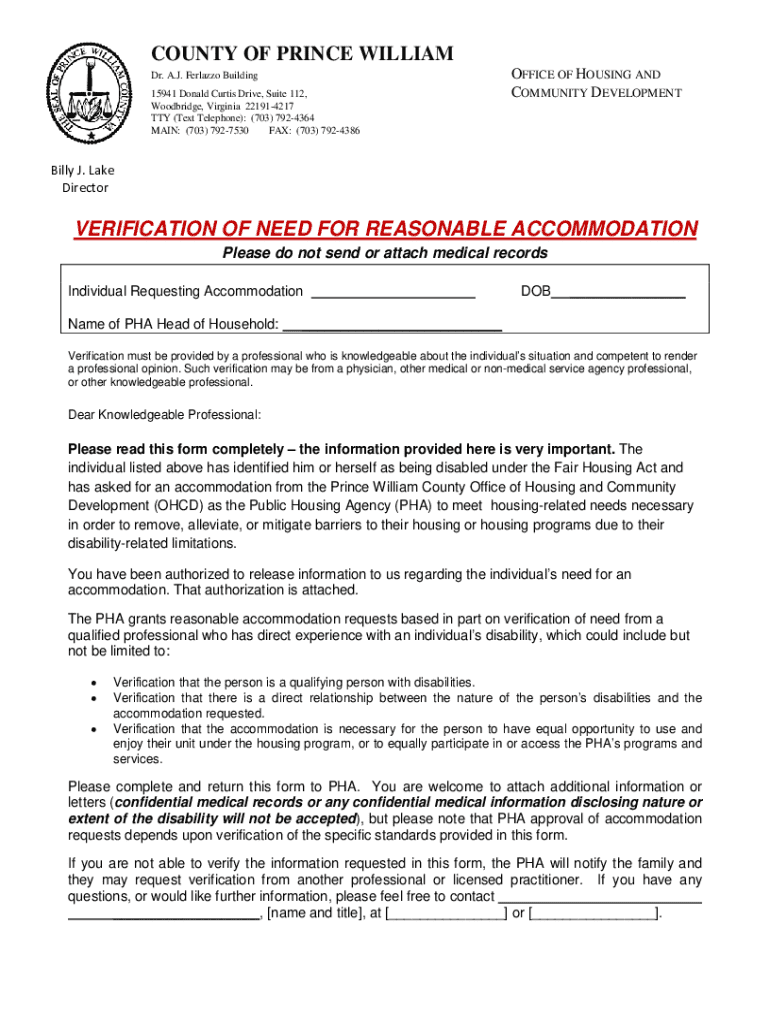







Definition and Meaning
The Verification of Need for Reasonable Accommodation form is an official document utilized to confirm whether an individual with a disability requires specific accommodations under the Fair Housing Act. This form plays a crucial role in ensuring that individuals with disabilities have equal access to housing opportunities by formally verifying both the disability and the necessary accommodations. This document is typically employed in housing contexts, particularly when a tenant or prospective tenant seeks accommodations to facilitate an equal living environment.
How to Use the Verification of Need for Reasonable Accommodation
To properly use the Verification of Need for Reasonable Accommodation form, follow these guidelines:
- Identification and Verification: Capture the essential information about the individual requesting accommodation, including details of their disability.
- Documentation of Needs: Clearly articulate the specific accommodations being requested to address or aid the disability.
- Completion by Professionals: Ensure the form is completed by relevant professionals, such as healthcare providers, who can officially verify the legitimacy and necessity of the accommodation.
- Submission: Once filled, submit the form to the relevant housing authority, landlord, or entity responsible for processing accommodation requests.
How to Obtain the Verification of Need for Reasonable Accommodation
Obtaining this form can be straightforward:
- Contact Housing Authorities: Request the form from local housing authorities, property managers, or real estate agencies involved in federal housing programs.
- Online Access: Many organizations provide digital access to forms like these, allowing you to download and complete them electronically.
- Legal Services: Consulting with legal services can also help in acquiring the necessary forms, especially for assistance with completion or submission.
Steps to Complete the Verification of Need for Reasonable Accommodation
- Read Instructions Carefully: Begin by reviewing the complete form and its instructions to understand what information is required.
- Fill Personal Information: Enter the individual’s full name, address, and contact information.
- Detail the Disability: Provide specifics of the disability, ensuring medical records are not included.
- Specify Accommodation Needs: Precisely outline what accommodations are necessary and how they assist in mitigating the disability.
- Professional Completion: Ensure a qualified professional verifies the disability and necessity for accommodation, substantiating claims within their area of expertise.
- Review and Submit: Double-check all information for accuracy before submission to the appropriate housing authority or entity.
Why You Should Verify the Need for Reasonable Accommodation
Verifying the need for reasonable accommodation is essential because:
- Legal Compliance: It ensures compliance with federal laws such as the Fair Housing Act, which prohibits discrimination against individuals with disabilities.
- Promoting Fairness: Provides equal opportunity to access housing, ensuring individuals with disabilities are not disadvantaged.
- Establishing Necessity: Verifies the specific needs of individuals to landlords and housing authorities, facilitating timely and appropriate accommodations.
Who Typically Uses the Verification of Need for Reasonable Accommodation
- Tenants: Current or prospective tenants who require modifications to their living situation to accommodate disabilities.
- Healthcare Professionals: Doctors, psychologists, or occupational therapists who can confirm an individual’s disability and associated needs.
- Housing Authorities: Those responsible for ensuring reasonable accommodations are provided to residents and applicants, such as property managers or landlords.

Important Terms Related to the Verification of Need for Reasonable Accommodation
Understanding key terminology is important for this form:
- Fair Housing Act: A federal law that ensures non-discrimination in housing based on disabilities.
- Reasonable Accommodation: Adjustments or modifications needed in a housing unit to afford an individual with disabilities equal housing options.
- Disability Verification: The professional confirmation of a disability’s existence and the necessity of requested accommodations.
- Legal Professionals: Individuals who can offer guidance on completing the form in accordance with legal requirements.
Legal Use of the Verification of Need for Reasonable Accommodation
The legal use of this form involves:
- Compliance with Federal Law: Ensures adherence to the Fair Housing Act's requirements.
- Documentation for Legal Procedures: Can be used as part of legal processes to verify non-discrimination in housing.
- Protection of Rights: Acts as an official record to protect tenants’ rights to necessary accommodations without facing discrimination.
Key Elements of the Verification of Need for Reasonable Accommodation
Critical components of the form include:
- Personal Information Section: Captures information about the individual requiring the accommodation.
- Description of Disability: Outlines the disability without requiring sensitive medical records.
- Accommodation Specification: Details the specific accommodations being requested.
- Verification by a Professional: Requires certification by a qualified professional to verify the legitimacy of the need.




