
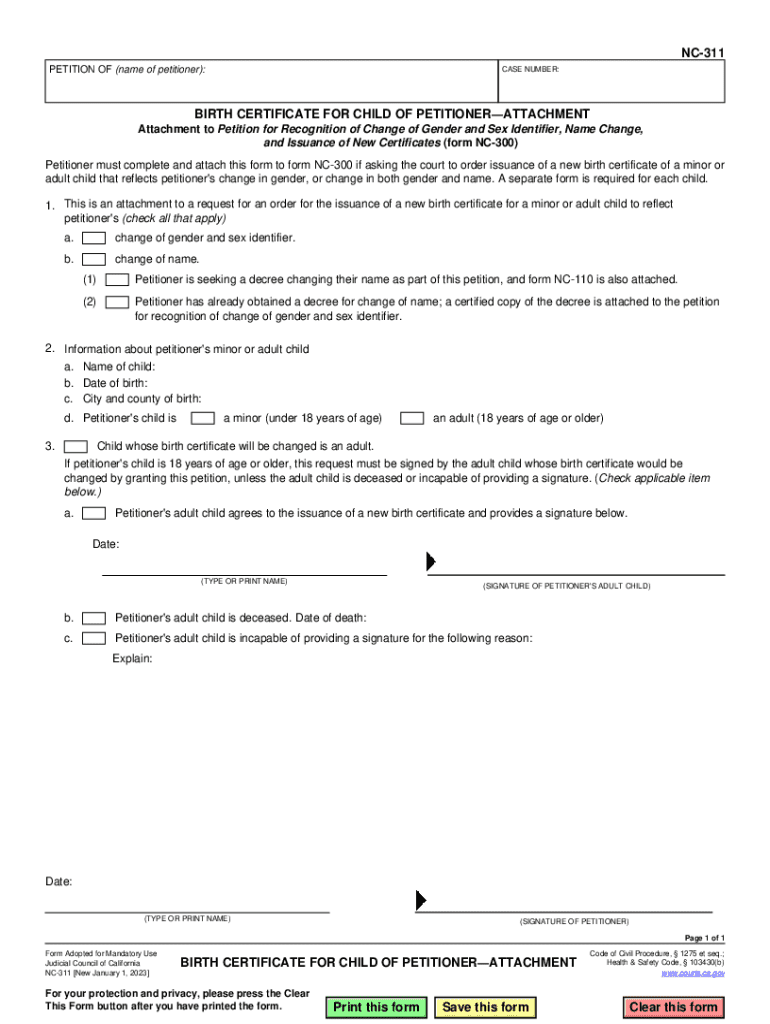







Definition and Purpose of the NC-311 Form
The NC-311 form, known as the "Birth Certificate for Child of Petitioner Attachment," is designed for the official request of a new birth certificate for a minor or adult child. This form is particularly used in legal processes where the petitioner seeks recognition of a gender change and/or name change for the child. It serves as a petition attachment and is required alongside form NC-300 as part of the broader application.
- Recognition Process: Facilitates changes to a child's legal identity.
- Consent Section: Includes a space for an adult child's consent if applicable.
- Required Information: Collects essential data about the child, ensuring accurate document issuance.
How to Use the NC-311 Form
To effectively use the NC-311 form, certain procedural steps and considerations are necessary. Each step aligns with the legal requirements set by the Judicial Council, ensuring the document's integrity and purpose are upheld.
- Preparation: Gather all necessary personal details about the child. This includes their current legal name, the name to be changed, and identification numbers or documentation.
- Completion: Fill out every relevant section of the form while ensuring clarity and accuracy. Pay special attention to sections requiring legal or parental consent.
- Attachment: Make sure the NC-311 is submitted together with the NC-300 form, as they jointly represent a legal request for identity modification.
Important Tips
- Double-Check Details: Incorrect information can delay processing.
- Legal Advice: Consider consulting an attorney for guidance if the form is part of a larger legal process, such as a court case.
Obtaining the NC-311 Form
The NC-311 form is accessible through several channels. Understanding where and how to access it streamlines the entire application process and ensures compliance with state-specific procedures.
- Online Access: Many states provide downloadable versions on their government websites.
- Judicial Council Offices: Physical copies can typically be obtained at local judicial council offices.
- Legal Assistance Services: Attorneys and legal aid organizations often have these forms available, especially if they specialize in family law.
Steps to Complete the NC-311 Form
In filling out the NC-311 form, accuracy and thoroughness are paramount. Follow these detailed steps to ensure a comprehensive and correct submission.
- Identifying Information: Enter the petitioner’s information, including their full legal name and contact information.
- Child's Details: Fill out the child's current and new legal name, along with any identifying numbers.
- Consent Sections: If applicable, ensure the adult child signs the consent section for acknowledgment.
- Final Verification: Review all entered data for accuracy. Confirm that all required fields are completed.
Supporting Documentation
- Attach copies of any additional documents that substantiate the changes being requested, such as medical or legal affidavits.
Importance of the NC-311 Form
This form holds significant importance in legal transformations concerning identity. It not only aids in aligning official records with personal identity but also provides a legal cornerstone for recognizing an individual's gender and name change.
- Legal Recognition: It is a critical step in legally validating a person's chosen identity.
- Identity Alignment: Ensures official documents reflect current personal status and personal identification.
- Supportive Legislation: Reflects contemporary legal attitudes towards gender identity and personal rights.
Key Elements of the NC-311 Form
Understanding the critical elements of the NC-311 form helps ensure each section is completed properly and that no part is overlooked during submission.
- Personal Information: Detailed data about both petitioner and child is mandatory.
- Consent Clause: For individuals aged 18 and over, there is a section requiring consent that must be duly signed.
- Legal Justifications: Explanation of why the changes are being requested, supported by legal or medical evidence if needed.
State-Specific Rules for the NC-311 Form
Each state may have variations in how the NC-311 form is processed, requiring awareness of state-specific guidelines and rules.
- Legislative Variance: Some states have additional requirements, such as unique fields or extra documentation.
- Processing Times: Can vary significantly between states, affecting how long the change might take.
- Additional Fees: States may have distinct fees associated with processing these forms, which should be verified beforehand.
Legal Use and Implications of the NC-311 Form
The NC-311 form is a legally binding document that plays a crucial role in identity-related legal matters. It must be used properly to comply with legal standards and avoid any implications or legal repercussions.
- Legal Binding: Once processed, it is incorporated into official state records.
- Document Authentication: Must align with all state and federal legal standards regarding identity and document processing.
- Judicial Process: May become part of a broader legal process that involves court appearances or other legal stipulations.
By thoroughly understanding and applying these facets of the NC-311 form, petitioners and legal professionals can ensure compliance with legal standards while facilitating a smooth transition in the child’s legal identity.




