







Definition and Purpose of the Firearm Consignment Form
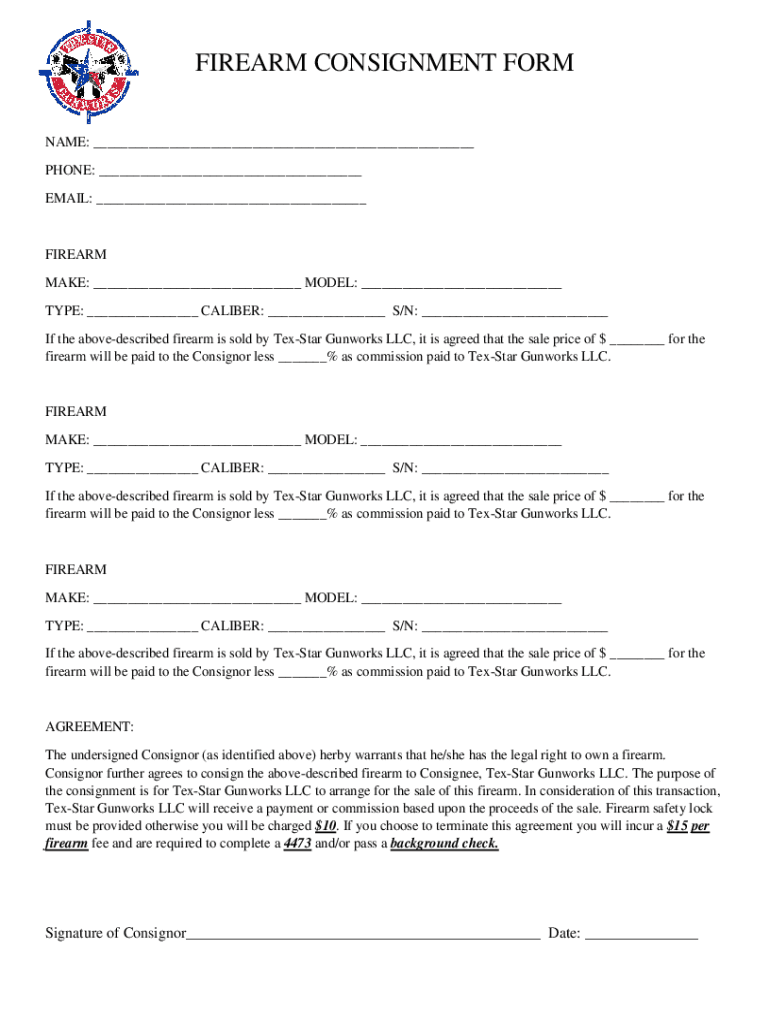
The Firearm Consignment Form is a legal document primarily used by businesses involved in firearm sales, such as Tex-Star Gunworks LLC, to manage and document the consignment process. The form formalizes the agreement between the consignor (the individual or entity placing the firearm for sale) and the consignee (the business selling the firearm). It ensures all necessary details are captured, including ownership confirmation, commission rates, and terms of consignment. This form protects both parties, providing clarity and legal assurance about the consignment sale.
How to Use the Firearm Consignment Form
To use this form effectively, the consignor must fill out specific sections meticulously. This includes providing detailed information about each firearm, such as the make, model, and serial number. The consignor also needs to assert legal ownership and agree to terms outlined by the consignee, including any fees deducted from the sale proceeds. Both parties must sign the form to validate it, often requiring a government-issued ID for confirmation.
Consignment Agreement Terms
- Commission Fees: Clearly state the percentage or flat fee retained by the consignee.
- Ownership Confirmation: Consignor asserts they are the legal owner of the firearms.
- Termination Conditions: Specify under what conditions the consignment agreement may end prematurely.
Obtaining the Firearm Consignment Form
The form can typically be obtained directly from the firearm dealer's website or in-store. Many businesses, including those like Tex-Star Gunworks LLC, provide downloadable versions on their websites. Alternatively, the form might be accessible through certified partners or lawful firearms transaction platforms.
Online Access
- Retailer Websites: Check the dealer's website for available downloadable PDF versions.
- Digital Platforms: Platforms like DocHub allow digital completion of such forms with e-signature capabilities.
Steps to Complete the Firearm Consignment Form
Completing the Firearm Consignment Form requires careful attention to detail for accuracy and compliance. Follow these steps:
- Fill in Personal Information: Enter the consignor's full name, address, and contact details.
- Describe Firearms: Include make, model, serial numbers, and any other specific details.
- Ownership Declaration: Confirm your legal ownership of the firearms.
- Sign the Form: Both consignor and consignee must sign and date the form.
Common Mistakes to Avoid
- Incomplete Details: Ensure every section is completed to avoid delays.
- Incorrect Serial Numbers: Double-check all provided firearm specifics for accuracy.
Legal Use of the Firearm Consignment Form
The Firearm Consignment Form is used within a framework of rules and regulations that ensure compliance with federal and state laws. It includes security provisions, such as necessary background checks and permits documentation, ensuring transactions remain lawful.
Legal Considerations
- Federal Compliance: Ensure adherence to the Gun Control Act and other federal regulations.
- Background Checks: Consignee may need to ensure that buyers meet legal requirements before finalizing a sale.
Key Elements of the Firearm Consignment Form
The form comprises several critical elements that uphold its legal integrity and functional purpose. Each section must address specific requirements relevant to the firearms consignment process.
Main Components
- Identification Section: Consignor's personal data and government-issued ID verification.
- Firearm Details: Comprehensive description of the firearms involved.
- Agreement Terms: Detailed consignment arrangement, including financial terms and responsibilities.
State-Specific Rules for the Firearm Consignment Form
While the Firearm Consignment Form serves a standardized purpose, various states may impose additional requirements or restrictions based on their specific laws governing firearm sales.
Variations by State
- Additional Certifications: Some states may require extra documentation or certifications when transferring firearms.
- State-Specific Fees: Commission rates or consignment terms might differ to comply with local regulations.
Examples of Using the Firearm Consignment Form
Understanding practical scenarios assists in comprehending the necessity and application of the form.
Real-World Scenarios
- Consigning Collectible Firearms: Used by individuals seeking to sell antique or collectible weapons through a licensed dealer.
- Commercial Dealers: Businesses frequently use the form when managing customer firearms offered for sale on their premises.
Important Terms Related to the Firearm Consignment Form
Familiarity with specific legal and technical terms associated with the form aids in ensuring its proper completion and understanding.
Glossary of Terms
- Consignor: The individual or entity offering firearms for consignment.
- Consignee: The business or dealer selling the firearms on behalf of the consignor.
- Commission: The fee charged by the consignee for their services rendered during the sale process.
By understanding these various aspects, individuals and businesses can effectively utilize the Firearm Consignment Form, ensuring legal compliance and smooth consignment transactions.




