
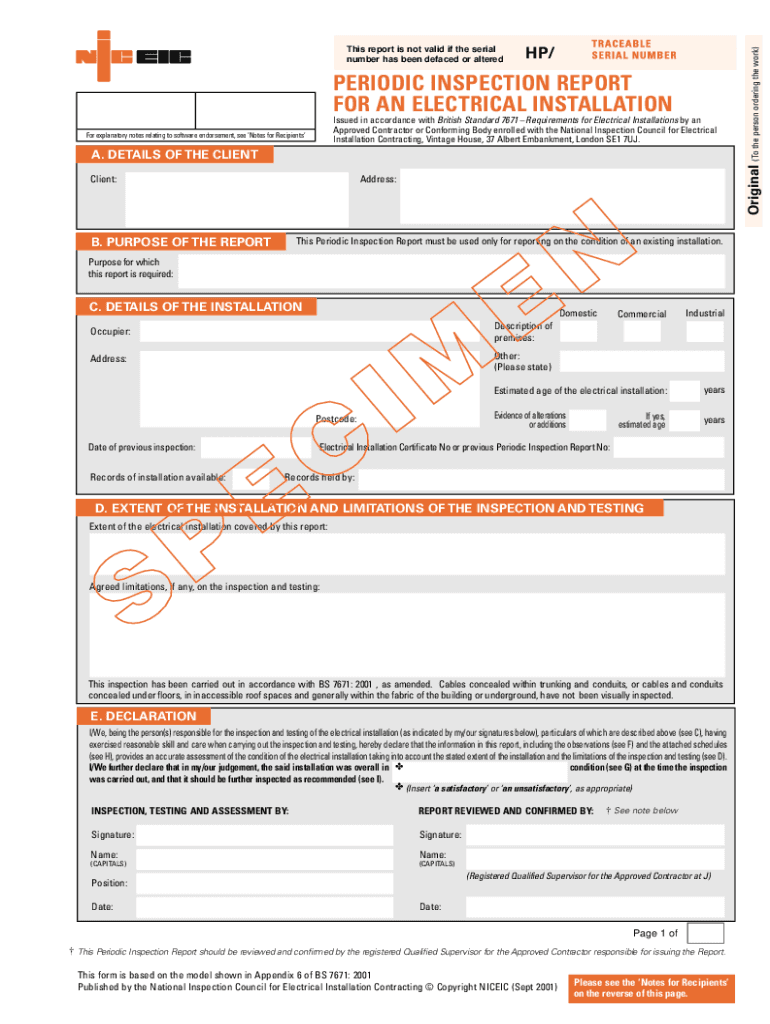







Definition & Meaning
A certificate of electrical inspection sample is a document that serves as a template or example for certifying an electrical inspection. It outlines the essential criteria needed to evaluate the safety and compliance of electrical systems within buildings. This document is crucial for verifying that electrical installations meet the specified safety standards and regulations, such as the National Electrical Code (NEC) in the United States. The certificate includes details about the inspection process, conditions assessed, and any corrective actions required.
Key Components
- Inspector Information: Details about the licensed inspector conducting the evaluation.
- Installation Details: Specifics of the electrical system being inspected, including location and complexity.
- Compliance Standards: References to the relevant safety codes and standards.
- Inspection Results: A summary of findings, including any non-compliance issues and recommended corrections.
- Certification Date: The date on which the inspection and certification were completed.
How to Use the Certificate of Electrical Inspection Sample
Using this sample certificate effectively involves understanding its structure and the purpose of each section. It's primarily used by contractors, electricians, or inspectors to ensure thorough documentation of an electrical inspection.
Step-by-Step Guide
- Review the Template: Familiarize yourself with the structure and required sections of the certificate.
- Gather Information: Collect all necessary data, including property details and inspection dates.
- Conduct the Inspection: Use the sample as a checklist during the inspection to ensure all aspects are assessed.
- Fill Out the Form: Enter the inspection results, documenting any safety issues and compliance status.
- Finalize the Document: Ensure all fields are completed accurately before signing and dating the form.
Steps to Complete the Certificate of Electrical Inspection Sample
Completing this sample form involves several detailed steps to ensure accuracy and compliance with local regulations.
Detailed Process
-
Initial Assessment:
- Conduct a preliminary review of the electrical installation for any immediately visible issues.
-
Detailed Inspection:
- Evaluate the entire system, checking for proper grounding, circuit integrity, and load calculations.
-
Documentation:
- Use the sample form to meticulously document each aspect of the inspection.
- Highlight any deviations from standard practices and suggest corrective measures.
-
Sign-off:
- The inspector must sign and date the certificate to validate the inspection results.
-
Distribute Copies:
- Provide copies to property owners, contractors, and relevant authorities.
Important Terms Related to Certificate of Electrical Inspection Sample
Understanding key terminology is vital for interpreting and accurately completing the certificate.
Glossary
- Ampacity: The maximum current an electrical conductor can carry before sustaining damage.
- GFCI (Ground Fault Circuit Interrupter): A device designed to protect from electric shock by interrupting a circuit when fault conditions are detected.
- Load Center: Central point in an electrical system where the main power feed enters and is distributed throughout the installation.
- Breaker Panel: A component used to distribute power and protect circuits in an electrical system.
- Code Compliance: Adherence to local and national electrical standards defined by regulatory bodies.
Legal Use of the Certificate of Electrical Inspection Sample
This certificate serves as a legal document asserting that an electrical installation has been inspected and meets all required standards.
Legal Considerations
- Regulatory Compliance: Ensures adherence to NEC and local codes, safeguarding against potential liabilities.
- Property Sales: Often necessary for real estate transactions to verify the condition of electrical installations.
- Insurance Requirements: Insurance companies may require certificates to verify compliance before issuing coverage.
Key Elements of the Certificate of Electrical Inspection Sample
Several critical sections must be completed to ensure the certificate serves its intended purpose effectively.
Essential Sections
- Inspection Date and Time: Provides a chronological reference for when the evaluation was conducted.
- Inspection Scope: Defines the extent of the inspection, whether partial or complete.
- Deficiency Report: Lists any identified faults and non-compliance issues with suggested remedial actions.
- Inspector Certification: Confirms the legality and authenticity of the inspection through authorized signatures.
State-Specific Rules for the Certificate of Electrical Inspection Sample
State regulations can impact how an inspection certificate is completed and processed.
Variations and Considerations
- California: Requires additional seismic considerations in electrical inspections.
- New York: Mandates specific energy efficiency evaluations as part of the inspection.
- Texas: Emphasizes adherence to both state and local municipal codes, varying between cities.
- Florida: Focuses on hurricane safety compliance and relevant electrical precautions.
Examples of Using the Certificate of Electrical Inspection Sample
Real-world scenarios highlight how this certificate is applied in different contexts.
Practical Applications
- Residential Property Inspection: Ensures homes meet electrical safety standards, particularly during sales.
- Commercial Building Assessment: Verifies that a large-scale installation complies with electrical safety codes before operations begin.
- Event Venues: Used in temporary setups to certify electrical systems for safety and reliability during events.
These examples demonstrate the versatility and necessity of the certificate across various industries and scenarios.




