






Definition & Meaning
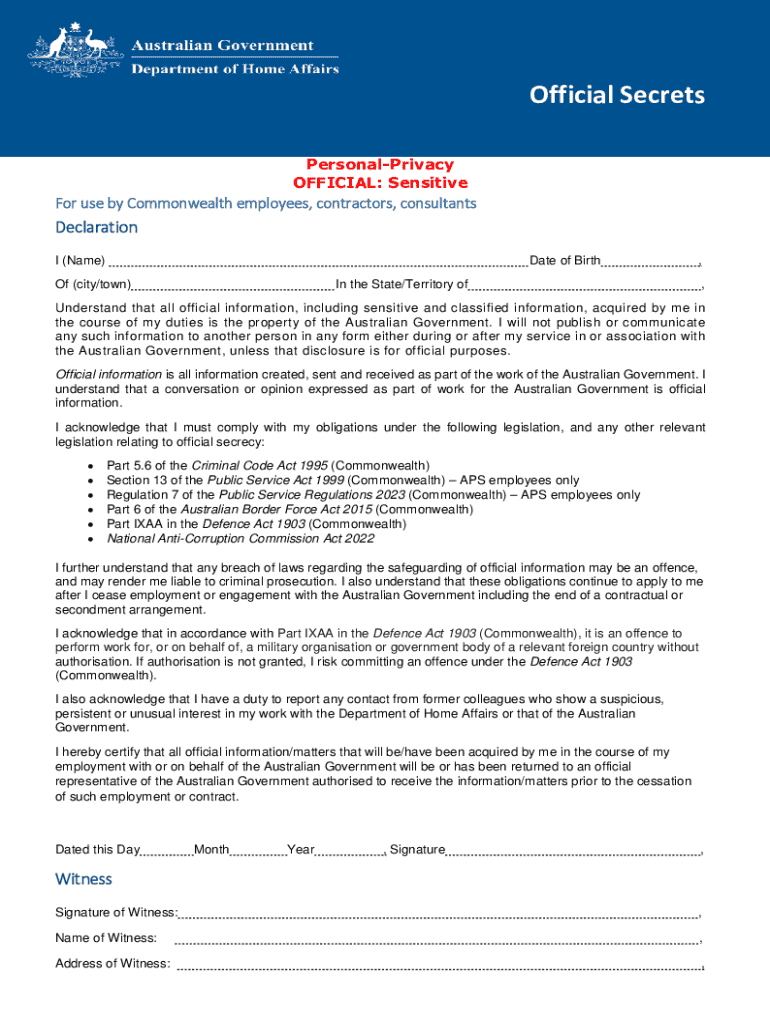
The Official Secrets Declaration is a formal document used by the Australian Government to outline the responsibilities of individuals who have access to classified information. It is primarily targeted towards Commonwealth employees, contractors, and consultants, specifying their obligations concerning the handling of official and sensitive information acquired during their service. This declaration confirms that such information remains the property of the government and prohibits unauthorized disclosure, even after the termination of employment or contract. The document plays a crucial role in maintaining national security and safeguarding confidential government operations.
Key Elements of the Declaration
-
Confidentiality Clause: This clause emphasizes that the information acquired during the service is confidential and must not be shared without proper authorization. Specific details about whom the information can or cannot be shared with are delineated.
-
Post-Employment Obligations: The declaration extends its obligations beyond employment, mandating that former employees, contractors, or consultants do not disclose sensitive information after the end of their service.
-
Legal Consequences for Breach: Outlines potential repercussions, such as criminal prosecution, for failing to adhere to confidentiality agreements. It emphasizes the serious nature of breaches and the legal framework supporting these consequences.
Legal Use of the Official Secrets Declaration
The Official Secrets Declaration has a legal foundation rooted in legislation related to national security. It serves as a binding agreement, ensuring that individuals entrusted with sensitive data are legally accountable for its protection. Violations can lead to severe penalties including fines and imprisonment. This legal backing assures that the confidentiality of government secrets is maintained while reinforcing the importance of adherence to the declaration’s provisions.
Relevant Legislation
-
Security Legislation Amendment: This includes amendments specific to the protection of classified information and outlines the legal processes involved in the prosecution of breaches.
-
Information Security Protocols: The declarations are supported by broader protocols aimed at strengthening information security across different sectors within the government.
Steps to Complete the Official Secrets Declaration
-
Review the Declaration: Begin by thoroughly reading the declaration to understand all aspects of the obligations and consequences.
-
Sign the Document: Provide your signature as an acknowledgment of your understanding and agreement to adhere to the rules and responsibilities stated within the declaration.
-
Submit to the Relevant Authority: Once signed, submit the document to the designated department or official responsible for documentation and compliance.
-
Undertake Training, if Required: Some roles may require specific training on handling sensitive information, which should be completed as part of the declaration process.
Who Typically Uses the Official Secrets Declaration
This declaration is commonly utilized by individuals within or closely associated with government sectors. Typical users include:
-
Government Employees: Staff working within various government departments who have access to classified or sensitive data.
-
Contractors and Consultants: Third-party service providers who perform government-related tasks requiring access to confidential information.
-
Law Enforcement and Security Personnel: Involved in activities where classified information is routinely handled.


Penalties for Non-Compliance
Non-compliance with the Official Secrets Declaration can result in severe legal penalties. The type and severity of the penalties depend on the nature and extent of the breach. Common penalties include:
-
Fines: Financial penalties imposed proportionate to the severity of the breach.
-
Imprisonment: Severe breaches may result in prison sentences as a deterrent against unauthorized disclosures.
-
Professional Repercussions: Loss of employment or contract, alongside potential blacklisting from future government positions.
Important Terms Related to the Declaration
Understanding the language and terms used within the Official Secrets Declaration is vital. Some essential terms include:
-
Classified Information: Information that requires protection due to its sensitive nature.
-
Breach: Unauthorized disclosure or mishandling of classified information.
-
Authorization: Official permission required for disclosing classified information.
Variations and Exceptions
While the core of the declaration remains consistent, there may be variations based on specific roles or projects. Special exceptions, if any, are clearly outlined within the declaration or supplementary documents.
Who Issues the Form
The Official Secrets Declaration is officially issued by the department or agency within the Australian Government responsible for the role or project requiring the declaration. This ensures proper documentation and tracking of all individuals who have access to sensitive information, providing a robust framework for national security.
Quick Facts
- The Official Secrets Declaration is fundamental in safeguarding national interests.
- It extends responsibilities beyond the term of employment or contract.
- Breaches of the declaration can lead to severe punitive measures.
- Compliance helps maintain trust and integrity within government operations.
These sections combine to offer a comprehensive understanding of the Official Secrets Declaration, ensuring that individuals involved are well-informed about their obligations and the legal implications of handling classified information.