Definition & Meaning
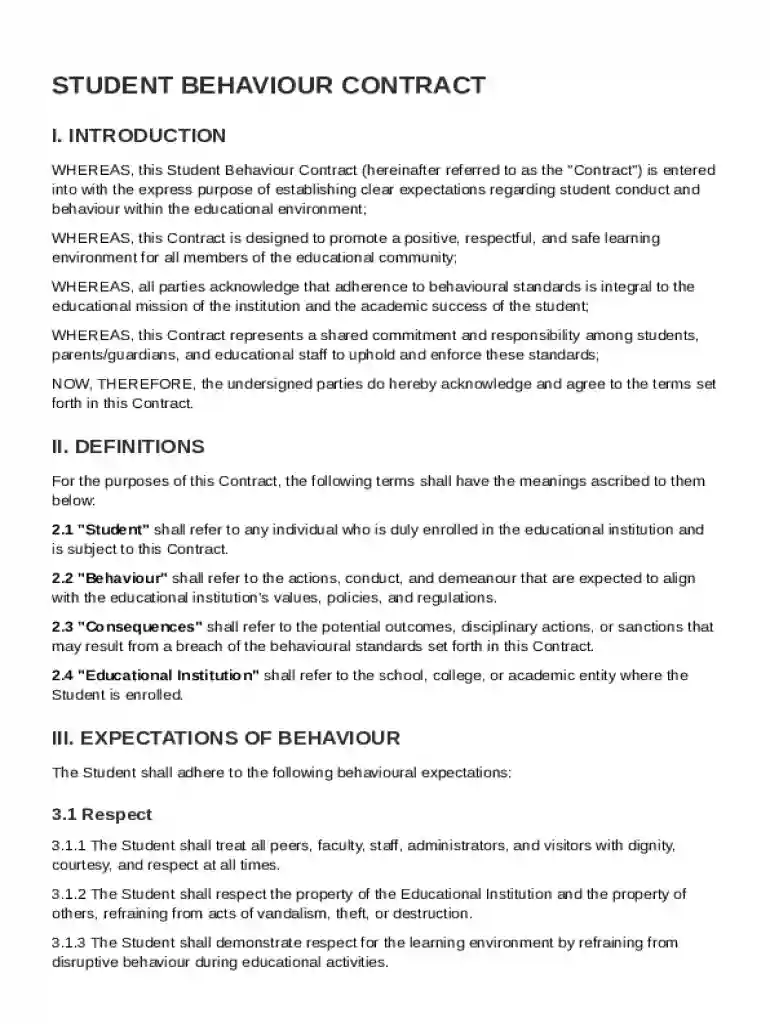
A Student Behaviour Contract Template is a formal agreement used within educational institutions to define and establish expectations for student conduct. The purpose of this contract is to foster an environment of respect, responsibility, and integrity among students. It outlines specific behavioral standards and prohibited actions, providing clear guidance on acceptable and unacceptable conduct within the school. This contract serves as a commitment between students, parents, and the educational staff to uphold a positive learning atmosphere. Emphasizing cooperation, the contract also includes resources for behavioral improvement and support, helping students align with the set expectations.
Key Elements of the Student Behaviour Contract Template
The Student Behaviour Contract Template typically includes several critical elements that ensure comprehensive coverage of behavioral standards:
- Expectations for Conduct: A detailed description of expected behaviors and attitudes such as respect for peers and staff, punctuality, and adherence to school rules.
- Prohibited Actions: Specific actions that are considered violations, such as bullying, cheating, and vandalism, and their corresponding consequences.
- Consequences for Violations: A clear outline of disciplinary actions for failing to meet the expected standards, ranging from warnings to suspension or expulsion.
- Commitment to Improvement: Resources and steps provided for students to improve their behavior, such as counseling sessions or behavioral workshops.
Each element is designed to promote transparency and mutual understanding, ensuring all parties are aware of their roles and responsibilities within the school community.
Steps to Complete the Student Behaviour Contract Template
Completing the Student Behaviour Contract involves several steps to ensure it meets its intended purpose effectively:
- Initial Meeting: Conduct a meeting involving students, parents, and school staff to discuss the contract's goals and contents.
- Review Contract Terms: All involved parties carefully review the terms, ensuring clarity on all expectations and consequences.
- Signatures: Students and parents are required to sign the contract to acknowledge understanding and agreement to adhere to the stipulated guidelines.
- School Approval: The school's representative, usually a teacher or administrator, signs the contract to legitimize it.
- Monitoring Compliance: Establish a system for monitoring student adherence to the contract and addressing violations promptly.
- Regular Review: Schedule periodic evaluations of the contract’s effectiveness, allowing for adjustments based on feedback and behavioral trends.
Why Use the Student Behaviour Contract Template
Implementing a Student Behaviour Contract Template offers several benefits, both short-term and long-term, within an educational setting:
- Clarity and Consistency: Establishes a uniform set of standards, ensuring consistency in behavioral expectations across the school.
- Parental Involvement: Engages parents in the behavioral development of their children, fostering a cooperative environment for student growth.
- Preventative Measure: By clearly stating consequences, it serves as a deterrent against undesirable behavior, helping maintain a safe and conducive learning environment.
- Resource for Improvement: Provides a structured plan and resources for students who need to adjust their behavior, supporting overall personal development.
Who Typically Uses the Student Behaviour Contract Template
The Student Behaviour Contract Template is primarily used by educational institutions, but several stakeholders are involved in its use:

- Schools: Teachers and administrators utilize it to maintain order and promote positive behavior among students.
- Students: As the primary subjects of the contract, students are expected to understand and adhere to the behavioral standards.
- Parents/Guardians: Play a crucial role in understanding and reinforcing the expectations set out in the contract at home.
- Counselors: Often involved in the implementation of improvement resources and strategies for students needing additional support.
Legal Use of the Student Behaviour Contract Template
The legal use of the Student Behaviour Contract Template involves ensuring compliance with educational and legal standards applicable in the U.S.:
- Adherence to State Laws: Schools must ensure that the contract aligns with state-specific educational regulations and mandates.
- Informed Consent: Obtaining informed consent from parents/guardians, indicating that they understand the terms and conditions of the contract.
- Confidentiality: Maintaining the confidentiality of student behavioral records in accordance with privacy laws such as FERPA (Family Educational Rights and Privacy Act).
These legal considerations ensure the contract's validity and protection of all parties’ rights.
Examples of Using the Student Behaviour Contract Template
Practical examples of utilizing a Student Behaviour Contract Template illustrate its versatility:
- Bullying Prevention: Schools implement the contract to specifically address and prevent bullying by establishing detailed consequences for such behavior.
- Classroom Management: Teachers use the contract to manage classroom dynamics, ensuring all students contribute positively to the learning environment.
- Extracurricular Activities: Coaches and club leaders may tailor the template to fit specific extracurricular conduct, ensuring all participants understand their responsibilities while representing the school.
State-Specific Rules for the Student Behaviour Contract Template
While the core principles of a Student Behaviour Contract remain consistent, certain state-specific rules may apply:
- California: May require additional clauses related to digital conduct and cyberbullying due to specific state legislation on internet use among minors.
- New York: Schools might need to incorporate specific anti-discrimination policies aligned with state mandates within their contracts.
- Texas: The inclusion of state-enforced safety protocols and emergency procedure adherence might be necessary due to local educational regulations.
Educational institutions must adjust their templates to comply with these variations, ensuring both compliance and relevance to their specific state’s legal environment.