
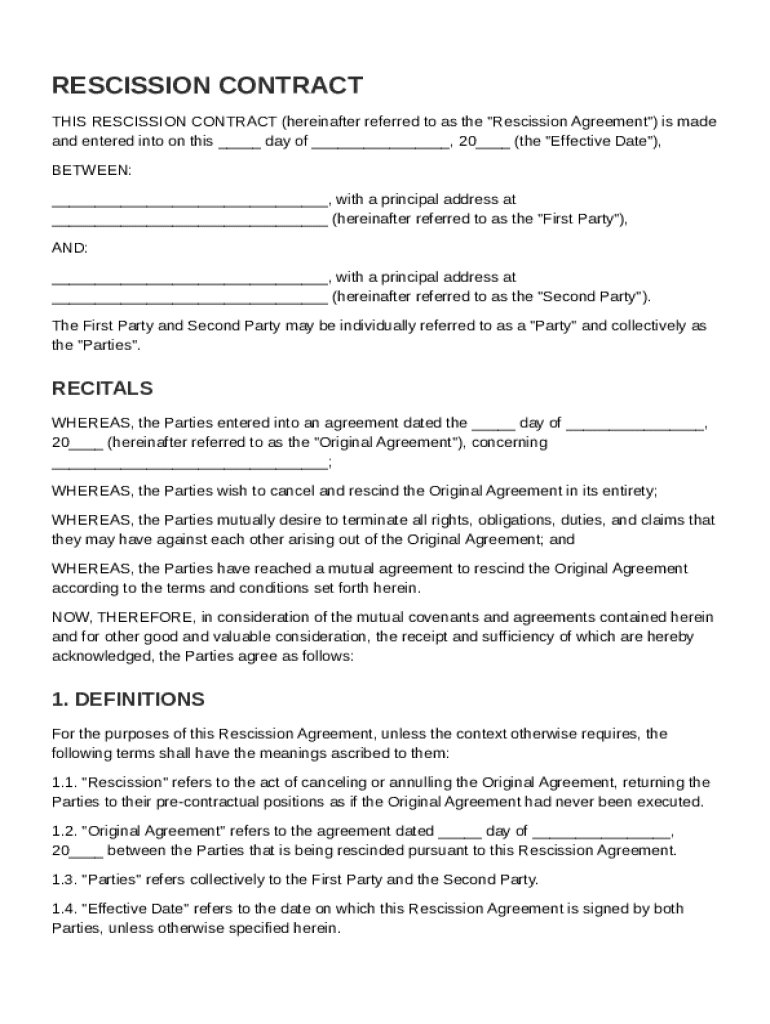







Definition & Meaning
A "Rescission Contract Template" is a legal document used by parties who wish to mutually terminate and nullify a previously executed agreement. This template outlines the terms and conditions under which the original contract is dissolved, effectively releasing all parties from any further obligations or claims related to the original agreement. The rescission process ensures that both parties are returned to their positions prior to entering the contract, often involving the return of exchanged goods, services, or money. The template serves as a formal declaration of the parties' intent to discontinue the legal relationship established by the original contract.
Key Elements of the Rescission Contract Template
The rescission contract template encompasses several vital components to ensure clarity and enforceability. These elements typically include:
- Parties Information: Names and contact details of the involved parties.
- Original Contract Details: Description of the original agreement to be rescinded, including effective dates and key terms.
- Mutual Agreement Clause: A statement confirming that all parties mutually agree to the rescission.
- Release of Obligations: Clauses specifying the release of rights and obligations for both parties.
- Representations and Warranties: Assurances that the parties have the authority to rescind the agreement and that no other rights are affected.
- Governing Law: Specification of the legal jurisdiction applicable in case of disputes.
- Signatures: Spaces for all parties to sign, confirming their agreement to the rescission terms.
How to Use the Rescission Contract Template
Utilizing the rescission contract template involves several steps to ensure that it is accurately completed and legally binding:
- Download the Template: Obtain the rescission contract template from a reliable legal source or document management platform like DocHub.
- Fill in Party Details: Enter the names and contact information of the parties involved in the contract rescission.
- Insert Original Agreement Details: Provide specifics about the original agreement, including its date and nature of obligations.
- Specify Terms of Rescission: Clearly outline the terms under which the contract is being rescinded, ensuring all parties' understanding.
- Review Legal Clauses: Examine standard clauses such as governing law and representations to confirm they meet your needs.
- Sign the Document: Both parties should review the document before adding their signatures, which legally binds the agreement.
Who Typically Uses the Rescission Contract Template
Various individuals and entities can benefit from using a rescission contract template, including:
- Business Partners: When terminating business partnerships or joint venture agreements.
- Service Providers: Ending service contracts amicably with clients or vendors.
- Landlords and Tenants: Mutually agreeing to terminate lease agreements.
- Contractors: Rescinding agreements with clients when projects are canceled or modified.
- Employers and Employees: When ending employment contracts through mutual consent.
These users need clear documentation to support the legal cancellation of prior agreements and to ensure all parties are released from future claims.


Steps to Complete the Rescission Contract Template
Completing the rescission contract template requires careful attention to detail:
- Gather Information: Ensure all relevant details of the original contract and parties are accurately captured.
- Customize the Template: Adjust the template to reflect specific agreement terms, obligations to be released, and any special conditions.
- Verify Clarity and Legality: Double-check that all language used is clear and that legal terms comply with local laws.
- Confirm Mutual Agreement: Both parties should meet to discuss the rescission terms, ensuring mutual understanding and agreement.
- Sign and Witness: Obtain signatures from all parties and, if necessary, have the document witnessed or notarized.
- Distribute Copies: Provide all signatories with a copy of the fully executed rescission contract for their records.
Important Terms Related to Rescission Contract Template
Certain legal terms are often associated with rescission contracts:
- Nullification: The action of making the original contract legally void.
- Consideration: Any return of goods or funds exchanged under the original contract.
- Mutual Release: Agreement by all parties to waive any claims against each other regarding the original contract.
- Jurisdiction: The legal authority under which the rescission will be governed and enforced.
- Indemnity: Protection against future claims related to the agreement being rescinded.
Understanding these terms is crucial for parties involved in drafting or executing a rescission contract.
Legal Use of the Rescission Contract Template
Rescission contracts are legally binding documents when properly executed. They must comply with relevant state and federal laws to be enforceable. Before executing a rescission template, parties should:
- Consult Legal Counsel: Ensure the document adheres to legal standards and requirements in your jurisdiction.
- Review Contractual Obligations: Confirm that all obligations in the original agreement are addressed in the rescission contract.
- Check Compliance: Ensure compliance with any industry-specific regulations that may impact the rescission process.
- Follow Protocols: Adhere to prescribed protocols for contract rescission as per the original agreement or applicable laws.
By fulfilling these legal requirements, parties can ensure the rescission contract holds up under legal scrutiny.
State-Specific Rules for the Rescission Contract Template
Different states may have varying rules governing contract rescission. Factors to consider include:
- Statutory Requirements: Some states require particular clauses or disclosures in rescission contracts.
- Notarization: States might mandate notarization for rescission contracts, ensuring document authenticity.
- Timelines: States could have specific timelines for executing rescission agreements once decided upon.
- Enforceability: State laws may dictate enforceability standards, affecting how rescission agreements are handled in court.
Parties should check state-specific laws or consult legal advisors to confirm compliance with these rules.




