






Definition & Meaning
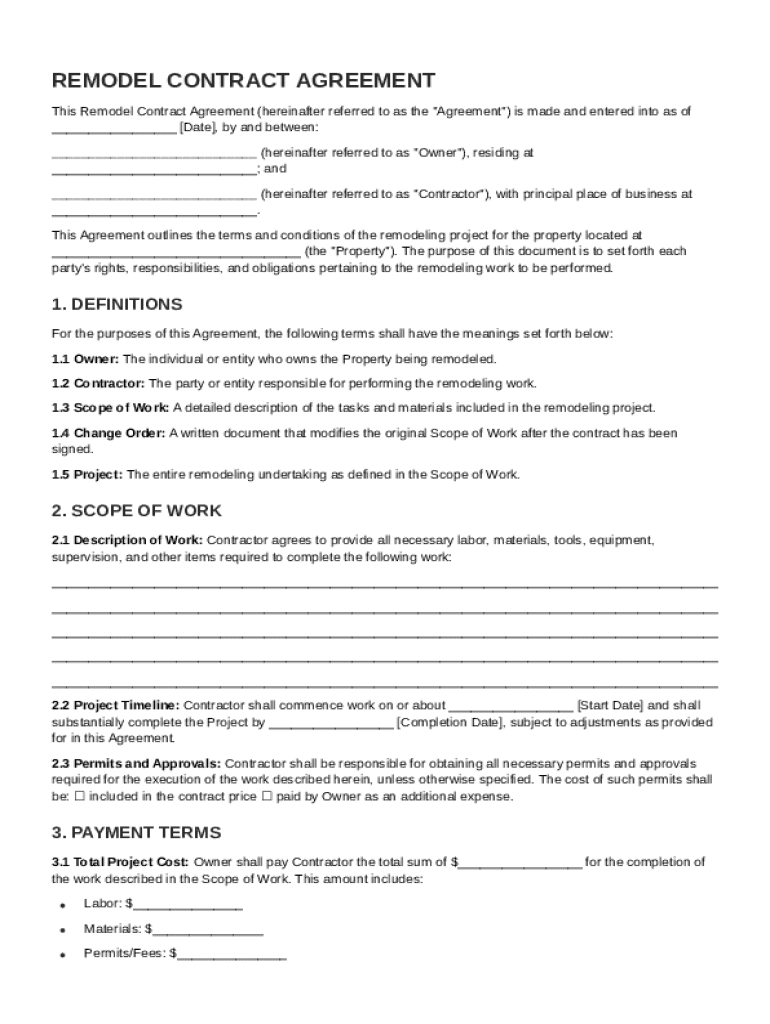
A Remodel Contract Template is a structured document that outlines the agreement between a property owner and a contractor for a remodeling project. This template serves as a legally binding agreement specifying the responsibilities, roles, and expectations of each party involved. It includes key elements such as the project scope, payment terms, timelines, and warranties. By using a template, both parties can ensure clarity and alignment on the remodeling work, reducing the risk of misunderstandings and disputes. For contractors and homeowners alike, a well-defined contract can provide assurance and a clear reference point during the project lifecycle.
How to Use the Remodel Contract Template
Using the Remodel Contract Template involves several critical steps to ensure its effectiveness. Start by reviewing the entire document to understand the provisions and identify any areas that may require customization. Next, fill in the specific details related to the remodeling project, including the names and contact information of the involved parties, project location, and detailed description of work. It is also essential to outline the timelines, payment schedule, and any conditions for changes. After completing the form, both parties should review and agree to the terms before signing. The signed contract provides a lasting record of the agreement, serving as a reference point for resolving any potential conflicts that may arise.
Steps to Customize the Template
- Identify and fill in all necessary fields with your project's specifics.
- Add any additional clauses specific to your circumstances, like unique warranty terms.
- Ensure both parties review the final document before signing.
- Keep a copy of the completed contract for future reference.
Key Elements of the Remodel Contract Template
This template incorporates several key elements to make sure that it comprehensively covers all aspects of the remodeling agreement:
- Project Scope: Details the work to be done, outlining each task included in the project.
- Payment Terms: Specifies the payment structure, including due dates and amounts.
- Work Schedule: Provides a timeline for project milestones and completion date.
- Change Orders: Describes how changes to the project scope will be managed and authorized.
- Warranties: Lists any guarantees provided by the contractor regarding the workmanship or materials.
- Termination Clause: Explains the conditions under which the contract can be terminated.
Each component is designed to protect the interests of both parties and ensure a smooth process from start to finish.
Important Terms Related to Remodel Contract Template
Understanding certain terms is crucial when dealing with remodel contracts:
- Change Order: An official amendment to the original contract specifying changes in the work scope or cost.
- Lien Waiver: A release of the contractor's right to file a lien for outstanding payments once payment is made.
- Substantial Completion: The stage when the work is sufficiently complete per the contract terms, allowing the owner to use the property.
- Force Majeure: Events beyond the control of the contracting parties that may affect project progress, such as natural disasters.
Familiarity with these terms helps ensure both parties articulate and understand their contractual obligations clearly.
Legal Use of the Remodel Contract Template
The Remodel Contract Template serves as a legally binding document that helps facilitate compliance with applicable laws and regulations. It protects the rights of both the contractor and the property owner by setting clear boundaries for performance and payment obligations. It also makes provisions for legal recourse in case of disputes, typically including a dispute resolution mechanism such as arbitration or mediation. Both parties should ideally seek legal evaluation before finalizing the contract to ensure that the template complies with local, state, and federal laws, as well as industry standards. Properly drafted, the contract helps avert legal complications and ensures a smoother business relationship.
State-Specific Rules for the Remodel Contract Template
Contractors and homeowners should be aware of state-specific rules that may influence their remodeling contracts. Each U.S. state can have distinct requirements and regulations, such as licensure of contractors, consumer protection statutes, and specific clauses that must be included in home improvement contracts. For instance, some states require a "notice of cancellation" clause allowing the homeowner to cancel the contract within a specific timeframe. It's essential to customize the template to meet these requirements and consult with legal professionals familiar with regional laws to verify the contract is in compliance. Incorporating state-specific guidelines in the contract helps avoid legal pitfalls and ensures the enforceability of the agreement.
Examples of Using the Remodel Contract Template
To illustrate its practical application, consider the following examples:
- A homeowner hires a contractor for a kitchen remodel. The template includes stipulated labor costs, material expenses, and a schedule. An unexpected structural issue arises, triggering a change order documented in the contract.
- A contractor uses the template to formalize an agreement for a bathroom renovation, clearly defining the payment installments and project timelines. When a subcontractor is employed, the template provides a basis for outlining specific responsibilities and ensuring proper execution.
These examples underscore the importance of using a Remodel Contract Template to align expectations and outline procedures for handling changes during the project.
Who Typically Uses the Remodel Contract Template
The Remodel Contract Template is versatile, serving a diverse group of users within the construction and real estate sectors:
- Homeowners: Seek to formalize agreements with contractors for renovation projects, protecting their investments.
- Contractors: Use the template to ensure that there is a clear understanding of the project's scope and terms.
- Property Managers: Manage multiple remodeling projects across different properties efficiently.
- Real Estate Developers: Include it as part of larger development projects to manage subcontractor agreements and renovations.
Each user benefits from the structure and clarity the template provides, facilitating successful project execution.