






Definition and Purpose of a Terms of Service Contract Template
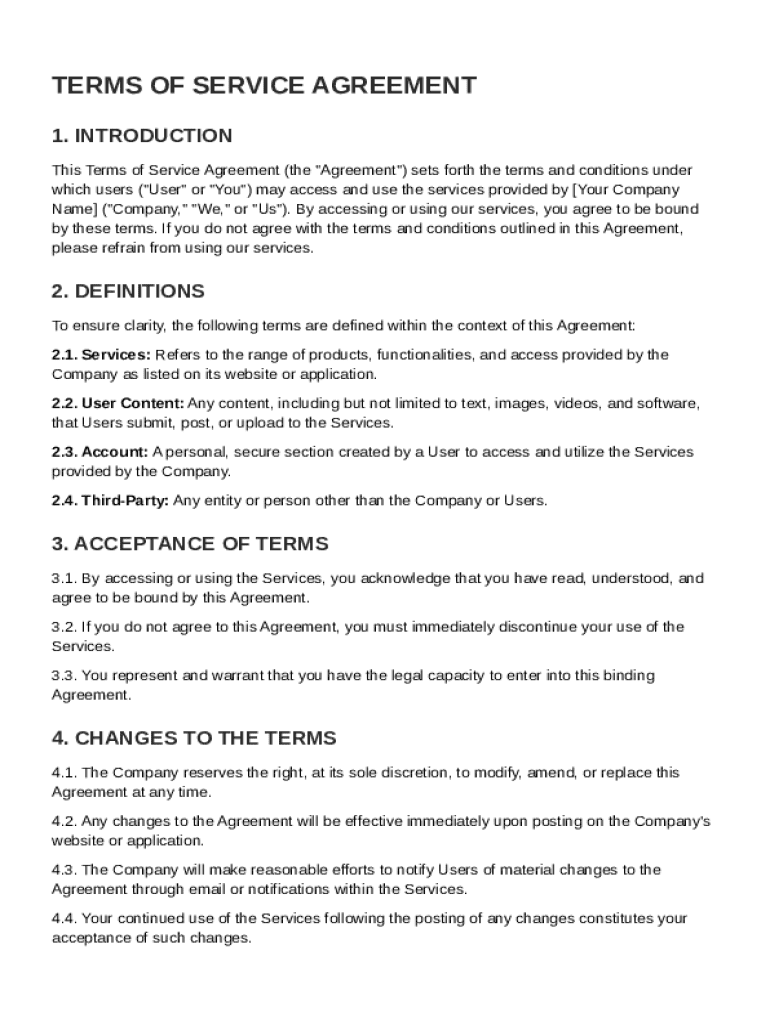
A Terms of Service Contract Template serves as a standardized framework for creating a Terms of Service Agreement. This legal document outlines the terms and conditions under which users can access and use the services provided by a company. It typically includes sections on user responsibilities, account management, usage rights, intellectual property, disclaimers, limitations of liability, and governing law. The template allows businesses to draft consistent agreements that protect their services while informing users of their rights and obligations. By using a template, companies can ensure comprehensive coverage of vital legal terms, reducing ambiguity and potential disputes.
Key Elements of the Terms of Service Contract Template
When crafting a Terms of Service Agreement using the template, several critical elements must be considered to ensure it effectively regulates service use. These elements typically include:
- Definitions: Clarifying terminology used throughout the contract to ensure all parties understand the agreement’s terms.
- User Responsibilities: Outlining what is expected from the users, such as truthfulness in providing information and compliance with applicable laws.
- Account Management: Describing the user’s responsibilities in managing their account, including security and password protection.
- Intellectual Property: Specifying the rights related to creative assets and proprietary information, ensuring users acknowledge company ownership.
- Disclaimers and Liability Limitations: Limiting the company’s liability in case of issues arising from service use.
- Governing Law and Dispute Resolution: Identifying which jurisdiction’s laws govern the agreement and setting out procedures for resolving disputes, such as mediation or arbitration.
Steps to Complete the Terms of Service Contract Template
Creating a detailed Terms of Service involves a clear sequence of steps. Using a template can simplify this process:
- Select the Template: Choose a comprehensive template that covers various service scenarios.
- Customize Sections: Modify sections to reflect specific business practices and legal requirements.
- Define User and Company Responsibilities: Clearly outline what is expected from both parties.
- Include Legal Disclaimers: Add necessary disclaimers to cover liability and service limitations.
- Review for Compliance: Ensure the document aligns with local, state, and federal regulations.
- Consult Legal Professionals: Have the document reviewed by a legal professional to ensure completeness and accuracy.
- Finalize and Implement: Once finalized, incorporate the Terms of Service into the company’s website and onboarding process for user awareness.
Legal Use of the Terms of Service Contract Template
Legal considerations are paramount in the creation and use of a Terms of Service Contract Template. The agreement must comply with applicable laws and regulations, which mandate clear communication of service terms to ensure enforceability. For instance, the Electronic Signatures in Global and National Commerce (ESIGN) Act in the U.S. allows for electronic agreements, so offering the Terms of Service online can be legally valid. Still, it is crucial to provide users with an explicit acknowledgment process, such as requiring them to check a box indicating agreement with the terms. Compliance with privacy laws, like the General Data Protection Regulation (GDPR) for services available in the EU and California Consumer Privacy Act (CCPA) for California residents, is also essential.
How to Use the Terms of Service Contract Template
The template acts as a practical guide for creating a robust Terms of Service Agreement. Here’s how to leverage it effectively:
- Start with a Base Template: Obtain a reliable template suitable for your industry and service type.
- Incorporate Company Policies: Adapt the template to include specific company policies and operational guidelines.
- Ensure Clarity and Precision: Use clear language to avoid misinterpretations and explicitly define all terms.
- Include Modification Provisions: Allow for updates to the agreement as services or laws change, while informing users how they’ll be notified.
- Validate with Legal Expertise: Have a legal expert review the document to ensure all clauses are enforceable and fair.
Practical Examples and Real-World Scenarios
Examining real-world scenarios where a Terms of Service Contract Template has been pivotal can provide practical insight:
- E-commerce Websites: These platforms often use Terms of Service to outline payment processes, return policies, and user conduct online.
- Software as a Service (SaaS) Companies: These businesses detail service levels, data usage rights, and subscription terms within their agreements.
- Social Media Platforms: Providers set rules for content posting and user interactions through Terms of Service to manage community standards and protect platform integrity.
- Online Marketplaces: Outline seller and buyer responsibilities, including transaction processes and dispute resolution.
Who Typically Uses the Terms of Service Contract Template
Terms of Service Contract Templates are broadly used across industries by businesses that offer digital platforms, services, or products. Common users include:
- Technology Companies: Software developers, SaaS providers, and app developers to limit liability and establish user protocols.
- E-commerce Businesses: Online retailers and marketplace operators to define rules around purchases and user accounts.
- Content Platforms: Streaming services and media companies to govern content access and sharing rights.
- Educational Platforms: Online learning services to outline course access, intellectual property rights, and educational content usage.


Variations and Alternatives to the Terms of Service Contract Template
While the main elements of Terms of Service agreements are consistent, variations exist to meet industry-specific needs and changing regulatory environments:
- Privacy Policy Addendums: Some templates include integrated privacy terms to address data protection directly within the service agreement.
- Mobile Application Agreements: Tailored terms that address mobile platform use, app functionalities, and data management.
- Open Source Software Terms: Templates that focus on licensing rights, code usage, and contribution protocols.
Alternatives to the traditional Terms of Service Contract Template can include end-user license agreements (EULAs) for software or bespoke contracts crafted by law firms furnishing tailored terms for specialized services.