Definition & Meaning
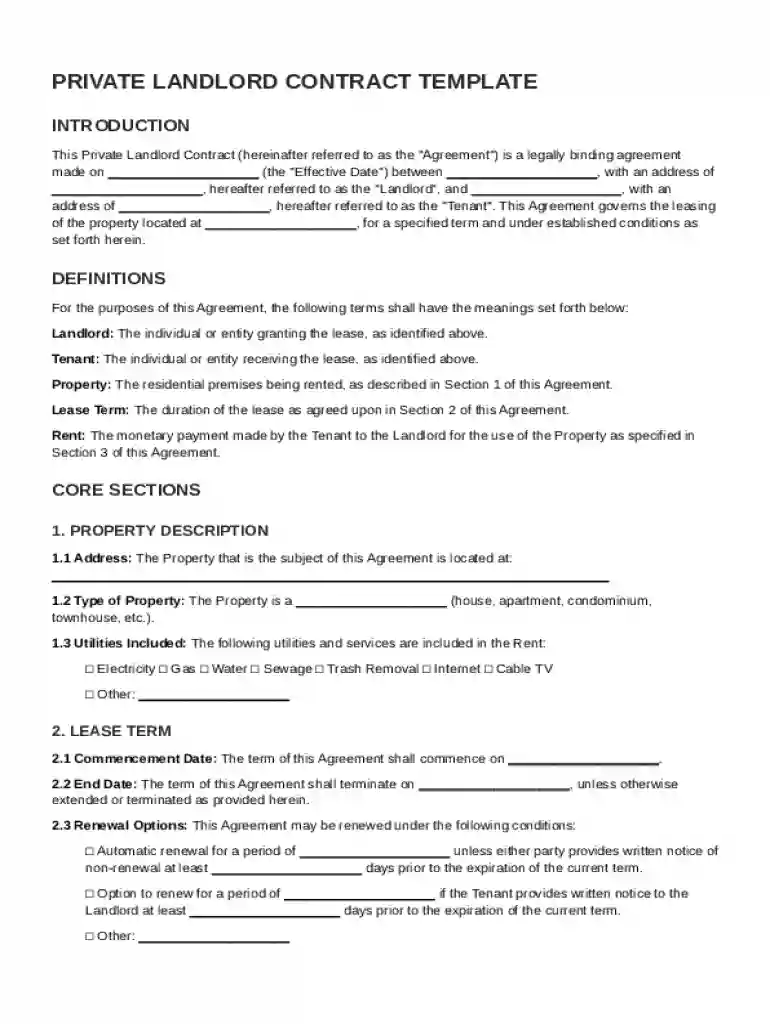
A Private Landlord Contract Template serves as a legally binding agreement between a landlord and a tenant, detailing the terms and conditions of leasing a property. This template includes crucial sections such as the property description, lease term, rent payment regulations, and the responsibilities of both parties involved. The primary function of this document is to clearly define the rights and obligations of each party to prevent misunderstandings and disputes.
Key Elements of the Private Landlord Contract Template
This contract template encompasses several critical elements:
- Property Description: Specific details about the property, including its location, size, and features.
- Lease Term: The length of the lease, including start and end dates.
- Rent Payments: Specifications on rent amount, due dates, and acceptable payment methods.
- Responsibilities: Obligations of both landlord and tenant, including maintenance expectations and utility management.
- Termination Clauses: Conditions under which the lease can be terminated, including necessary notice periods.
- Governing Law: Specification of the state laws applicable to the lease, ensuring legal compliance.
Steps to Complete the Private Landlord Contract Template
- Gather Required Information: Collect all necessary details about the property, landlord, and tenant.
- Property and Terms Details: Fill in the property description, lease term, and rent amount.
- Outline Responsibilities: Clearly define the responsibilities of both parties, covering maintenance and utilities.
- Complete Legal Sections: Specify the governing law and any necessary legal provisions.
- Review and Sign: Once completed, review the contract and have both parties sign the document to make it legally binding.
How to Use the Private Landlord Contract Template
Using this template involves several critical steps:
- Download or Create: Obtain a ready-made template or use document management software like DocHub to create one.
- Customize the Template: Adjust the template's sections to suit the specific needs of the lease agreement, ensuring all variables are tailored.
- Distribute for Review: Share the draft with all parties involved for review and revisions.
- Finalize and Execute: Upon approval, finalize the template and execute it through physical or electronic signatures.
Why Use the Private Landlord Contract Template
This template provides several advantages:
- Clarity and Transparency: It offers a clear, transparent outline of the lease agreement's terms, reducing potential disputes.
- Legal Protection: Serves as a legal safeguard for both landlord and tenant by enforcing the agreed terms.
- Efficiency: It streamlines the leasing process by providing a structured format that ensures all essential elements are covered.
Who Typically Uses the Private Landlord Contract Template
Primarily used by:
- Private Landlords: Manage single or multiple properties, seeking formal agreements with tenants.
- Property Management Companies: Oversee numerous leases and require standardized agreements.
- Tenants: Individuals or businesses entering into lease agreements who need clarity on terms and conditions.
State-Specific Rules for the Private Landlord Contract Template
Each state has unique laws governing rental agreements:
- Tenant Rights: Vary significantly by state, impacting deposits, rent control, and eviction processes.
- Lease Term Provisions: Some states have mandatory lease clause requirements or prohibitions.
- Dispute Resolutions: Procedures for resolving tenant-landlord disputes differ based on jurisdiction.
Legal Use of the Private Landlord Contract Template
- ESIGN Act Compliance: DocHub allows electronic signatures, ensuring legality under U.S. electronic transaction laws.
- Security Measures: Documents can be protected with password protection and encryption to safeguard sensitive information.
- Customization for Legal Requirements: The template can be adapted to include clauses specific to U.S. rental laws.
Important Terms Related to Private Landlord Contract Template
- Security Deposit: A sum paid by the tenant to cover potential damages or unpaid rent.
- Sublease: An agreement allowing the tenant to lease the property to another party with the landlord’s permission.
- Eviction: Legal process by which a landlord may remove a tenant from the property due to breach of contract.
Examples of Using the Private Landlord Contract Template
- Residential Leases: For leasing apartments, houses, or condos to individuals.
- Commercial Leases: Suitable for renting office spaces or retail locations.
- Short-Term Rentals: Useful for vacation or temporary housing agreements, often requiring specific clauses for duration and fees.