Definition and Purpose of a Strategic Alliance Contract Template
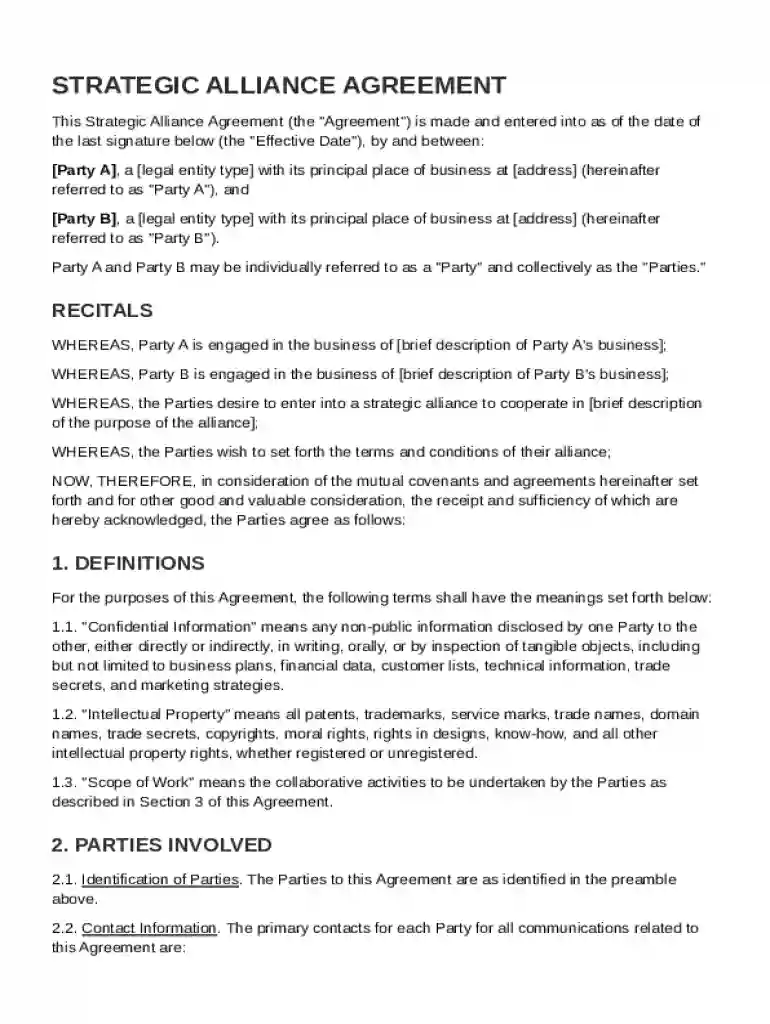
A Strategic Alliance Contract Template is a legally binding document that defines the terms of a collaborative partnership between two parties. This template lays out mutual responsibilities, financial arrangements, intellectual property rights, and confidentiality obligations. By using this template, organizations can efficiently formalize their partnerships, ensuring that both parties leverage each other's strengths to achieve common goals and create strategic advantages in their respective markets.
How to Use the Strategic Alliance Contract Template
- Download the Template: Obtain the template from a reliable document management platform like DocHub to ensure it meets legal standards.
- Customize the Content: Fill in specific details such as the names of the parties involved, the scope of the alliance, and any unique conditions relevant to your partnership.
- Define Responsibilities: Clearly document each party's roles and responsibilities to prevent misunderstandings later on.
- Finalize and Execute: Both parties should review the contract for accuracy, make any necessary adjustments, sign the document electronically, and save it in a secure location.
Key Elements of the Strategic Alliance Contract Template
- Introduction of Parties: Outlines the legal names and roles of each party involved in the agreement.
- Objectives: Specifies the goals and intended outcomes of the strategic alliance.
- Financial Arrangements: Details the financial commitments, investments, and cost-sharing provisions between the parties.
- Intellectual Property Rights: Defines the ownership and usage rights for any intellectual property developed or shared during the partnership.
- Confidentiality Clauses: Establishes protocols for handling sensitive information.
- Dispute Resolution Mechanisms: Provides methods for resolving disagreements, such as mediation or arbitration.
Important Terms Related to Strategic Alliance Contract Template
- Mutual Goals: The shared objectives each party aims to achieve through the alliance.
- Leverage: The strategic advantage gained by aligning resources and capabilities.
- Confidentiality: The practice of maintaining the privacy of shared information, essential in protecting competitive advantages.
- Collaboration: Cooperative efforts where parties work together toward common objectives.
Who Typically Uses a Strategic Alliance Contract Template
Business entities such as corporations, LLCs, and partnerships frequently utilize strategic alliance contracts. These documents support collaborations where entities aim to combine resources for mutual benefit. Additionally, organizations in sectors like technology, healthcare, and manufacturing find these agreements particularly beneficial when seeking advancements in innovation and market reach.
Legal Use of the Strategic Alliance Contract Template
The template ensures compliance with contractual law by providing a structured format that parties can customize to fit their specific agreement. Legal use involves confirming the document meets local jurisdiction requirements and adheres to federal laws regarding partnerships. This includes elements like enforceable terms and clear delineation of responsibilities and rights.
Examples of Using the Strategic Alliance Contract Template
- Tech Sector Joint Ventures: Two technology companies may form an alliance to co-develop new software solutions, enhancing their market position and fostering innovation.
- Healthcare Collaborations: Medical institutions might partner to share research findings, aiming to accelerate advancements in patient care practices.
- Manufacturing Agreements: Companies in manufacturing might enter alliances to expand production capabilities by leveraging each other's resources and expertise.
Versions or Alternatives to the Strategic Alliance Contract Template
While the Strategic Alliance Contract Template is flexible and adaptable, businesses may sometimes require variations or related contract forms, such as:
- Joint Venture Agreements: For creating a new entity jointly owned by the partnering organizations.
- Partnership Agreements: Which are less formal and used when entities collaborate without forming a new legal entity.
- Memoranda of Understanding (MOU): Used for initial negotiations where terms need to be outlined but not legally enforced yet.
State-Specific Rules for the Strategic Alliance Contract Template
State regulations may influence how strategic alliance contracts are executed and enforced. It's crucial for parties to ensure compliance with state-specific business regulations, including requirements for disclosures, limitations on certain types of collaborations, and variations in dispute resolution processes. Legal professionals familiar with state law should review the finalized agreement to validate compliance.