Definition and Meaning of Photographic Contract Template
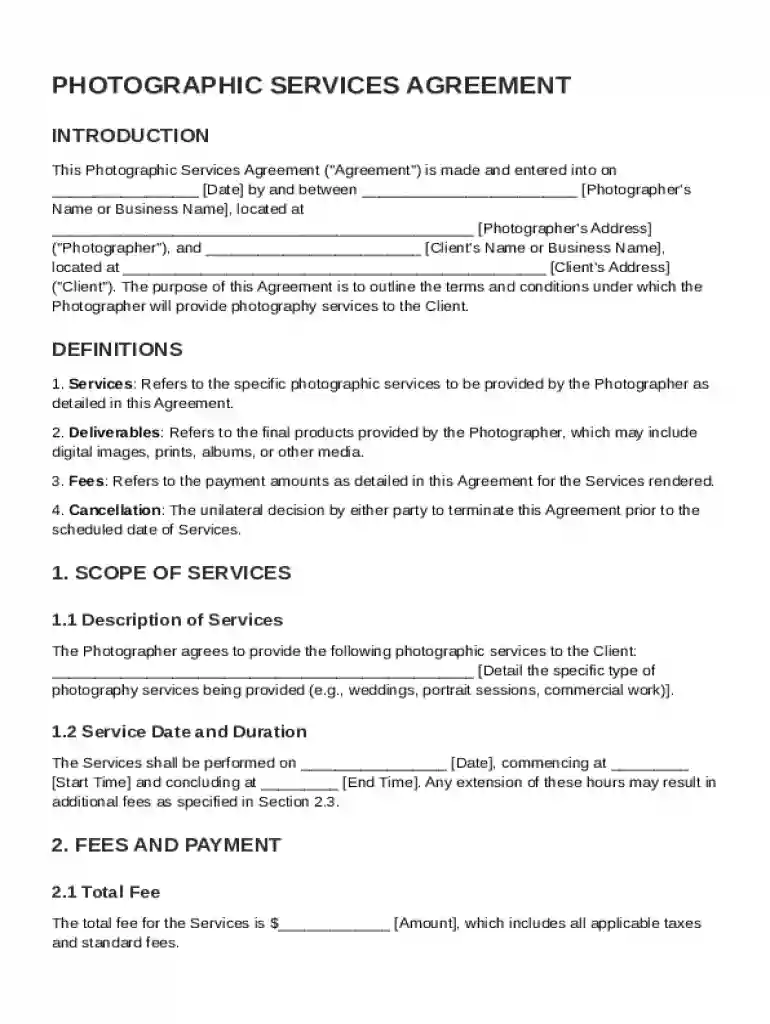
The Photographic Contract Template is a structured document outlining the terms and conditions agreed upon between a photographer and a client for photography services. This template serves as a legal framework that ensures both parties are aware of their obligations and rights, thus preventing potential disputes. It traditionally includes sections covering the scope of services, payment terms, and copyright regulations, providing clarity regarding the deliverables expected from the photographer and the compensation due from the client. Its detailed clauses help in protecting the interests of both parties, ensuring the smooth execution of photography services.
Key Elements of the Photographic Contract Template
A comprehensive Photographic Contract Template typically includes the following elements:
- Scope of Services: Details the specific photography services to be provided, including the event type, location, duration, and any post-processing services like editing or printing.
- Fees and Payment Schedule: Clearly outlines the total fee for the services, including deposit requirements, due dates, and accepted payment methods to avoid any financial misunderstandings.
- Copyright and Usage Rights: Specifies who retains the copyright to the images and defines how the images can be used by both the photographer and client, often balancing artistic control and client needs.
- Cancellation and Rescheduling Policies: Establishes the terms under which a booking can be canceled or rescheduled by either party and any associated fees, which is crucial for managing unforeseen changes.
- Indemnification and Liability: Includes clauses that protect against potential legal issues, ensuring both parties understand their liability limits in the case of an unexpected event or dispute.
How to Use the Photographic Contract Template
Using the Photographic Contract Template effectively involves several steps:
- Customization: Tailor the template to suit the specific needs of the photography service and the parties involved, ensuring all unique project attributes are covered.
- Review and Revise: Engage both parties in reviewing the draft to ensure mutual understanding and agreement on all terms and conditions.
- Legal Consultation: Consider seeking legal advice to ensure all included clauses comply with relevant laws and effectively protect your rights.
- Signing: Use DocHub's electronic signature feature to digitally sign the contract once both parties are satisfied with the terms, ensuring the contract is legally binding.
Important Terms Related to Photographic Contract Template
Understanding key terms within the Photographic Contract Template is crucial for effective use:
- "Deliverables": Refers to the final products provided to the client, such as digital files, prints, or albums.
- "Retainer": A non-refundable fee paid upfront to secure the photographer's services, often deducted from the final total cost.
- "Model Release": A clause allowing the photographer to use the photos for marketing or portfolio purposes, often requiring client consent.
- "Force Majeure": Covers circumstances beyond reasonable control, like natural disasters, that might prevent either party from fulfilling their obligations.
Steps to Complete the Photographic Contract Template
To complete the Photographic Contract Template successfully, follow these steps:
- Gather Information: Collect all necessary details about the project, including date, location, type of event, and specific requests from the client.
- Input Client and Photographer Details: Fill in the contact information and business credentials for both parties to establish clear communication channels.
- Define Services and Terms: Clearly outline service specifics, including expected output formats and deadlines, ensuring all client expectations are met.
- Confirm Payment Arrangements: Establish agreed-upon methods and terms of payment to prevent future financial disputes.
- Review for Accuracy: Thoroughly read the contract to identify any errors or omissions, allowing modifications as needed before final approval.
- Sign and Distribute: Use the platform for electronic signatures to officially sign the contract, then distribute copies to all relevant parties.
Legal Use of the Photographic Contract Template in the United States
Using a Photographic Contract Template within U.S. jurisdiction involves adhering to specific legal standards:
- ESIGN Act Compliance: Ensure the contract's electronic signature feature complies with the Electronic Signatures in Global and National Commerce Act, making the contract legally valid.
- Governing Law Clause: Incorporate a clause specifying which state laws will govern the contract, particularly important if the parties are in different states.
- Privacy Regulations: Adhere to U.S. privacy laws, ensuring client information is protected and consent is obtained for publishing images where required.
Variants and Alternatives to the Photographic Contract Template
Several variations of the Photographic Contract Template cater to different needs:
- Wedding Photography Contracts: Specialized for detailing wedding-specific services and expectations.
- Commercial Photography Agreements: Tailored for corporate or advertising photo shoots, focusing on usage rights and creative control.
- Portrait Photography Contracts: Simplified versions used for individual or family portrait sessions, often with less emphasis on post-processing and more on session specifics.
These alternative forms help photographers address unique requirements in specialized areas of their practice, enhancing professionalism and client trust.