
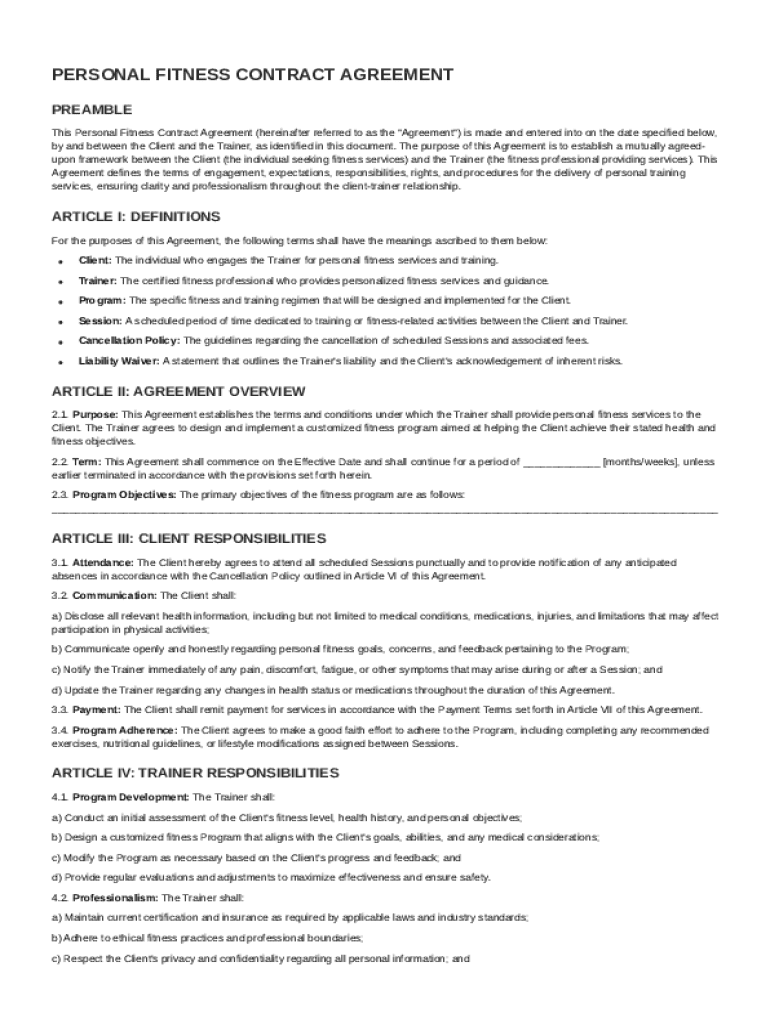







Definition & Meaning
A Personal Fitness Contract Template serves as a formal agreement outlining the terms and conditions between a fitness client and a trainer. Its primary purpose is to detail the responsibilities, expectations, and obligations of both parties involved in the fitness program. This legal document establishes a framework for program development, session scheduling, payment terms, cancellation policies, and liability waivers. By using this template, the client and trainer can ensure clarity and professionalism, fostering an effective working relationship aimed at achieving fitness goals. This contract is crucial in promoting open communication and mitigating misunderstandings.
Key Elements of the Personal Fitness Contract Template
The Personal Fitness Contract Template comprises several critical components that form a comprehensive agreement:
-
Participant Details: This section includes the contact information and personal details of both the client and the trainer. It serves as a foundation for identification and record-keeping.
-
Program Outline: Details about the fitness program, including the types of exercises, frequency, and intensity levels, ensure both parties have a clear understanding of the fitness regimen's structure.
-
Payment Terms: Specifies the payment amount, method, due dates, and any additional costs, such as travel fees. Clear payment terms help avoid financial disputes.
-
Cancellation and Refund Policy: Outlines the procedures for canceling sessions and any related financial implications. Defining this policy helps manage expectations and maintain schedule integrity.
-
Liability Waiver: Acknowledges the risks involved in fitness training and releases the trainer from certain liabilities, ensuring that participants are aware of the potential risks.
-
Dispute Resolution: Provides a framework for addressing and resolving conflicts that may arise during the contractual relationship, promoting a cooperative approach to problem-solving.
How to Use the Personal Fitness Contract Template
Using the Personal Fitness Contract Template effectively involves several steps:
-
Customize the Template: Tailor the document to reflect the specific needs and preferences of both the client and the trainer. This includes adjusting the program details and personalizing the payment and cancellation policies.
-
Review Key Sections: Both parties should carefully review the entire template, ensuring that all terms are clear and agreed upon. This collaborative review helps identify potential areas of concern and ensures mutual understanding.
-
Finalize the Document: Once reviewed and accepted, both parties should sign the contract to signify their agreement. Having a signed contract is crucial for its enforceability.
-
Maintain a Copy: Ensure that both the client and the trainer retain copies of the finalized contract for future reference. Keeping a record is important for accountability and future reviews.
Examples of Using the Personal Fitness Contract Template
Several scenarios illustrate the practical application of a Personal Fitness Contract Template:
-
Introduction of New Fitness Programs: A gym offering a new type of fitness class can use this template to set precise expectations regarding session content and participant requirements.
-
Freelance Personal Trainers: Independent trainers engaging in private sessions with clients can formalize their business relationships through a structured contract, ensuring professional standards are maintained.
-
Corporate Wellness Initiatives: Companies aiming to improve employee fitness can use a contract template to lay out the terms for an in-office personal training service, benefiting both employees and the corporate environment.
Steps to Complete the Personal Fitness Contract Template
To effectively complete the Personal Fitness Contract Template, follow these steps:
-
Gather Basic Information: Collect key details about the client and the trainer, ensuring accuracy in contact information and personal details.
-
Outline the Program: Define the structure of the fitness program, including schedules, types of exercises, and any special requirements or equipment needed.
-
Detail Financial Terms: Clearly state the financial obligations, such as payment schedules, methods, and amounts, removing any ambiguity regarding fees.
-
Establish Policies: Define the cancellation, refund, and liability policies, ensuring they are fair, clear, and aligned with legal standards.
-
Review and Edit: Thoroughly review the contract for clarity, completeness, and legal compliance. Make any necessary revisions before signing.
-
Sign the Contract: Both parties should sign the document digitally or in person, depending on their preference and convenience.
Important Terms Related to Personal Fitness Contracts
Understanding the terminology used in personal fitness contracts enhances comprehension and execution:
-
Breach of Contract: Occurs when either party fails to fulfill their contractual obligations, potentially leading to a legal dispute.
-
Indemnity Clause: Protects the trainer from certain liabilities that may arise during the training sessions.
-
Non-Disclosure Agreement (NDA): Ensures that any proprietary or sensitive information shared during the training remains confidential.
-
Force Majeure: A clause that frees both parties from liability or obligation when extraordinary events or circumstances prevent the contract's fulfillment.
State-Specific Rules for Personal Fitness Contracts
Various states in the U.S. may have unique regulations surrounding the execution of personal fitness contracts:
-
Consumer Protection Laws: Some states enforce specific consumer protection laws that impact cancellation policies and refund terms.
-
Fitness Facility Regulations: Certain states may impose additional requirements for fitness centers and trainers, including certifications and insurance coverage.
-
Contract Enforcement: Local law may dictate the manner in which contracts are enforced, emphasizing the importance of understanding state-specific legal considerations.
Digital vs. Paper Version
The choice between using a digital or paper version of the Personal Fitness Contract Template has implications for convenience, accessibility, and security:
-
Digital Contracts: These are easily editable, shareable, and typically include features such as electronic signatures, offering convenience and efficiency.
-
Paper Contracts: They offer a tangible format that some parties may prefer for archival purposes, but they lack the flexibility and environmental benefits of digital formats.
Choosing the appropriate format depends on the preferences of the client and trainer, as well as the logistical capabilities available to them.




