






Definition and Purpose of the Service for IT Contract Template
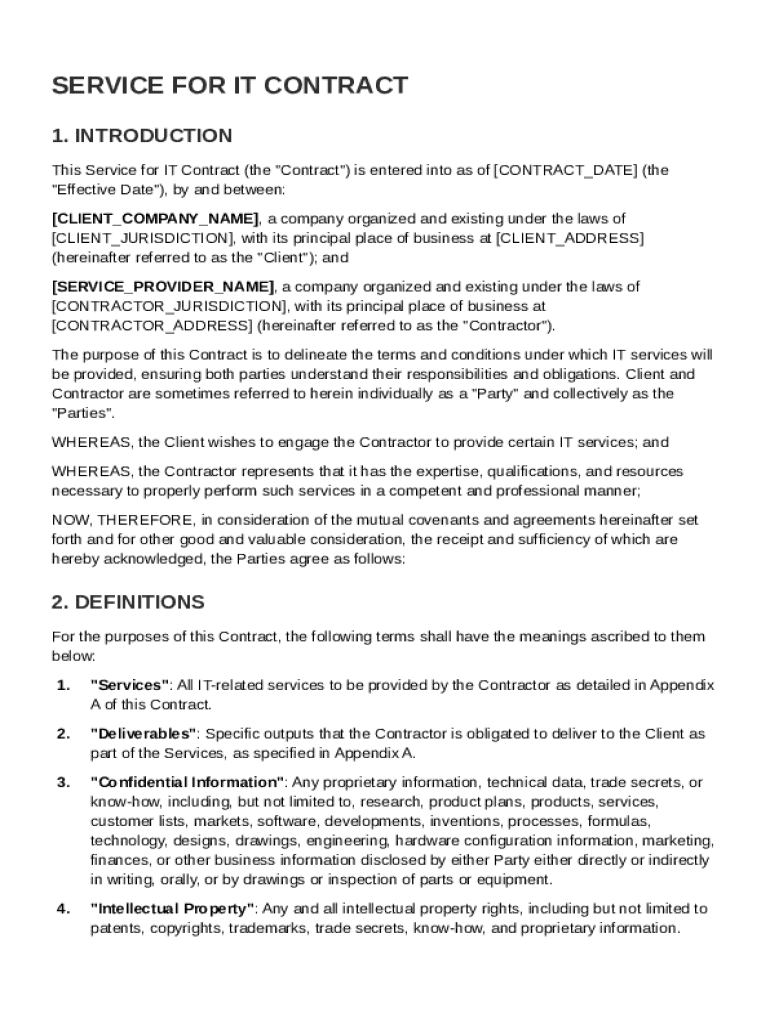
The "Service for IT Contract Template" is a comprehensive document designed to outline the agreement between a client and an IT contractor. This form serves a critical role in defining the parameters of the relationship, ensuring all parties have a mutual understanding of the services to be provided. It includes essential aspects such as the scope of services, compensation terms, confidentiality obligations, and intellectual property rights.
- Key Objectives: The primary goal is to offer clarity on roles and expectations, minimizing potential conflicts and misunderstandings.
- Critical Components: Elements such as liability limitations, termination clauses, and dispute resolution processes are included to protect the interests of both parties.
- Customizable Nature: The template can be adjusted to cater to specific requirements of different IT services, ensuring a tailored fit for varied contractual needs.
Key Elements of the IT Contract Template
Understanding the main elements within the Service for IT Contract Template is essential for drafting an effective agreement. These components capture the core details and terms agreed upon by the parties involved.
Scope of Services
The scope defines the specific IT services the contractor will provide. Detailed descriptions help in setting clear expectations.
- Specific Deliverables: Outlines deliverables, schedules, and associated milestones.
- Service Limitations: Clarifies what is beyond the scope to avoid misconceptions.
Compensation Structure
Compensation components describe the financial terms of the agreement, including payment schedules and terms.
- Billing Cycles: Monthly, weekly, or project-based payments should be outlined clearly.
- Additional Costs: Specifies reimbursable expenses, if any, like travel or extra equipment.
How to Use the Service for IT Contract Template
Using the IT contract template involves several steps to customize it to meet specific service arrangements. Here’s a step-by-step guide:
- Review the Template: Begin by thoroughly analyzing the default contents, ensuring familiarity with each section.
- Identify Needs: Highlight sections relevant to specific agreements and adjust language to suit those needs.
- Customize Specific Details: Tailor sections such as scope, duration, and termination clauses to reflect the specific agreement terms.
- Legal Consultation: Consult with a legal expert to ensure compliance with relevant laws and regulations, especially when dealing with complex contracts.
- Finalize and Sign: Once both parties agree on the content, proceed with legitimizing the document through signatures. This step often involves witness signatories or notarization in specific jurisdictions.
Legal Use and Compliance
Ensuring the template is legally compliant is crucial for its enforceability. This section focuses on critical legal aspects and compliance requirements within the United States.
Contractual Legitimacy
- ESIGN Act Compliance: The contract and its electronic signatures should comply with the Electronic Signatures in Global and National Commerce Act (ESIGN).
- Jurisdictional Adherence: State-specific laws, especially those concerning electronic agreements and IT services, should be considered.
Confidentiality and IP Rights
- Non-Disclosure Agreements (NDAs): Integrate NDAs to protect proprietary and confidential information shared during the service period.
- Ownership Clauses: Specify the ownership of intellectual property created during the contractual period.
Common Users of the IT Contract Template
Several entities and individuals find this template particularly useful for formalizing IT service agreements. Understanding typical users enhances the customization and utility of the document.

Businesses and Corporates
- IT Departments: Engage external contractors for specialized tasks not covered internally.
- Project Managers: Oversee service delivery, ensuring contractors meet specified standards and deadlines.
Independent Contractors and Consultants
- Freelancers: Use the contract to formalize relationships with clients, ensuring clarity in deliverables and payments.
- Small IT Firms: Establish legal protection and structured engagement with their client base.
Examples and Use Cases for IT Contract Template
Examining real-world examples and scenarios provides practical insight into the application of the template.
Scenario: Web Development Project
A client hires a contractor to develop a custom website. The contract outlines deliverables such as design, development milestones, testing, and launch schedules. Fees and project changes are explicitly defined to prevent scope creep.
Managed IT Services
An organization outsources its IT infrastructure management. The contract specifies the range of services like monitoring, troubleshooting, and regular updates, with a detailed SLA (Service Level Agreement) defining service standards and responses.
Technical Compatibility and Integration
Understanding the technical aspects of filling or interacting with the Service for IT Contract Template is important, especially when utilizing digital tools for document handling.
Software Compatibility
The template supports various formats—PDF, DOC—that are compatible with popular software tools and cloud storage platforms like DocHub, Google Drive, and OneDrive. This versatility enables seamless integration into existing document workflows.
Electronic Signature Integration
Implementing legally binding electronic signatures using platforms like DocHub facilitates contract execution without physical meetings. This feature is essential for remote work arrangements and international agreements.