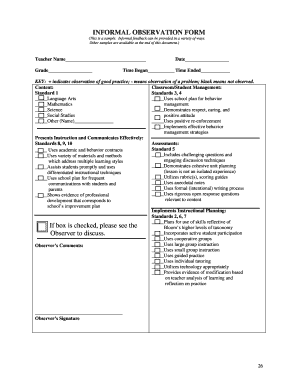
Definition and Purpose of the Safety Contract Template
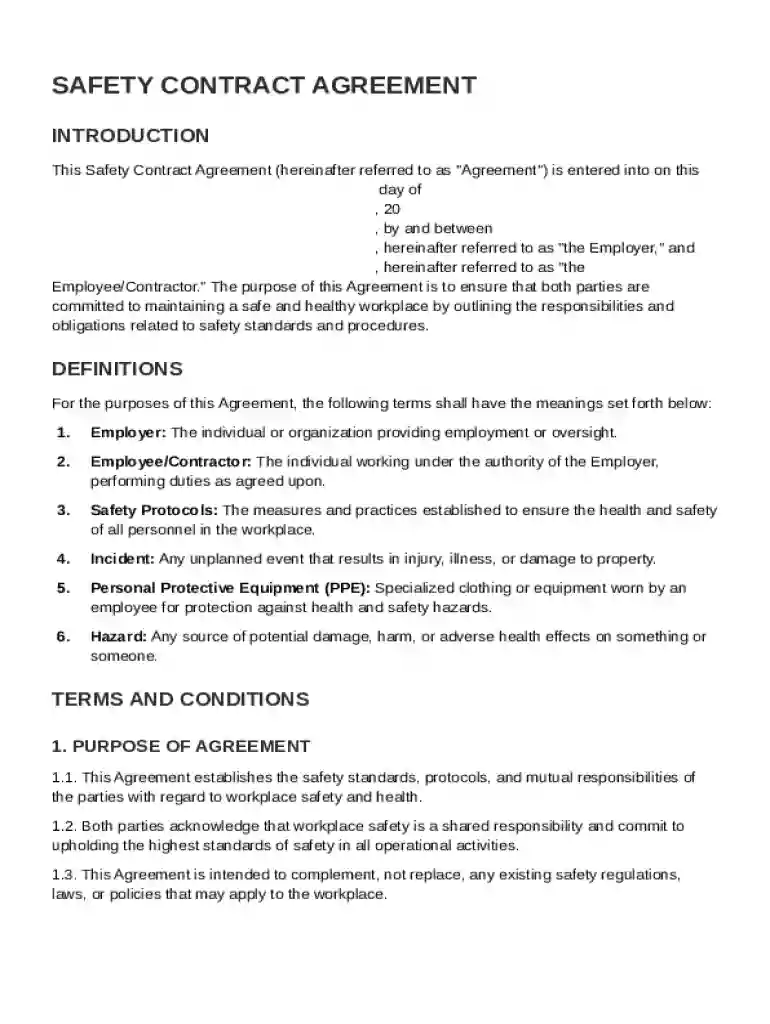
The Safety Contract Template serves as a formal agreement outlining the mutual responsibilities between an employer and an employee or contractor to maintain safety standards in the workplace. This document delineates expectations regarding personal protective equipment (PPE), incident reporting, and compliance with established safety protocols. It aims to foster a culture of mutual accountability in safeguarding health and safety, ensuring all parties understand their roles and responsibilities in upholding a secure work environment. By clearly stating these obligations, the Safety Contract Template helps mitigate risks and potential legal liabilities.
Key Elements of the Safety Contract Template
This section of the template captures the essential components that make up a comprehensive safety contract:
- Parties Involved: Identifies the employer and employee or contractor entering the agreement.
- Safety Protocols: Specifies procedures and policies that must be adhered to in order to maintain a safe workplace.
- Incident Reporting: Details the process for reporting accidents or safety incidents, including timeframes and responsible parties.
- Use of PPE: Outlines the mandatory personal protective equipment required for various tasks and ensures that both parties acknowledge their responsibility in its proper use.
- Training Requirements: Establishes the need for regular safety training sessions and verification of training completion.
- Compliance with Standards: References applicable safety laws and regulations, ensuring alignment with industry norms and governmental requirements.
- Modification and Termination: Provides terms under which the contract can be modified or terminated.
How to Use the Safety Contract Template
The practical application of the Safety Contract Template involves several steps to ensure it serves its intended purpose effectively:
- Customize the Template: Adjust language and include details specific to your organization or industry, ensuring relevance to your unique safety requirements.
- Distribute for Review: Share the document with all stakeholders, including managers, employees, and contractors, for their input and adjustments.
- Training Sessions: Conduct workshops or training to explain the safety contract, focusing on key responsibilities and protocols.
- Implementation: Once finalized, formally implement the policy, incorporating it into existing workplace safety programs.
- Regular Audits: Schedule periodic reviews of the contract to assess its effectiveness and make necessary adjustments.
Steps to Complete the Safety Contract Template
Completing the Safety Contract Template requires a systematic approach to ensure all pertinent information is captured:
- Collect Basic Information: Enter the names, contact information, and roles of the parties involved.
- List Safety Obligations: Include detailed safety protocols and specific responsibilities expected from each party.
- Outline Reporting Procedures: Define the steps and deadlines for reporting safety incidents, including who to contact.
- PPE Requirements: Specify the PPE required for different tasks and any employer-provided equipment.
- Training and Compliance: Include sections on mandatory training sessions and compliance checks, defining consequences for non-compliance.
- Signatures: Provide space for the signatures of all parties involved, validating their agreement to adhere to the terms set forth.
Legal Use of the Safety Contract Template
The Safety Contract Template ensures compliance with U.S. workplace safety laws and regulations, such as OSHA standards. By formalizing safety practices within the contract, companies provide an additional layer of legal protection in the event of safety incidents or inspections. It also serves as evidence of an employer's diligence in prioritizing workplace safety, which can mitigate potential legal consequences stemming from accidents or safety violations.
Examples of Using the Safety Contract Template
Organizations across various sectors can benefit from utilizing the Safety Contract Template:
- Construction Companies: Ensure workers are equipped with and trained to use appropriate PPE, adhering to site safety rules.
- Manufacturing Plants: Outline machine operation safety protocols and establish incident response procedures.
- Healthcare Facilities: Formalize infection control procedures, requiring adherence to hygiene standards and regulations.
- Warehousing Operations: Address forklift safety, lifting procedures, and emergency exit protocols.
Importance and Benefits of the Safety Contract Template
The Safety Contract Template provides integral benefits that contribute to a safer work environment:
- Clarity and Consistency: Establishes clear standards and expectations for workplace safety, reducing misunderstandings and non-compliance.
- Reduced Risk: Mitigates potential risks and liabilities by fostering a culture of safety awareness and accountability.
- Improved Communication: Promotes open communication on safety issues between employers and employees or contractors.
- Legal Protection: Provides documented evidence of agreed-upon safety measures, supporting compliance with regulatory requirements.
State-Specific Considerations for the Safety Contract Template
While the core components of the Safety Contract Template are generally applicable across the United States, variations may exist due to state-specific safety requirements:
- California: Must comply with specific Cal/OSHA regulations, which may include additional stipulations and documentation regarding occupational safety and health.
- New York: New York State PESH (Public Employee Safety and Health) may apply to public sector employees, demanding additional compliance details.
- Texas: Emphasizes employer responsibilities under the Texas Workers' Compensation Act, which includes obligations around reporting and training.
Understanding these regional nuances ensures that the Safety Contract Template remains compliant and effective within different legal contexts.