
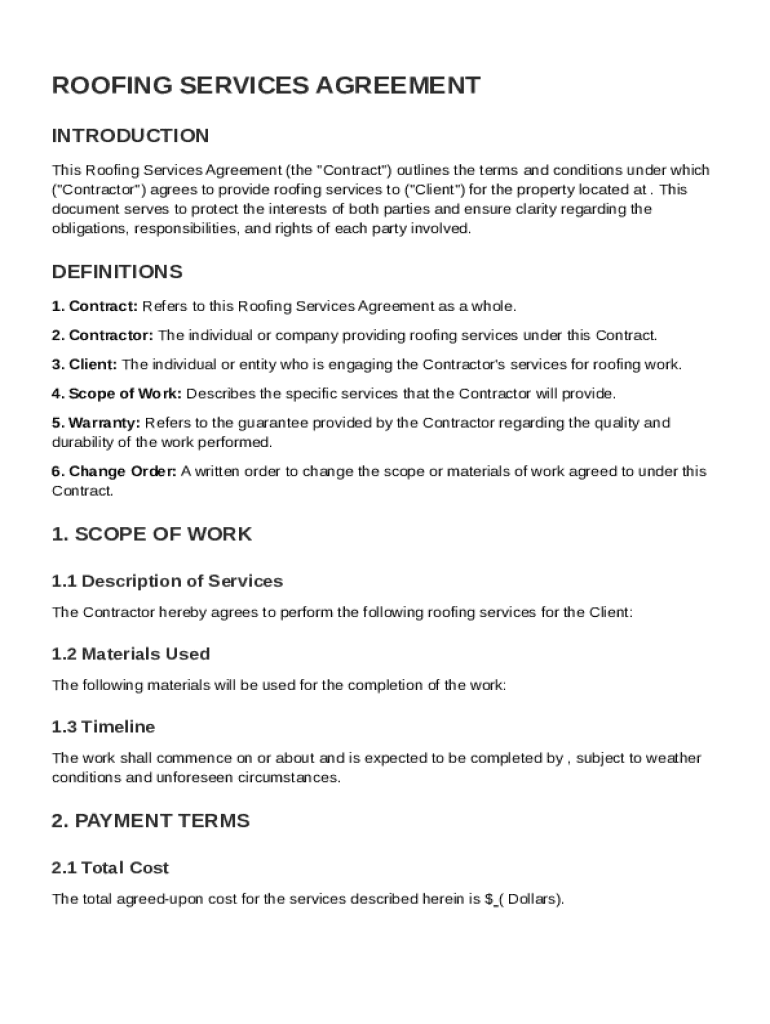







Definition & Meaning
The Roof Contract Template serves as a comprehensive document outlining the terms and conditions between a roofing contractor and their client. It details the scope of work, payment structures, responsibilities for each party, and other essential considerations. This template ensures clear communication and prevents potential disputes by defining expectations early in the project. By using a Roof Contract Template, contractors and clients solidify their professional relationship, offering a level of protection and clarity that is critical in construction agreements.
Key Elements of the Roof Contract Template
Several central components are integral to a Roof Contract Template:
- Scope of Work: Outlines the specific tasks and services to be performed by the contractor, providing detailed descriptions to avoid any ambiguity.
- Payment Terms: Specifies payment schedules, methods, and conditions under which payments are made.
- Responsibilities: Clarifies duties and obligations of both the contractor and the client to ensure smooth project execution.
- Change Orders: Details procedures for modifying the original agreement, accommodating changes while maintaining transparency.
- Warranty Information: Describes warranty terms offered by the contractor, setting expectations for maintenance and repair.
- Dispute Resolution: Outlines the process for handling disagreements, whether through mediation, arbitration, or legal means.
- Governing Law: Specifies which jurisdiction's laws apply to the contract, providing legal clarity.
Steps to Complete the Roof Contract Template
- Review the Template: Begin by thoroughly reading the template to understand each section.
- Input Contractor Information: Fill in the contractor's details, including name, business address, and contact information.
- Enter Client Details: Provide the client's information, ensuring accuracy for identification and communication.
- Define the Project Scope: Clearly list the tasks and services to be completed, including specifics like materials used and timelines.
- Set Payment Conditions: Outline the financial agreements, detailing amounts, due dates, and acceptable forms of payment.
- Add Specific Provisions: Make any necessary amendments for change orders, warranties, and dispute resolution methods.
- Sign and Date: Both parties must sign and date the document to validate the agreement.
Legal Use of the Roof Contract Template
In the United States, a Roof Contract Template is widely accepted in various jurisdictions, provided it meets legal standards. Both parties must ensure the document is comprehensive and free from ambiguous language that could lead to misinterpretation. It's important to review state-specific requirements as these can affect the contract’s enforceability. Consulting with legal professionals for validation can help in aligning the contract with applicable laws and regulations.
State-Specific Rules for the Roof Contract Template
Different states may have unique regulations impacting roofing contracts:
- Licensing Requirements: Some states mandate contractors to hold specific licenses.
- Inspection Standards: Varying safety and inspection protocols can influence project timelines and deliverables.
Understanding local laws is crucial, as non-compliance might nullify the contract or expose parties to legal liabilities. Seeking legal advice or utilizing state-specific contract resources can ensure adherence to local standards.
Software Compatibility
Roof Contract Templates are often compatible with various document management software platforms, including DocHub. The flexibility to import and export documents seamlessly allows for easy editing, sharing, and signing. This compatibility with platforms like Google Workspace ensures efficient document handling without unnecessary conversions, maintaining productivity and reducing processing time.
Examples of Using the Roof Contract Template
Consider the following situations where a Roof Contract Template proves invaluable:
- Residential Projects: Homeowners secure detailed agreements with roofing companies to ensure quality and reliability.
- Commercial Properties: Business owners require comprehensive contracts to outline extensive repair or construction projects in commercial settings.
- Municipal Contracts: Governments use these templates to standardize terms with contractors for public projects, ensuring public funds are utilized efficiently.
In each scenario, the template serves to align expectations and facilitate smooth execution of roofing services.
Important Terms Related to Roof Contract Template
Understanding terminology used within the Roof Contract Template clarifies its content:
- Subcontractor: A third party hired by the primary contractor to perform specific tasks within the project scope.
- Lien Waiver: A statement releasing the client from liability for unpaid bills by subcontractors or suppliers once paid.
- Retainage: A percentage of the contract price withheld until project completion to ensure quality standards are met.
Defining these and other terms within the template minimizes confusion and improves communication between all parties involved.




