
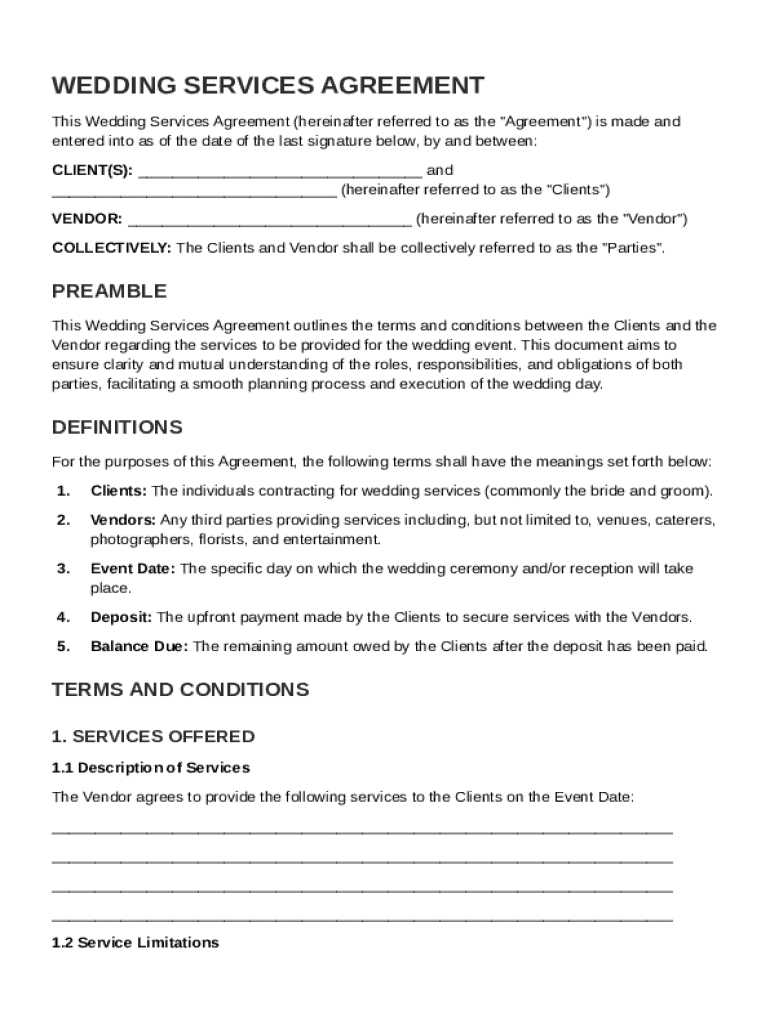







Definition & Importance of the General Wedding Contract Template
The General Wedding Contract Template is a comprehensive document that establishes the terms and conditions between wedding clients, often the couple, and vendors who provide wedding-related services. This template is instrumental in delineating the scope of services, payment terms, responsibilities of each party, and procedures for dispute resolution. The purpose of this contract is to foster clarity and mutual understanding, ensuring that both clients and vendors have a shared expectation of what services will be delivered and how issues will be handled should they arise. It is used widely in the United States owing to the diverse range of services required for weddings and the need to safeguard interests legally.
How to Use the General Wedding Contract Template
Utilizing the General Wedding Contract Template effectively involves customizing it to meet the specific needs of each wedding event. Typically, the process begins by identifying the services required, such as catering, photography, or venue management. Each vendor must then be provided with a version of the contract that outlines their specific service terms. Clients should ensure that all details, such as service dates, times, fees, and cancellation policies, are accurately noted. Discuss these terms with the vendor, ensuring both parties agree before signing. Once signed, this document serves as a legally binding agreement outlining mutual commitments.
Subsections:
- Reviewing Contract Terms: Carefully read through the entire contract to check for any clauses that may affect the service agreement, especially those concerning payment schedules and cancellation procedures.
- Customization: Modify sections to reflect specific needs and preferences, adding custom clauses if necessary to address unique aspects of the wedding service.
Steps to Complete the General Wedding Contract Template
- Identify Services Needed: List all services required for the wedding and correspond these to potential vendors.
- Gather Vendor Information: Include full contact details and company information for each vendor in the document.
- Specify Service Dates and Details: Clearly indicate the dates and locations where services will be rendered, alongside operating times.
- Define Payment Terms: Outline how and when payments should be made, including any deposit requirements and final payment deadlines.
- Include Cancellation Policies: Clearly state the terms regarding non-refundable deposits and penalties for cancellations or modifications.
- Review with Vendors: Discuss and confirm each point with the vendor for mutual understanding and agreement.
- Sign and Date: Both parties should sign and date the document to ensure its validity.
Key Elements of the General Wedding Contract Template
A strong General Wedding Contract Template typically incorporates several critical components:
- Service Description and Obligations: Detailed breakdown of what each vendor will provide.
- Payment Structure: Information on fees, deposits, payment schedules, and methods.
- Refund and Cancellation Policies: Terms that explain what happens in the case of event cancellation or changes in service requirements.
- Liability and Dispute Resolution: Clauses that address what to do in the event of a service failure or disagreement.
- Force Majeure: Provisions that cover unforeseen events that might hinder the performance of contractual duties.
Legal Use of the General Wedding Contract Template
The General Wedding Contract Template is a legally binding document when signed by both the wedding couple and the service provider. It adheres to the requirements for enforceable contracts under U.S. law, including offer, acceptance, and consideration. Legal enforceability is key in protecting the interests of both parties. If disputes occur, the contract provides a foundation for resolution through specified legal frameworks. Couples and vendors typically consult with legal advisors to ensure that the contract terms are fair, clear, and compliant with state laws.
Examples of Using the General Wedding Contract Template
This template is crucial in various real-world scenarios. For example, a couple hiring a photographer might include commitments to deliver specific types of photos by a given deadline. Similarly, a caterer contract might specify the number of meals, dietary accommodations, and timings for service. Each service agreement within the template can be tailored to cover necessary details and ensure all parties understand their responsibilities, leading to smooth wedding operations.
Who Typically Uses the General Wedding Contract Template
The template is predominantly used by wedding planners, coordinators, and individual couples looking to formalize agreements with vendors. Vendors themselves, such as florists, DJs, and caterers, may also initiate or recommend these contracts to standardize service expectations with clients. It is an essential tool for any individual or organization involved in planning, coordinating, or executing wedding events, especially those requiring multiple service providers.


State-Specific Rules for the General Wedding Contract Template
While the template provides a general framework, certain provisions may be subject to state-specific laws. Variations may exist in terms of vendor licensing requirements, consumer protection laws, or enforceability of certain clauses. To address this, it is advisable for users to consult legal professionals familiar with the wedding industry and state-specific regulations to customize the template accordingly. Understanding these nuances ensures compliance and reduces the possibility of legal disputes.
Software Compatibility with the General Wedding Contract Template
The General Wedding Contract Template can be easily handled using document management platforms like DocHub. This platform allows for seamless importing of the template, enabling users to integrate necessary changes and distribute the document efficiently. Compatible with various file formats such as DOC and PDF, DocHub ensures that the contract can be completed, edited, and signed electronically, saving time and enhancing collaboration among involved parties.




