
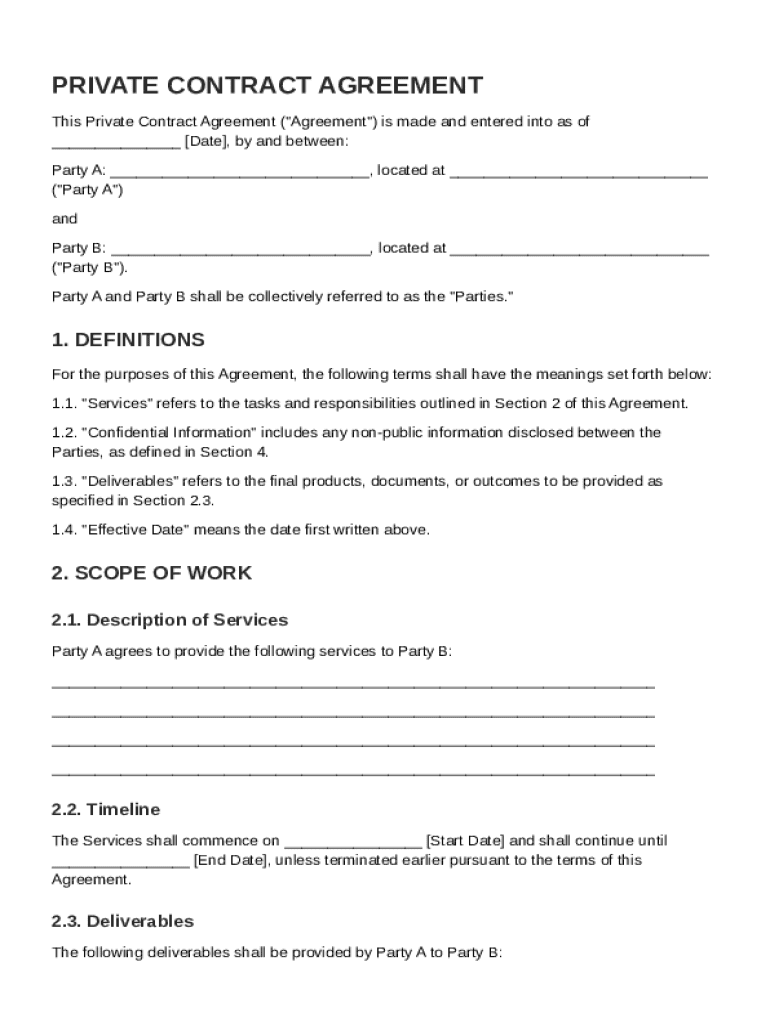







Definition & Meaning
A Private Contract Template is a comprehensive document that facilitates the agreement process between two parties regarding specific terms and conditions. It is a legally binding contract that typically includes details about the services to be provided, payment terms, and responsibilities of each party. By documenting these aspects, it helps ensure each party understands their obligations and rights within the agreement. It also commonly covers confidentiality clauses, termination conditions, and methods for resolving disputes, making it an essential tool for maintaining a clear professional relationship.
- Designed to outline comprehensive terms and conditions
- Useful for documenting mutual agreements between two parties
- Often includes confidentiality, termination, and dispute resolution clauses
Key Elements of the Private Contract Template
The Private Contract Template is composed of several critical sections, each serving a distinct purpose in the agreement. Understanding these parts is essential for both drafting and interpreting the contract accurately:
-
Parties Involved: Identifies and defines the parties entering the contract. This section captures their legal names and addresses, establishing a clear point of reference throughout the document.
-
Scope of Services: Articulates the services or products involved in the contract, providing specific details that delineate the expectations and responsibilities of each party.
-
Payment Terms: Specifies the payment structure, including amounts, terms of payment, deadlines, and any penalties for late payment. Comprehensive payment details minimize the potential for financial disputes.
-
Confidentiality Clauses: Protects sensitive information shared between the parties during the collaboration. It may include non-disclosure agreements to safeguard this information against unauthorized disclosure.
-
Dispute Resolution Processes: Outlines the preferred methods for addressing and resolving any disputes that arise, such as mediation or arbitration, often saving time and costs compared to court proceedings.
How to Use the Private Contract Template
Utilizing a Private Contract Template optimally involves several carefully defined steps that enable both the contract issuer and recipient to thoroughly address all necessary details:
-
Identify Requirements: Determine the essential terms and conditions both parties mutually accept. This requires a clear understanding of each party's goals and limitations.
-
Customize the Contract: Modify the template according to the specifics of your agreement, ensuring every section is tailored to the project or transaction in question.
-
Review Legal Implications: Consult with legal professionals to confirm that all terms comply with applicable laws and regulations, minimizing potential legal risk.
-
Signatures and Authentication: Secure signatures from all parties involved in the contract to formalize and legitimize the document. Using platforms like DocHub, signatures can be easily captured and verified electronically.
-
Document Storage and Sharing: Utilize secure methods for storing and sharing the final signed contract. Ensure all involved parties have access to a copy for their records.
Legal Use of the Private Contract Template
Adhering to legal standards when using a Private Contract Template is critical for ensuring its effectiveness and enforceability. Contracts must comply with the relevant laws in the jurisdiction where they are executed:
-
Enforceability: The contract should meet all legal requirements to be considered enforceable in a court of law, including having the capacity to contract and mutual assent.
-
Fraud and Misrepresentation: Parties must act in good faith, providing truthful information without deception. Any form of misrepresentation can render a contract void or voidable.
-
Local Jurisdiction: Contracts should adhere to the specific legal requirements of the state or locality, which may include special clauses or mandates.
By ensuring that these legal aspects are addressed, the contracting parties can avoid invalidation and other contractual disputes down the line.
Steps to Complete the Private Contract Template
Completing the Private Contract Template effectively requires a methodical approach. Here are the detailed steps to consider:
-
Gather Information: Collect all necessary information, such as names, addresses, and contact details for all parties involved.
-
Draft Agreement Terms: Clearly draft the terms concerning services, payments, and other essential obligations. Ensure the language is clear and understandable.
-
Negotiate Terms: Engage both parties in a discussion to finalize the terms. Be prepared to make adjustments to reach a satisfactory agreement.
-
Review and Edit: Thoroughly review the contract for accuracy and completeness. Make necessary edits to correct any errors or areas of ambiguity.
-
Execute Contract: Once both parties agree on the terms, finalize the document by obtaining signatures. Verify that each signature is properly dated.
-
Archiving: After signing, store the original contract in a secure location. Distribute copies to all parties involved as part of the archival process.
Examples of Using the Private Contract Template
Practical application of the Private Contract Template is extensive, ranging across various fields and industries:
-
Freelance Services: When hiring freelancers, a contract template helps outline deliverables and payment terms, aligning expectations with actual service delivery.
-
Supplier Agreements: Businesses utilize the template to formalize agreements with suppliers, detailing the supply terms and conditions to prevent disputes in the supply chain.
-
Tenant Agreements: Private lease agreements for rental properties utilize contract templates to specify tenancy terms and obligations, safeguarding landlord and tenant rights.
These examples demonstrate the versatility of the Private Contract Template across different scenarios, ensuring transparent and binding agreements for all parties.
Who Typically Uses the Private Contract Template
The Private Contract Template is widely used by:
-
Businesses: Companies often engage in agreements with clients, vendors, or other businesses using standardized contract templates for consistency.
-
Freelancers and Contractors: Independent professionals use these templates for securing terms with clients, ensuring clarity in freelance work arrangements.
-
Legal Professionals: Lawyers leverage contract templates to draft preliminary contracts, saving time and ensuring all legal bases are covered.
These categories represent just a few of the common users of private contracts, underscoring the document's importance in structuring professional relationships.


State-Specific Rules for the Private Contract Template
When creating a Private Contract in the United States, it's essential to account for state-specific regulations, as contract law can differ significantly across state lines:
-
Governing Law Clauses: Contracts should specify which state's laws govern the agreement, especially when parties are located in different jurisdictions.
-
Unique State Requirements: Some states might impose specific stipulations regarding contract terms, disclosure, or execution that must be included for legal recognition.
-
Consumer Protection Laws: In certain contracts, state-level consumer protection laws may require specific wording or disclosures to protect party rights.
By adjusting the contract template to reflect these state-specific rules, parties reduce the risk of legal issues arising from jurisdictional discrepancies.




